


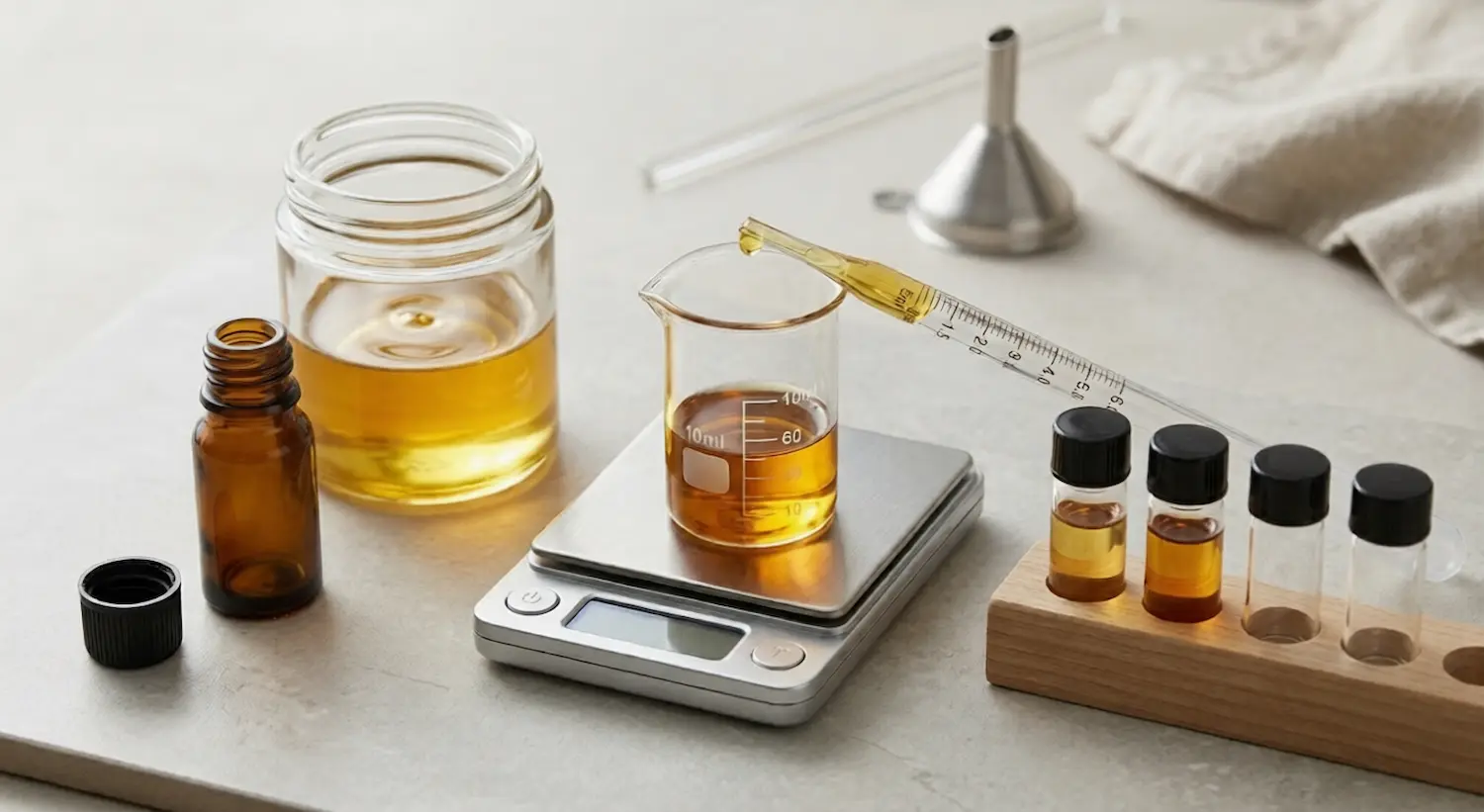
If you are looking for a terp to distillate ratio calculator, you are probably trying to answer one of the most important formulation questions in this space: how much terpenes should you add to distillate without pushing the blend too far.
That question matters because the right ratio affects more than just flavour. It also influences aroma strength, consistency, repeatability, and how easy it is to move from a small test batch to a more reliable production process. A good terp to distillate ratio calculator helps with the maths, but the best results still come from understanding the percentage you want to test and why it makes sense for the product.
This article explains how a terp to distillate ratio calculator works, how to calculate terpene percentage more clearly, and what to consider before deciding how much terpenes to add.
A terp to distillate ratio calculator does not choose the perfect ratio for you. What it does is help you apply a chosen ratio accurately so that your batch remains controlled and repeatable.
That distinction is important. The real decision is not the calculator itself. The real decision is how strong, balanced or restrained you want the final blend to be. Once that target is clear, the maths becomes much easier.
That is why a terp to distillate ratio calculator is best used as a formulation tool. It helps you scale a batch, compare percentages, and keep your process more consistent from one run to the next.
The logic behind a terp to distillate ratio calculator is simple:
Terpenes to add = distillate amount × target terpene percentage
So if you have 100g of distillate and want to test a 5% terpene load:
100g × 0.05 = 5g of terpenes
That is the core idea. The calculator saves time and reduces errors, but the formula itself stays the same.
Here are a few practical examples:
These are calculation examples, not fixed rules for every product. The right percentage still depends on the distillate, the intended application, the flavour goal, and how the blend performs in testing.
This is where readers usually want a clean answer, but the right approach is not to force one universal number. The smarter way is to choose a percentage range, test it, and refine it based on the result.
A lower percentage may work better when:
A more noticeable percentage may make sense when:
The key is not to chase the highest ratio. It is to choose the percentage that suits the product and holds up in real use.
That is why a terp to distillate ratio calculator is most useful when it supports a testing process, not when it is treated as the only decision-maker.
This is one of the most common search variations, and it makes sense. People want a quicker reference point.
The problem is that “how many mL of terpenes per gram” can become confusing if you move too quickly from percentage into volume. In most workflows, weight-based calculation is the cleaner place to start.
A better process is:
That makes the calculation easier to repeat across batches and reduces the risk of inconsistency.
If you want to make that part of the process more reliable, it is worth reviewing measuring terpenes accurately before scaling a blend too far.
Even when the maths is simple, the formulation decision is not always identical from one batch to another.
Some bases need a lighter touch, while others may need more aromatic support. The same percentage will not always behave the same way.
The target format matters. A ratio that feels right in one context may not translate well into another.
A subtle profile and a bold profile do not need the same terpene loading. Starting with that in mind helps avoid overcorrecting later.
The bigger the batch, the more expensive small errors become. That is why test batches matter before committing to production quantities.
A strong ratio on paper means very little if measuring, mixing and documentation are inconsistent from one batch to the next.
This is where the terpene mixing chart and your broader mixing workflow become genuinely useful. They help keep formulation choices tied to a repeatable process rather than guesswork.
If you want a cleaner workflow, keep the decision process simple.
Start with the batch size.
Choose the percentage you want to test.
Calculate the terpene amount.
Run a controlled sample.
Review the result before scaling.
For example:
This is the real benefit of a terp to distillate ratio calculator. It removes guesswork from the maths so you can focus on the product itself.
If you want a quick reference after running the numbers, the terpene mixing chart is a useful next step. If you want a fuller process around preparing and blending the batch, it helps to mix terpenes step by step before moving into larger runs.
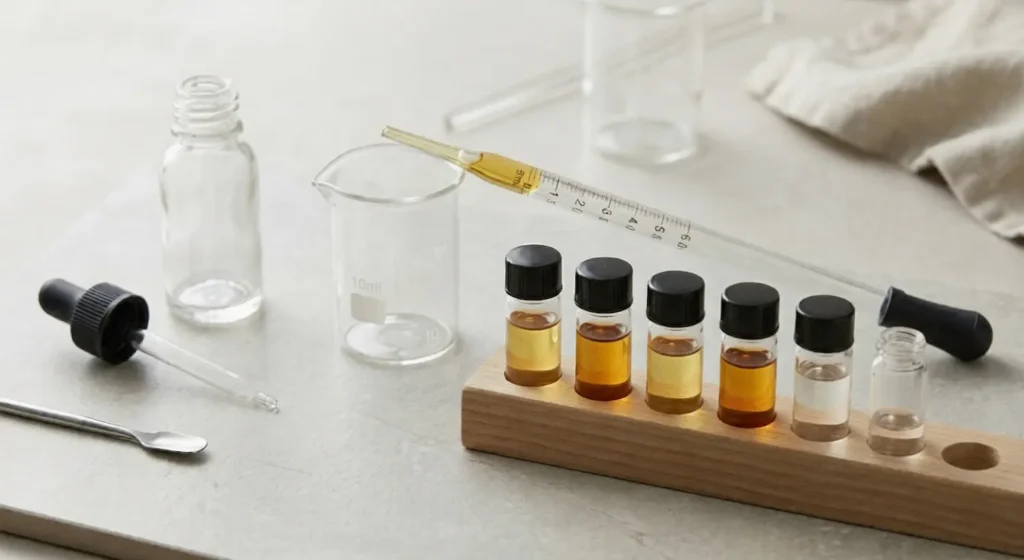
The formula is rarely the problem. Most issues come from how the ratio is chosen or applied.
A heavy first test can make it harder to understand what the blend actually needed.
Different bases behave differently. Reusing the same number every time is not always the best approach.
This is one of the easiest ways to create inconsistency, especially when the workflow is not fully controlled.
A small batch that seems close enough can turn into a larger production problem if it has not been properly validated.
A ratio only works well when the measuring, mixing and handling are also controlled.
This is also why readers coming from a cartridge angle should still review how to dilute terpenes for vape cartridges instead of assuming that a distillate ratio article answers every formulation question on its own.
A calculator is useful, but it is only one part of the decision. The stronger process is to choose the blend direction first, validate the percentage on a small batch, and then use a terp to distillate ratio calculator to scale the result more confidently.
If you are developing or refining a distillate-based product, the next step is not just to run the numbers. It is to work with terpene profiles that fit your product goals, batch size and production plan.
If you are ready to move from testing into a more reliable supply strategy, explore our premium terpenes range and choose profiles built for serious formulation work. And if you want help selecting the right terpenes for distillate applications, batch planning or ongoing supply, contact the team to discuss the best option for your product line.
Try our sample pack now
No account yet?
Create an Account