
What Are Terpenes in Weed? The Real Reason Cannabis Smells, Tastes, and Feels Different

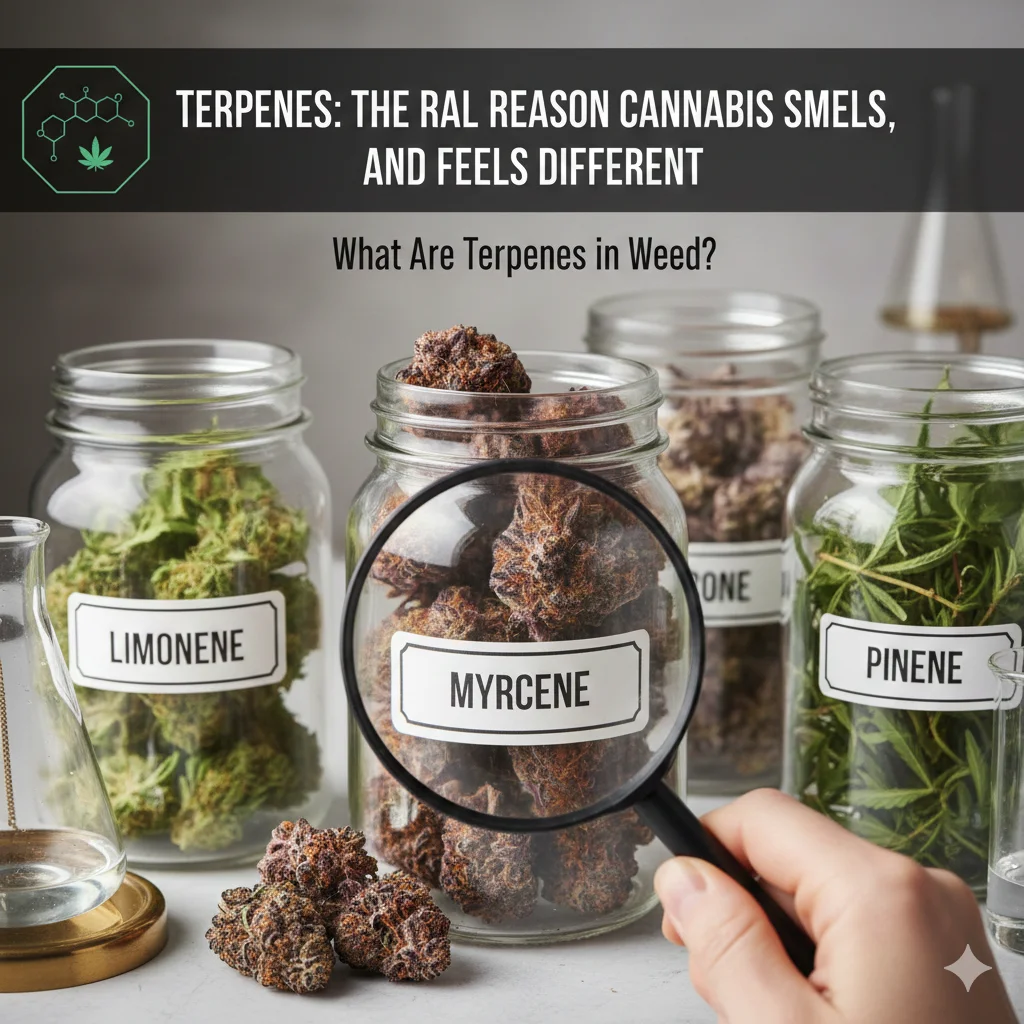
Terpenes Are Why Weed Hits Different
If you’ve ever wondered why two cannabis strains with the same THC percentage can feel completely different, the answer isn’t THC.
Terpenes are the aromatic compounds in weed that control smell, flavor, and how the high actually feels. They’re the reason one strain makes you relaxed and sleepy, while another keeps you alert, social, or focused.
Most experienced cannabis users learn this the hard way by trying dozens of strains and realizing THC alone doesn’t explain the experience. In this guide, I’ll break down what terpenes in weed really are, how they work, and why smart users pay more attention to terpenes than THC.
What Are Terpenes in Weed?
Terpenes are natural aromatic compounds produced by cannabis and many other plants. They evolved to protect plants from pests and environmental stress, but for humans, they do something much more interesting.
In weed, terpenes:
- Give each strain its unique smell
- Shape the flavor when smoked or vaped
- Influence how cannabinoids like THC and CBD affect your body and mind
Cannabis contains over 200 identified terpenes, though most strains are dominated by just a few.
Why Terpenes Matter More Than You Think
A lot of beginners focus only on THC percentage. Seasoned users don’t.
THC Gets You High, Terpenes Decide How
Two strains can both be 20% THC and feel totally different because:
- One is high in myrcene (relaxing, sedating)
- The other is rich in limonene or pinene (uplifting, energizing)
From real-world experience, terpene profiles are often a better predictor of effects than strain names or indica/sativa labels.
Terpenes Shape the “Vibe”
Think of THC as the engine and terpenes as the steering wheel.
They guide:
- Energy level
- Body vs head effects
- Mood
- Focus or relaxation
See real terpene profiles at Mr Terpeenes
Reading about aroma only goes so far. Browse the terpene profiles stocked in the UK and see how the descriptions map onto actual products.
The Most Common Terpenes Found in Weed
Here are the terpenes you’ll see most often on lab labels and why they matter.
Myrcene
- Aroma: earthy, musky, herbal
- Effects: deeply relaxing, body-heavy
- Common in: OG Kush, Granddaddy Purple
High-myrcene weed is what people mean by “couch-lock.”
Limonene
- Aroma: citrus, lemon, orange peel
- Effects: uplifting, mood-boosting
- Common in: Lemon Haze, Super Lemon strains
Great for daytime use or stress relief without sedation.
Pinene
- Aroma: pine, forest, fresh wood
- Effects: alertness, mental clarity
- Common in: Jack Herer, Durban Poison
Many users notice less brain fog with pinene-rich weed.
Linalool
- Aroma: floral, lavender
- Effects: calming, anti-anxiety
- Common in: Lavender, some indica hybrids
Popular with medical users seeking relaxation without strong intoxication.
Beta-Caryophyllene
- Aroma: peppery, spicy
- Effects: body relief, grounding
- Unique because it interacts directly with CB2 receptors
Often preferred by users focused on physical comfort.

How Terpenes Affect Your High (The Entourage Effect)
Terpenes don’t work alone. They interact with cannabinoids in what’s known as the entourage effect.
What Is the Entourage Effect?
It’s the idea that:
- THC + CBD + terpenes work better together
- Isolated THC feels flatter than full-spectrum cannabis
In practice, this means terpene-rich weed usually feels:
- more balanced
- longer-lasting
- more predictable
This is why many users prefer full-spectrum products over THC isolates.
Terpenes vs Strain Names (Why Labels Can Be Misleading)
“Indica,” “sativa,” and “hybrid” are outdated shortcuts.
Two strains with the same name can have different terpene profiles depending on how they’re grown. That’s why experienced users check lab results instead of trusting strain names.
What to look for instead
- Total terpene percentage (1–3% is solid)
- Dominant terpene(s)
- Secondary terpene support
This tells you far more than the name on the jar.
Work with terpenes through Mr Terpeenes
Understanding aroma is the first step; sourcing it reliably is the next. Discuss bulk supply for brands producing at volume across the UK and Europe.
Do Terpenes Change Flavor or Just Smell?
They do both and more.
Flavor
Terpenes survive combustion and vaporization, which is why:
- Vape carts taste different
- Flower flavor varies by strain
Low-terpene weed often tastes flat or harsh.
Smoothness
From experience, terpene-rich cannabis:
- feels smoother on the throat
- produces a more pleasant vapor
Poorly cured or terpene-depleted weed tends to be harsh.
Natural Terpenes vs Added Terpenes
Not all terpenes in weed products come from the plant itself.
Natural (Cannabis-Derived) Terpenes
- Extracted directly from cannabis
- Closest to the original strain profile
- Usually more expensive
Botanical Terpenes
- Sourced from fruits, herbs, or plants
- Chemically identical to cannabis terpenes
- More consistent and affordable
High-quality botanical terpenes are widely used in vape carts and concentrates.
How Terpenes Are Preserved (or Lost)
Terpenes are fragile. Heat, light, and oxygen destroy them.
What Kills Terpenes
- Over-drying flower
- Poor curing
- High-temperature extraction
- Old or improperly stored products
How Good Products Protect Terpenes
- Low-temperature extraction
- Airtight packaging
- Controlled curing processes
This is why fresh, lab-tested weed usually smells stronger.
How to Choose Weed Based on Terpenes
If you want consistent effects, this approach works better than guessing.
Step-by-step
- Decide how you want to feel (relaxed, focused, social)
- Identify terpenes associated with that effect
- Check lab results
- Ignore strain hype
Once you start doing this, your cannabis experience becomes far more predictable.
Are Terpenes Safe?
Terpenes are:
- naturally present in food
- approved for use in flavoring and fragrance
- widely studied in aromatherapy
That said, concentration matters. Terpenes should always be properly diluted in cannabis products.
High-quality brands follow strict safety standards.
Why Terpenes Matter When Buying Cannabis
If you’ve ever felt disappointed by a “high-THC” strain, it probably lacked terpenes.
Terpenes:
- define the experience
- enhance effects
- improve flavor
- make cannabis predictable
Smart buyers don’t ask “how strong is it?”
They ask “what terpenes does it have?”
So, what are terpenes in weed?
They’re the hidden drivers behind aroma, flavor, and effects—and the reason cannabis isn’t a one-size-fits-all experience.
If you want better highs, smoother sessions, and effects that actually match your goals, start choosing cannabis by terpene profile, not hype.