
Consistent Terpene Product: From Sample to Scale

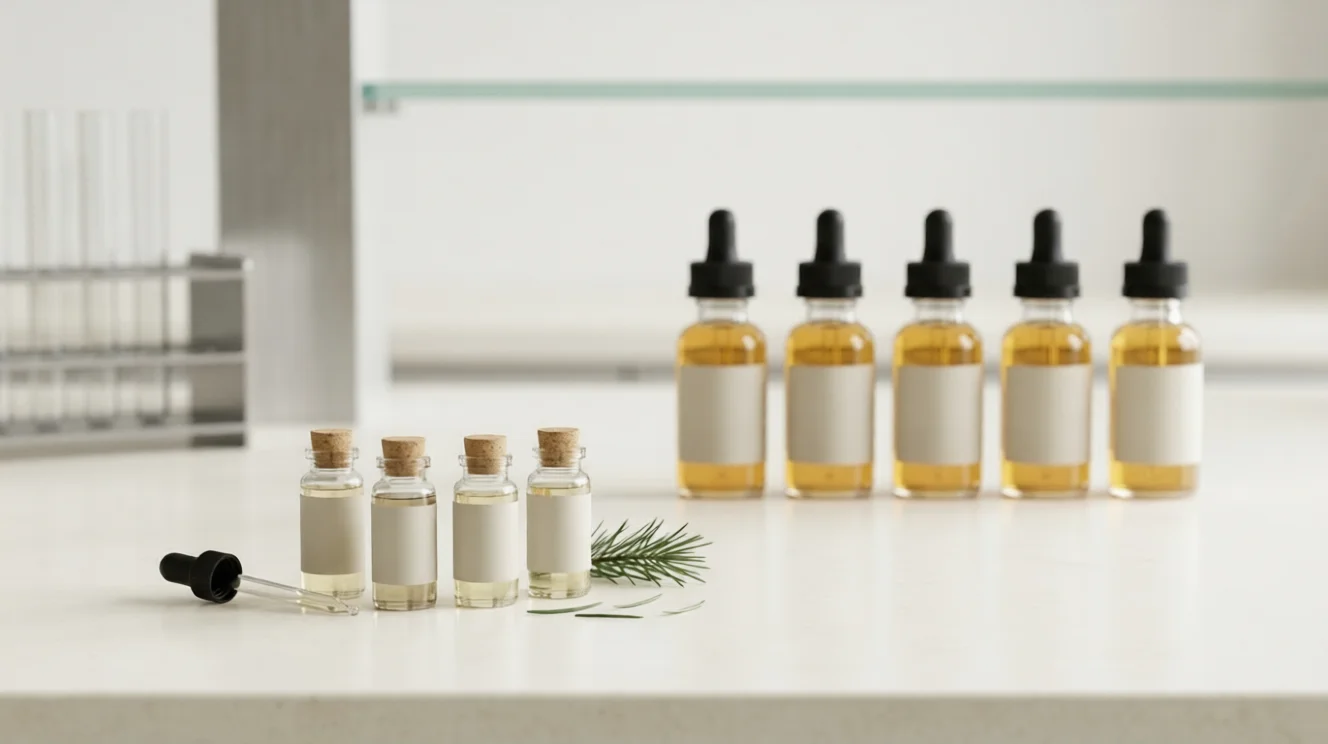
A consistent terpene product is built by treating the move from sample to scale as one continuous process. Brands that lock the formulation, control raw materials, document each batch and plan production from day one keep aroma, potency and presentation aligned at every order size — and that is exactly what separates a one-off blend from a product a brand can build a business around.
Building a consistent terpene product is one of the hardest steps for any brand moving beyond an initial concept. A blend can smell perfect at sample stage and still drift once production grows, suppliers change or batches are repeated months apart. For B2B buyers, white-label operators and brand owners, that drift is not a small detail — it shapes how customers perceive the product and whether they reorder.
Terpenes are sensitive aromatic compounds. Even small variations in terpenes sourcing, blending technique, equipment or storage can shift the final profile. The brands that scale successfully are the ones that treat sample creation, approval and full production as a single workflow, not three separate tasks handed to three different people.
This guide walks through what changes between a sample and a production batch, where consistency tends to break and how brands can plan from the first formulation so the product feels the same at every order size — from a 100 ml trial bottle to a multi-litre supply run.
Why does a consistent terpene product matter for brands?
For brand owners, consistency is not an aesthetic preference. It is the foundation of trust. A buyer who orders a 50 ml sample and approves it expects the next 5 litre order to smell, behave and perform the same way. If it does not, the brand absorbs the cost: returns, complaints, lost listings and reformulation work.
Inconsistency also damages internal operations. Manufacturing partners, fillers and distributors rely on stable specifications to plan their own work. When a profile shifts between batches, every downstream step has to be re-checked, re-approved and sometimes re-labelled.
A consistent terpene product is, above all, a commercial asset. It protects margins, simplifies supply contracts and lets the brand grow without rebuilding trust on every release.
What changes between a sample and a full production batch?
Samples are usually small, hand-blended and made under near-perfect conditions. A 50 ml or 100 ml sample is fast to prepare, easy to mix evenly and stored in a single bottle. None of that holds true at production scale.
As volumes grow, several variables enter the picture:
- Larger blending vessels mix differently than small glass beakers
- Raw-material lots may come from different harvests or suppliers
- Filling shifts from manual pipetting to semi-automatic or automatic equipment
- Bottles, closures and labels move from sample-grade to commercial packaging
- Storage time between blending and filling becomes longer
- Multiple operators may handle the same product across a shift
Each of these can introduce drift on its own. Combined, they explain why a brand can love a sample and still be disappointed by the first 25 litre run if the process has not been designed around scale from the start.

Browse production terpenes at Mr Terpeenes
Scaling punishes any input that changes between batches. Browse the range and see which profiles are held in production quantities before designing around them.
How do brands lock the formulation before scaling?
The first lever is the formulation itself. A blend that performs reliably at scale is one that has been documented in detail at sample stage, not improvised. That means recording exact ratios, raw-material lot numbers, blending order, mixing time, temperature and any rest period between blending and bottling.
Brands developing custom terpene blends for brands benefit from working with a supplier who keeps a master formulation file rather than re-creating the recipe each time. When the recipe is written down to the gram and the millilitre, it can be reproduced, audited and adjusted with confidence.
Approve the sample against a written specification
Before scaling, the approved sample should be matched to a specification sheet: appearance, aroma notes, density, refractive index where relevant, batch number and storage conditions. This document becomes the reference every future batch is checked against.
What role does quality control play when scaling terpenes?
Quality control is what separates a one-off sample from a repeatable product. Strong quality control links sample approval, raw-material checks, in-process testing and finished-batch sign-off into one chain. This is where terpene quality standards stop being a marketing phrase and become a daily operational tool.
At scale, every input is verified before it enters the blend. Every batch is sampled, compared against the reference and documented. Any deviation triggers a review before the product moves to filling. The goal is simple: nothing leaves the facility without a clear paper trail back to the original approved sample.

How can brands plan production for scale from day one?
Many brands treat scale as a problem for later. That delay is usually expensive. A formulation approved without thinking about production volumes often needs to be re-tested when real equipment, real bottles and real fill volumes come into play.
Planning for scale early means thinking about raw-material availability, blending capacity and filling workflow before the brief is finalised. For brands moving past small manual batches, investing in proper oil filling machines for terpenes, CBD and vape oils can take human variability out of the equation and protect fill accuracy across thousands of bottles.
Packaging is part of the same conversation. The bottle, closure and label that protect a sample may not be the right format for production. Reviewing terpene packaging solutions alongside formulation keeps the product stable from the bench to the shelf.
Scale without drift using Mr Terpeenes
The same profile, batch after batch, is a supply question rather than a formulation one. Discuss bulk volumes and continuity for your production schedule.
What should buyers ask a terpene supplier before placing a scale order?
Before committing to a larger run, buyers should treat the supplier as part of their own quality system. The right questions help separate suppliers who can hold a profile from those who only look reliable on paper.
Useful questions include:
- Do you keep a written formulation specification per blend?
- Are raw-material lots tracked and recorded against each batch?
- How do you compare each new batch against the original approved sample?
- What documentation is provided with every order (batch number, blend date, storage guidance)?
- Can you supply a retain sample so we can compare future batches?
- How do you handle a blend that drifts outside specification?
- Can you support our brand from sample volumes through to commercial scale?
Clear answers to these questions are a strong signal that the supplier understands consistency as a discipline, not a marketing claim.
Key takeaways
- Treat sample, approval and production as one workflow, not three separate tasks.
- Document the formulation in detail: ratios, lot numbers, blending order, mixing conditions.
- Approve every sample against a written specification that future batches must match.
- Build quality control into every batch, with retain samples and clear deviation handling.
- Plan packaging and filling alongside formulation, not after the recipe is locked.
Frequently asked questions
How small can a sample be and still represent a full production batch?
A 50 ml or 100 ml sample is usually enough to assess aroma, behaviour and stability, as long as the supplier blends it using the same ingredients, ratios and process they will use at scale. The sample only represents production if the method scales linearly.
How long does an approved terpene blend stay consistent in storage?
Properly stored in amber glass, away from heat and direct light, most terpene blends remain stable for many months. Suppliers should provide written shelf-life and storage guidance with every order so the brand can plan stock levels confidently.
Can a brand change suppliers without losing consistency?
It is possible, but it should be treated as a reformulation. The new supplier needs the original specification, a retain sample and time to match the profile before any scale order. Switching blind almost always introduces drift.
What is the most common cause of inconsistency between batches?
Undocumented changes. A different raw-material lot, a different operator or a slight change in blending equipment can each shift the profile. Written procedures and retain samples catch these issues before they reach the customer.
When should a brand move from sample blending to a contract supplier?
As soon as the brand needs repeatability across orders, a written specification, batch documentation and the ability to scale without re-testing every release. At that point, sample-only suppliers stop adding value and become a bottleneck.
Building consistent terpene products at every scale
A consistent terpene product is the result of decisions made early — about formulation, raw materials, documentation, quality control, filling and packaging. Brands that connect those decisions from the first sample onwards keep their aroma, performance and presentation aligned as volumes grow.
For UK and EU brands looking for premium terpenes UK businesses can rely on, this is the level of process that separates a supplier from a partner. The right partner does not just ship a blend; they help protect the product across every batch, every order size and every commercial milestone.
At Mr Terpeenes, we treat the journey from sample to scale as a single discipline — written formulations, raw-material control, batch documentation, retain samples and supply support for brands building serious terpene products in the UK and across Europe. When the process is designed for consistency, scale stops being a risk and becomes a growth opportunity.