


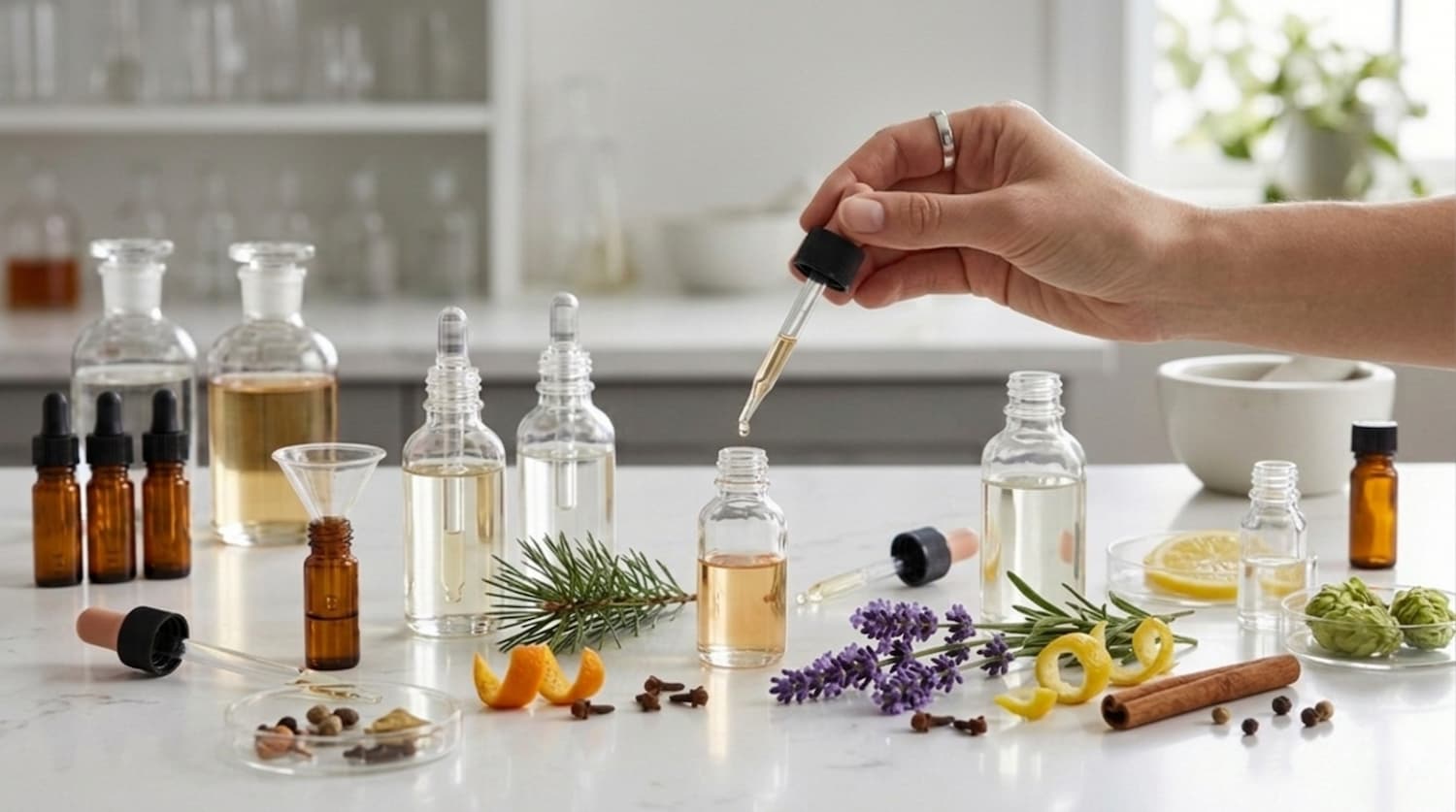
Getting a terpene blend right is not just about choosing ingredients that smell good on their own. The real challenge is creating a profile that stays balanced, repeatable, and pleasant from one batch to the next. That is why mixing terpenes should always be approached as a process, not a guess.
Whether you are working on a botanical profile for product development, flavour design, or general formulation, consistency matters. A blend that smells bright and clean in one test can feel harsh, flat, or unbalanced in the next if your ratios, evaluation method, or scaling process are off. Good results in mixing terpenes come from structure, patience, and careful adjustments.
This guide walks through a practical step-by-step method to help you build more reliable terpene blends with consistent aroma and flavour.
A strong blend is not only about the first impression. It should open well, hold together in the middle, and leave a clean, recognisable finish. Inconsistent blends usually happen when too many variables are changed at once, when notes are not measured accurately, or when the profile is scaled up without proper testing.
That is why mixing terpenes successfully depends on three things: a clear target, accurate ratios, and repeatable testing. If one of those is missing, the final result often feels unpredictable.
A more disciplined workflow also makes your future content and product decisions easier. For example, once you understand how ratios affect outcome, it becomes much easier to compare profiles, refine formulations, or decide when it is time to [buy terpenes] for new blend development.
Before you start combining ingredients, decide what you are trying to build. Do you want something citrus-forward, earthy, sweet, floral, piney, creamy, or gas-heavy? A vague goal leads to vague results.
Start by writing a short target profile in simple language. For example:
This gives structure to the whole process. In mixing terpenes, a blend usually performs better when each component has a clear role instead of being added randomly.
A useful way to think about this is in layers:
When you know the role each note should play, your blend becomes much easier to control.
One of the most common mistakes is trying to build complexity too fast. Beginners often assume more ingredients mean a more sophisticated result. In reality, too many strong notes can muddy the profile and make troubleshooting harder.
Start with three to five components. That is usually enough to create contrast, body, and direction without losing control. If the base works, you can refine it later.
For example:
The goal at this stage is not perfection. It is building a stable foundation. In mixing terpenes, simple blends are often easier to improve than overloaded ones.
Do not start by pouring freely. Even a good combination can fail if the proportions are wrong. A strong top note can dominate the entire profile, while a heavy base note can make it feel dull or closed.
Set a starting ratio before you mix. A practical method is to choose one lead terpene, one supporting terpene, and one or two accents. For instance, you might begin with something like:
This is only a framework, but it gives you a controlled place to begin. The key in mixing terpenes is to test from a measured baseline, not from memory or instinct alone.
If you want to make this easier when working with percentages and volumes, using a [terpene calculator] can help you convert your ratios more accurately before moving into larger batches.
Small test batches reduce waste and make comparison much easier. You do not need a large volume to know whether a blend is going in the right direction. In fact, large early batches often create more confusion because they make adjustment slower and more expensive.
Use a consistent test size for every trial. Label each version clearly and keep a simple record of:
This is where mixing terpenes starts becoming a repeatable system instead of trial and error. A good formula is not just one that smells good once. It is one you can reproduce confidently.
Freshly mixed terpene blends can smell sharper or more disconnected than they will after resting. Give the blend time to settle before making a final judgment. Even a short rest can change how the profile feels as the notes integrate.
After blending:
Try to smell and assess each sample in a neutral environment. Strong room scents, recent food, or testing too many blends back to back can distort your perception.
One reason people struggle with mixing terpenes is that they judge too quickly. A blend that seems too bright at first may feel much more balanced after resting, while an apparently rich blend can become heavy once it settles.
Do not ask only, “Do I like it?” Ask:
Good evaluation helps you make better changes. In mixing terpenes, random adjustments often make the profile worse because they are based on a vague impression instead of a specific problem.
A useful approach is to change only one variable at a time. If the blend feels too sweet, reduce or rebalance the sweet note. If it lacks lift, increase the brighter component slightly. Isolate the issue, then retest.
A blend that works in a tiny sample should still be treated carefully when scaled. Do not assume a larger version will behave exactly the same if your measurements are loose or your method changes.
Before scaling, double-check:
This is another moment where a terpene calculator becomes genuinely useful. It helps maintain ratio accuracy and reduces one of the biggest causes of inconsistency: human error in scaling.
If you are testing different suppliers or comparing profile quality, it can also help to review formulation-focused content like our Abstrax terpenes review, especially when you want to understand how profile style and flavour realism may vary between terpene sources.
If a blend works, document it in full. Many people lose good profiles simply because they think they will remember what they did. Exact records are what turn one good result into a repeatable standard.
Your final blend sheet should include:
The long-term advantage of mixing terpenes this way is that each blend teaches you something. Over time, you begin to recognise patterns: which notes need restraint, which combinations feel cleaner, and which profiles scale more reliably.

The biggest problems in mixing terpenes usually come from process mistakes rather than ingredient quality alone.
Complexity is not the same as clarity. Too many competing notes can flatten the whole blend.
Eyeballing is one of the fastest ways to lose consistency.
If you change three ingredients together, you will not know what actually improved or damaged the profile.
Some blends need time to settle before their true balance appears.
A ratio that works in theory can still fail in practice if your conversions are inaccurate.
The best results in mixing terpenes come from a simple principle: build slowly, measure carefully, and adjust with intention. A consistent blend is rarely the result of luck. It is usually the outcome of clear targets, small test batches, accurate ratios, and good notes.
If your goal is better aroma and flavour consistency, focus on process as much as ingredients. Start small, refine patiently, and keep each version documented. That approach gives you a much stronger foundation than chasing complexity too early.
And once you are ready to expand your testing library, compare new profiles, or buy terpenes for further formulation work, you will be doing it with a system that makes future blends easier to control.
Try our sample pack now
No account yet?
Create an Account