


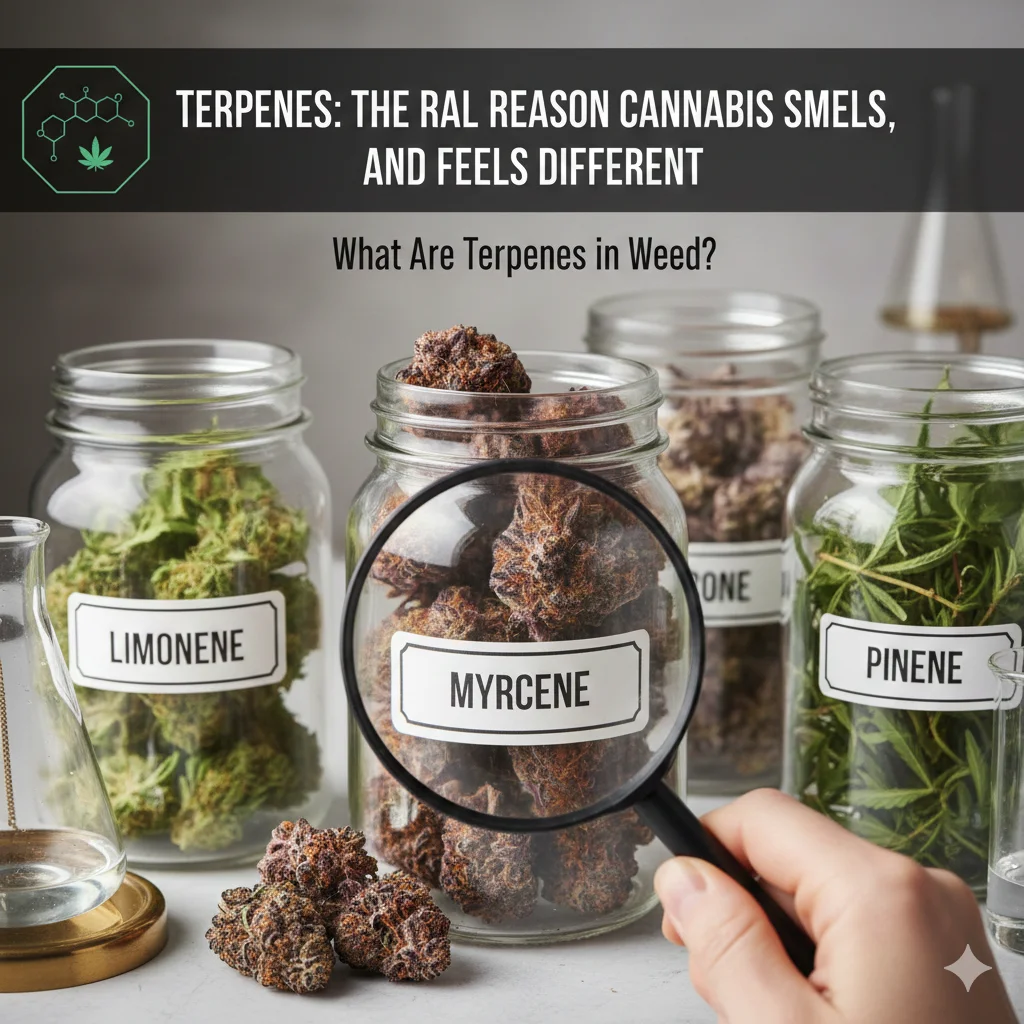
If you’ve ever wondered why two cannabis strains with the same THC percentage can feel completely different, the answer isn’t THC.
Terpenes are the aromatic compounds in weed that control smell, flavor, and how the high actually feels. They’re the reason one strain makes you relaxed and sleepy, while another keeps you alert, social, or focused.
Most experienced cannabis users learn this the hard way by trying dozens of strains and realizing THC alone doesn’t explain the experience. In this guide, I’ll break down what terpenes in weed really are, how they work, and why smart users pay more attention to terpenes than THC.
Terpenes are natural aromatic compounds produced by cannabis and many other plants. They evolved to protect plants from pests and environmental stress, but for humans, they do something much more interesting.
In weed, terpenes:
Cannabis contains over 200 identified terpenes, though most strains are dominated by just a few.
A lot of beginners focus only on THC percentage. Seasoned users don’t.
Two strains can both be 20% THC and feel totally different because:
From real-world experience, terpene profiles are often a better predictor of effects than strain names or indica/sativa labels.
Think of THC as the engine and terpenes as the steering wheel.
They guide:
Here are the terpenes you’ll see most often on lab labels and why they matter.
High-myrcene weed is what people mean by “couch-lock.”
Great for daytime use or stress relief without sedation.
Many users notice less brain fog with pinene-rich weed.
Popular with medical users seeking relaxation without strong intoxication.
Often preferred by users focused on physical comfort.

Terpenes don’t work alone. They interact with cannabinoids in what’s known as the entourage effect.
It’s the idea that:
In practice, this means terpene-rich weed usually feels:
This is why many users prefer full-spectrum products over THC isolates.
“Indica,” “sativa,” and “hybrid” are outdated shortcuts.
Two strains with the same name can have different terpene profiles depending on how they’re grown. That’s why experienced users check lab results instead of trusting strain names.
This tells you far more than the name on the jar.
They do both and more.
Terpenes survive combustion and vaporization, which is why:
Low-terpene weed often tastes flat or harsh.
From experience, terpene-rich cannabis:
Poorly cured or terpene-depleted weed tends to be harsh.
Not all terpenes in weed products come from the plant itself.
High-quality botanical terpenes are widely used in vape carts and concentrates.
Terpenes are fragile. Heat, light, and oxygen destroy them.
This is why fresh, lab-tested weed usually smells stronger.
If you want consistent effects, this approach works better than guessing.
Once you start doing this, your cannabis experience becomes far more predictable.
Terpenes are:
That said, concentration matters. Terpenes should always be properly diluted in cannabis products.
High-quality brands follow strict safety standards.
If you’ve ever felt disappointed by a “high-THC” strain, it probably lacked terpenes.
Terpenes:
Smart buyers don’t ask “how strong is it?”
They ask “what terpenes does it have?”
So, what are terpenes in weed?
They’re the hidden drivers behind aroma, flavor, and effects—and the reason cannabis isn’t a one-size-fits-all experience.
If you want better highs, smoother sessions, and effects that actually match your goals, start choosing cannabis by terpene profile, not hype.
Try our sample pack now
No account yet?
Create an Account