
Terpenes for Rosin: How to Adapt Blends to Rosin, Resin and Distillate Bases

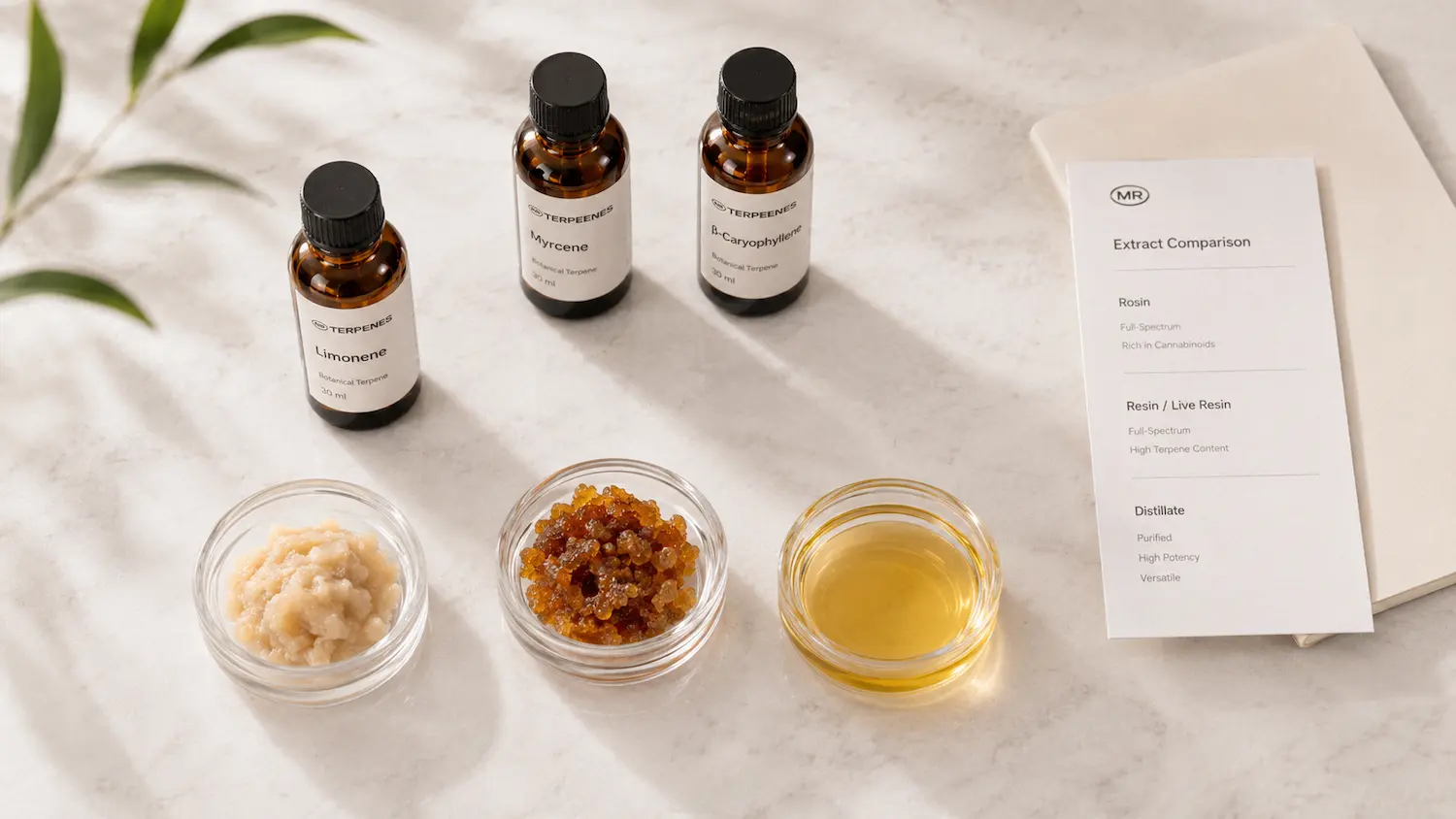
Not every extract base behaves the same way. Rosin, resin, live resin and distillate can each bring a different aromatic profile, texture, intensity and formulation challenge. For brands working with terpene profiles, this means one important thing: the blend should be selected according to the base, not applied as a generic final touch.
This is why terpenes for rosin are often approached differently from terpenes for resin, terpenes for live resin or terpene blends for distillate. Each extract type has its own sensory character, and the right terpene strategy depends on whether the goal is to complement, restore, balance or define the final flavour profile.
For brands, formulators and product developers, understanding these differences can help improve product consistency, avoid overpowering the base and create a more intentional flavour experience.
Why the extract base matters in terpene blending
Terpenes are highly aromatic compounds, so the base they are added to has a direct influence on the final result. A blend that works well with a neutral extract may feel too strong in a more expressive base. A profile that supports rosin may not have the same effect in distillate. A live resin product may already contain enough aromatic complexity, while a distillate product may depend more heavily on the terpene blend to define its identity.
This is the foundation of extract-based terpene blending. Instead of choosing a terpene profile only because it smells appealing on its own, brands need to consider how that profile will interact with the extract base.
Key factors include:
- The natural aroma already present in the extract
- The intensity of the terpene blend
- The intended flavour direction
- The product format
- Batch-to-batch consistency
- Supplier documentation and product suitability
- Storage, handling and stability requirements
The objective is not simply to make the product smell stronger. The objective is to create a more balanced, repeatable and commercially reliable sensory profile.
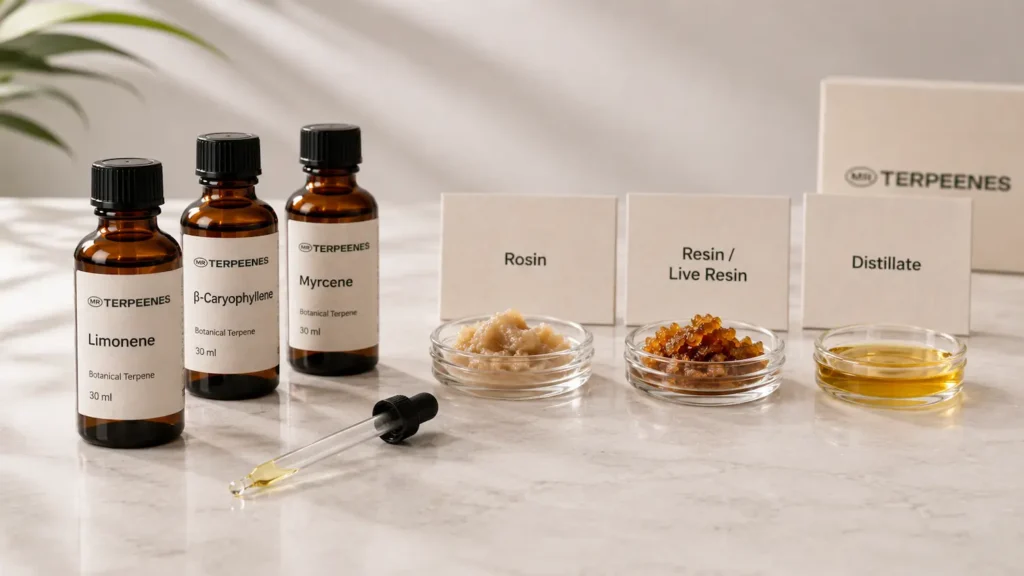
Terpenes for rosin: complementing a naturally expressive base
Rosin is often valued for its natural character. Because of this, terpenes for rosin should usually be selected with restraint and precision. The aim is often to support the existing profile rather than cover it completely.
A rosin base may already have aromatic depth. Depending on the material and production conditions, it can carry earthy, floral, citrus, herbal, piney or fruit-led notes. Adding a terpene profile that is too dominant can make the final product feel less natural or less refined.
For this reason, brands working with rosin often look for terpene blends that enhance the base’s existing character. A citrus-forward profile may help brighten a heavier rosin. A berry or tropical profile may add a more commercial flavour direction. A herbal or botanical blend may preserve a more natural, plant-led identity.
A complementary approach works best
When developing with rosin, the terpene blend should feel like part of the base, not something sitting on top of it. This requires careful sensory testing and a clear understanding of the product goal.
If the rosin already has a strong aromatic profile, the blend may only need to add definition. If the base is more muted, the terpene profile may play a larger role in shaping the final flavour.
The most important point is balance. Rosin products often appeal to customers looking for a more authentic extract experience, so the terpene strategy should respect that expectation.

See blending terpenes at Mr Terpeenes
Rosin, resin and distillate each demand something different from a blend. Browse the range and see which profiles are built for concentrate work.
Terpenes for resin: balancing character and consistency
Resin-based products can vary in aroma depending on the source material, processing method and storage conditions. This makes terpenes for resin useful for brands that want to improve flavour direction and maintain a more consistent product experience across batches.
In some cases, the resin base may already have a strong and distinctive profile. In others, the aroma may need support to feel more complete or commercially appealing. A terpene blend can help standardise the sensory direction without removing the natural character of the extract.
For example, a resin product with sharp, herbal notes may benefit from a smoother fruit or citrus profile. A heavier base may be lifted with brighter top notes. A product line designed around strain-inspired flavours may use terpene profiles to create clearer differentiation between SKUs.
Consistency is the commercial challenge
For resin products, the challenge is often consistency. Natural variation can make one batch feel different from another. A structured terpene approach helps brands manage this variation more effectively.
This does not mean forcing every product to taste the same. It means creating a defined flavour target and selecting terpene profiles that support that target with more control.
Terpenes for live resin: preserving aromatic complexity
Live resin is often associated with a more expressive aromatic profile. Because of this, terpenes for live resin should be chosen carefully. The goal is usually not to mask the base, but to preserve and refine its complexity.
A live resin base may already contain bright, fresh or layered aromatic notes. Adding a generic terpene blend can flatten that complexity if it is not chosen well. The best approach is to identify what the base already offers and then select a terpene profile that supports the intended direction.
A citrus blend may highlight freshness. A tropical blend may create a more modern and accessible flavour. A gas, pine or herbal profile may reinforce a more traditional extract-led identity. A fruit-led blend may make the product feel more approachable for a wider audience.
The blend should not overpower the base
Live resin products often depend on aroma as part of their value proposition. If the terpene blend becomes too dominant, the final profile may lose the nuance that makes the base attractive in the first place.
For brands, this makes testing especially important. The blend should be assessed in the actual base, not only from the bottle. A terpene profile can smell excellent on its own but behave differently once combined with a complex extract.
Supply your concentrate line with Mr Terpeenes
Concentrate production consumes terpenes faster than small-batch work suggests. Discuss bulk volumes and repeat supply so blending never waits on stock.
Terpene blends for distillate: defining the flavour identity
Distillate is typically more neutral in sensory character than rosin, resin or live resin. This makes terpene blends for distillate particularly important. In many distillate-based products, the terpene profile does more of the work in defining the flavour and aroma experience.
For brands, this can be an advantage. A neutral base gives more flexibility to create a clear product identity. Citrus, berry, dessert, tropical, mint, herbal or strain-inspired profiles can be used to build a more distinctive commercial range.
However, this flexibility also creates responsibility. Because the base may not contribute as much aromatic complexity, the blend needs to be chosen with care. A weak profile can feel flat. An overly strong profile can feel artificial or unbalanced.
Distillate needs structure
When working with distillate, brands should think in terms of flavour architecture. Top notes create the first impression. Middle notes provide the body of the profile. Base notes help create depth and finish.
A well-structured terpene blend can make a distillate-based product feel more complete and recognisable. This is especially useful for brands building multiple product lines, where each SKU needs a clear sensory difference while still feeling part of the same brand family.
How to choose terpenes by extract type
Knowing how to choose terpenes by extract type starts with understanding the role of the base. The same terpene blend can behave differently depending on whether it is paired with rosin, resin, live resin or distillate.
Start with the base profile
Before choosing a blend, brands should assess the natural aroma of the extract. Is it neutral, earthy, sharp, fruity, floral, herbal or heavy? Does it need support, balance or a stronger flavour direction?
This first evaluation helps avoid mismatched profiles. A delicate rosin may need a lighter touch. A neutral distillate may need a more structured blend. A complex live resin may need a profile that enhances rather than competes.
Define the commercial flavour goal
The terpene blend should match the product’s positioning. A premium extract product may need a more refined botanical profile. A lifestyle-led product may benefit from fruit, citrus or tropical notes. A strain-inspired range may need more specific aromatic identities.
Clear positioning makes it easier to choose a profile that supports both the formula and the brand.
Test in the real formulation
Terpene profiles should always be evaluated in the intended base. Smelling the blend on its own is useful, but it does not tell the full story. The final sensory result depends on the extract, product format, storage conditions and other formulation choices.
Small-batch testing helps brands compare different directions before committing to larger production.
Document the process
Consistency depends on documentation. Brands should record the blend used, batch reference, base type, test notes, sensory observations and any relevant handling information.
This is especially important for product teams managing multiple SKUs or preparing to scale.
Extract-based terpene blending for commercial brands
For commercial brands, extract-based terpene blending is not only a technical decision. It is part of product strategy.
A terpene profile can help define whether a product feels fresh, sweet, botanical, bold, classic, fruit-led or premium. It can support product differentiation, improve repeat purchase recognition and make a range feel more consistent.
This matters because consumers do not experience products only through potency, format or packaging. They also remember flavour. A consistent aroma and flavour profile can become part of the product identity.
For brands working across rosin, resin, live resin and distillate, the strongest approach is usually not to use one blend across everything. It is to build a terpene strategy that reflects the characteristics of each base.
Why brands work with Mr Terpeenes for extract-specific terpene profiles
Choosing the right terpene profile requires more than browsing a flavour list. Each extract base behaves differently, which means brands need reliable blends, clear product information and a supplier that understands how aroma, texture and base character influence the final result.
This is where Mr Terpeenes brings value to extract-based product development. With a specialised catalogue of terpene profiles for flavour testing, formulation and commercial refinement, Mr Terpeenes helps brands select blends that match the specific needs of rosin, resin, live resin and distillate applications.
Rosin often benefits from a complementary profile that respects its natural character. Resin may need balance and consistency across batches. Live resin requires careful blend selection to preserve aromatic complexity. Distillate, by contrast, often relies more heavily on terpene blends to define the final flavour identity.
From citrus and fruit-led profiles to more complex botanical and strain-inspired blends, Mr Terpeenes gives product teams a practical starting point for building more controlled, recognisable and repeatable flavour experiences.
For brands developing extract-based products, the strongest results come from matching the terpene blend to the base from the beginning. When aroma, extract type and commercial positioning work together, the final product feels more intentional, more consistent and better aligned with the brand’s sensory identity.