

White Gushers and Grape Ape: Two Fruity Terpene Strain Profiles Explained

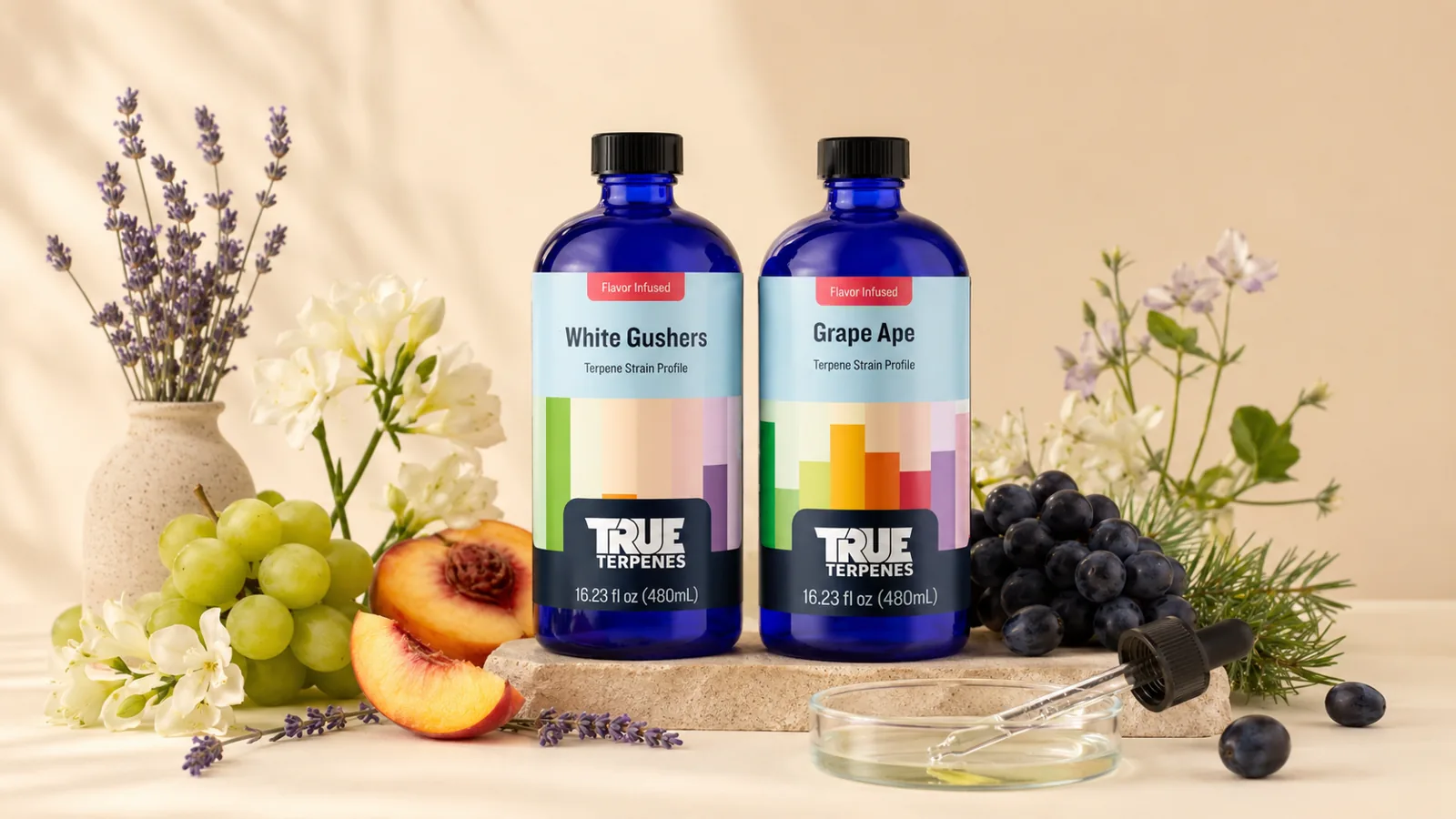
Fruit-forward profiles are some of the most popular and the most difficult to get right. Done well, they feel juicy, sweet and instantly recognisable; done badly, they collapse into a flat, sugary mess. Two fruity terpene strain profiles show just how much variety the category can hold: White Gushers, with its candied, tropical-leaning sweetness, and Grape Ape, with its deep, dark, grape-forward richness.
This guide looks at both fruity terpene strain profiles from a practical blending angle — what they smell like, how they taste in a finished formulation, what they pair with, and how to use them without losing balance. It is written for formulators, brands and product developers, not as a science summary, and makes no medical or effect claims.
What makes a terpene profile “fruity”?
Fruity is less a single note and more a family of impressions built from several terpenes working together. A convincing fruit profile usually balances three things: a bright, lifted top (often citrus or berry), a sweet, rounded middle, and just enough depth or contrast underneath to stop it from reading as one-dimensional sugar.
Strain-specific terpene profiles like White Gushers and Grape Ape are useful because they are recognisable targets. See our guide to strain-specific terpene profiles for the wider picture. Most people already have a mental image of “gushers” candy or ripe black grapes, which makes them easier to build towards and easier to judge once blended.
White Gushers terpene profile
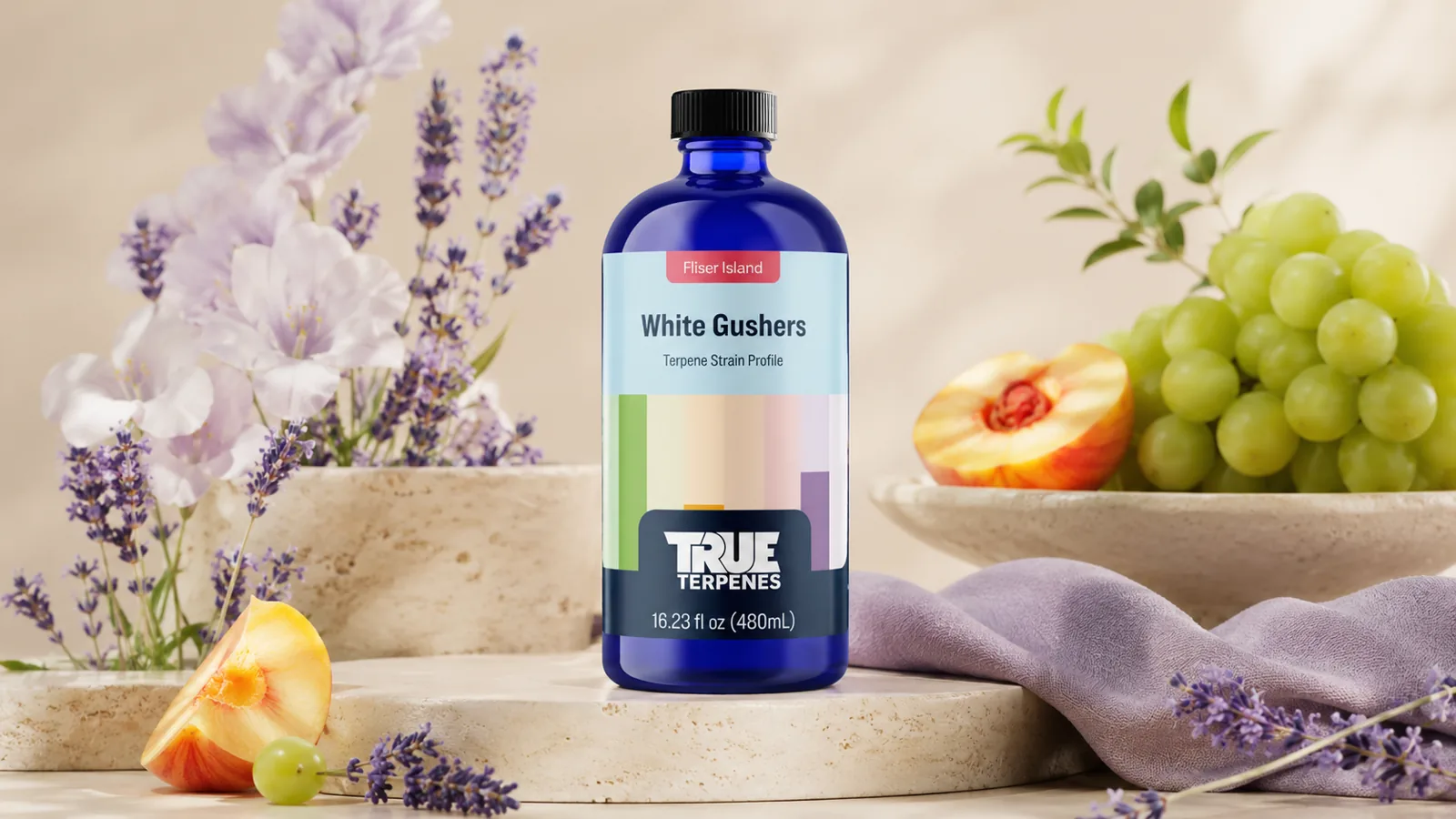
The White Gushers terpene profile is sweet, fruity and candy-like, leaning tropical. It is the kind of profile that reads as fun and approachable rather than serious, with a bright, juicy character that sits towards the top of a blend.
Typical White Gushers aroma and flavour notes include:
- Candied fruit — a sweet, sugary, sweet-shop impression.
- Tropical notes — soft hints of mango, melon or peach.
- Berry brightness — a lifted, juicy top note.
- Creamy sweetness — a smooth, rounded body that softens the edges.
- Light citrus lift — keeping the whole profile fresh rather than cloying.
White Gushers works as a top-to-middle profile: it leads with brightness and sweetness, so it needs a little structure underneath to keep it from feeling thin. The main risk is over-sweetening — push the candy note too far and the profile loses definition and starts to feel artificial.
Best pairings for White Gushers
- Limonene — reinforces the citrus lift and keeps the sweetness fresh. See the limonene terpene profile for how that brightness behaves.
- A touch of caryophyllene — a small amount of spice adds contrast and stops the candy note from feeling flat. Our caryophyllene terpene profile covers how to dose it carefully.
- Soft floral notes — a hint of floral softness rounds the profile and makes it feel more refined.

Browse fruit-forward profiles at Mr Terpeenes
White Gushers and Grape Ape sit inside a much wider fruit-forward selection. See what else is stocked before narrowing your shortlist to two.
Grape Ape terpene profile
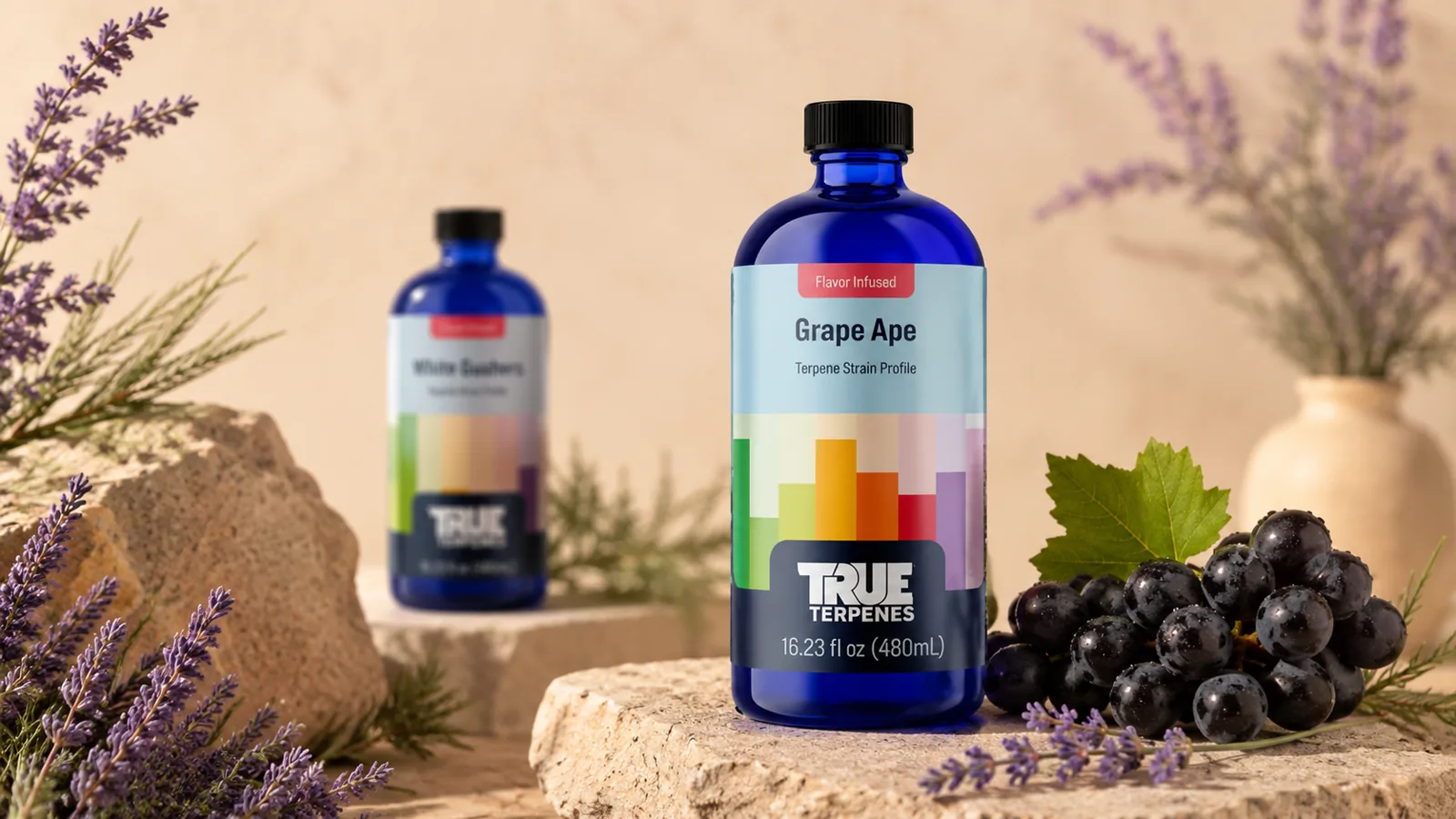
Where White Gushers is bright and candied, the Grape Ape terpene profile is deep, dark and grape-forward. It is richer and more grounded, with a sweet but earthy character that reads as ripe black grapes rather than fruit candy.
Typical Grape Ape aroma and flavour notes include:
- Dark grape — the defining sweet, jammy note.
- Berry depth — fuller and deeper than a bright top-note berry.
- Earthy undertones — a grounded, musky base that gives the profile weight.
- Subtle floral edge — a soft, slightly perfumed lift over the fruit.
- Sweet but rounded — sweetness with structure rather than sugar on its own.
Grape Ape behaves as a middle-to-base profile. The grape and berry sit in the body of the blend while the earthy undertones anchor it, which is why it feels so much heavier and more “serious” than a candy profile. The main risk here is the opposite of White Gushers: lean too far into the earthy base and the fruit can turn dull or muddy.
Best pairings for Grape Ape
- Myrcene — reinforces the earthy, musky base and makes the grape feel fuller. See myrcene terpene effects for how those notes sit underneath fruit.
- Limonene — a small citrus lift brightens the top and stops the profile from feeling heavy.
- Linalool or floral notes — play up the natural floral edge for a more perfumed, premium feel.
Buy fruity profiles in bulk from Mr Terpeenes
Fruit-forward blends move quickly once a product lands. Discuss production volumes, repeat supply and lead times before your first batch sells through.
White Gushers vs Grape Ape: how they differ
Both are fruity, but they sit at almost opposite ends of the fruit spectrum. A quick comparison:
- Sweetness style — White Gushers is candied and bright; Grape Ape is jammy and deep.
- Position in the blend — White Gushers leads from the top; Grape Ape sits in the body and base.
- Mood — White Gushers feels fun and playful; Grape Ape feels rich and grown-up.
- Main risk — White Gushers can over-sweeten; Grape Ape can turn muddy.
- Best contrast note — White Gushers wants a little spice or citrus; Grape Ape wants a citrus lift or floral edge.
Used together in a range, they cover a lot of ground: one light and playful, one deep and premium. That contrast is exactly why they make a strong pair on a menu or product line.
Blend tips for fruity terpene strain profiles
A few practical tips apply to almost any fruity terpene strain profile, including these two:
- Protect the brightness. Fruity profiles live or die on their top note — keep a citrus or berry lift in play.
- Add contrast, not just sugar. A small amount of spice, earth or floral gives sweetness something to push against.
- Start low on the heavy notes. Earthy and musky terpenes can take over a fruit profile fast.
- Keep batch notes. Record every ratio so a good fruity blend becomes repeatable.
- Test in the final application. Fruit profiles can read very differently from the bottle to the finished product.
When you are ready to turn these profiles into finished formulations, our mixing terpenes guide is the natural next step, and the terpene mixing chart makes it easier to see at a glance which notes lift or weigh down a fruity blend.
Two takes on fruit, one shelf
Picture the two of them side by side on a menu. White Gushers practically winks at you — bright, candied, the profile someone reaches for when they want a bit of fun. Grape Ape never raises its voice; it sits back, dark and velvety, the one that reads as considered and grown-up. Neither is the “right” answer. They are built for different moods, and the sharpest ranges hand a customer both doors and let them choose.
So before you reach for the sugar, decide what you actually want the blend to say — a playful first impression, or a slow, premium finish. Get that one decision right, and these two profiles all but mix themselves.
Building a fruity terpene range? Explore the Mr Terpeenes range, or contact our team for support with custom terpene blends.