


Importing Terpenes into the UK and EU: Documents, Labels and Buyer Checks

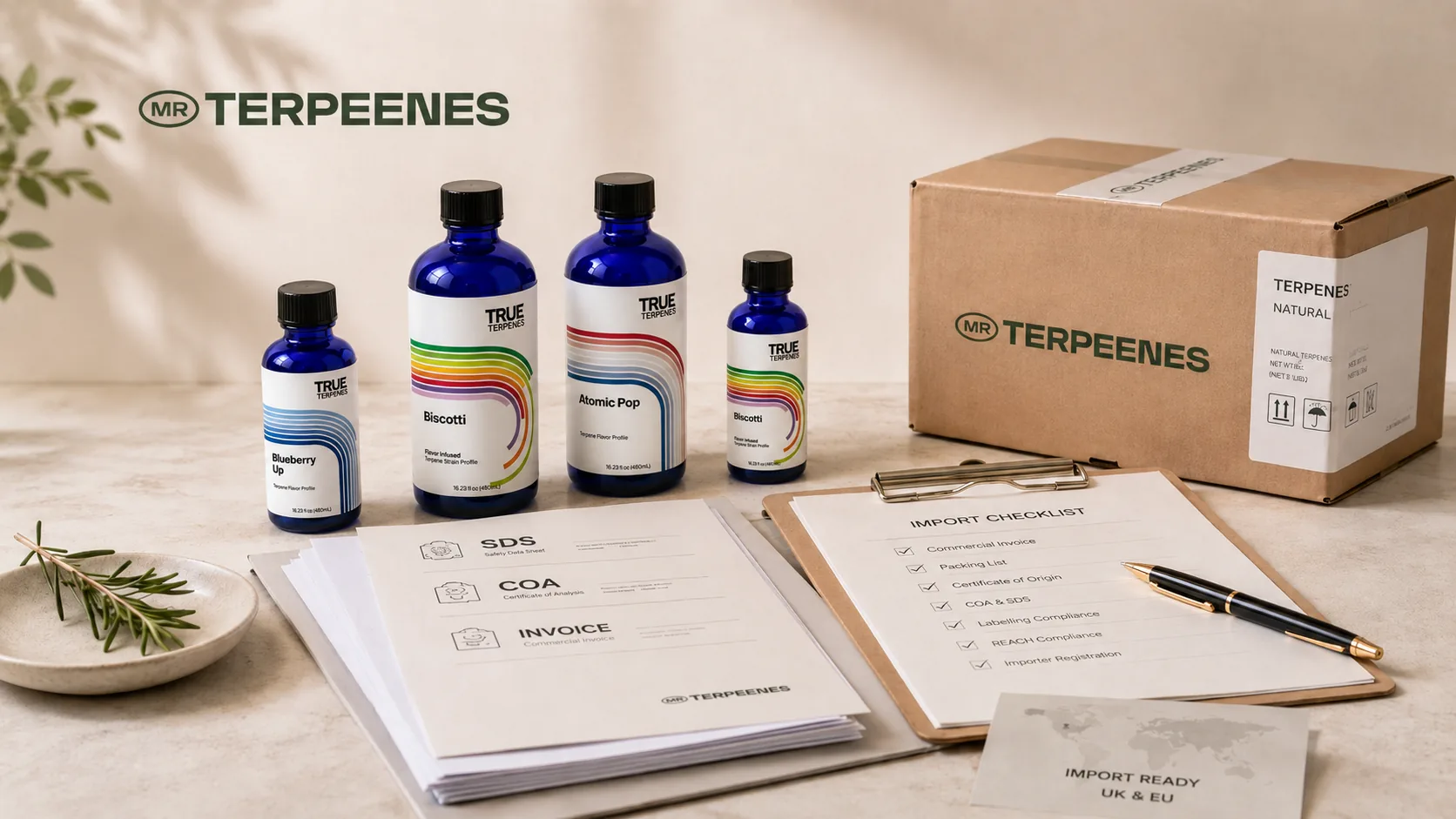
For serious buyers, importing terpenes is rarely just about price or aroma profile. The strength of an order often comes down to something less glamorous: paperwork. Documentation, labelling, batch traceability and shipping readiness can be the difference between a clean, on-time delivery and a frustrating delay at the border. If you are responsible for sourcing for a brand, a formulation team or a growing manufacturing operation, those details matter as much as the product in the bottle.
This guide walks through the practical checks that experienced buyers make before importing terpenes into the UK or EU. It is written from a buyer’s point of view, not a legal one, so you can approach your next order with more confidence and fewer surprises.
A quick note: import requirements can vary depending on your destination country, the product’s classification, your intended use case and the specific shipment details. This article is general guidance, not legal or customs advice. Always confirm exact requirements with your logistics provider, customs broker or the relevant authority.
Why documentation matters when importing terpenes into the UK
Terpenes are used across technical, aromatic, flavour, formulation and product-development settings. Because the same compound can be destined for very different applications, buyers need clarity before committing to an order — and so do carriers and customs.
Good documentation does several things at once. It builds trust between buyer and supplier, supports batch traceability, gives shipping partners the information they need, and signals that you are working with a professional operation rather than a one-off reseller. When importing terpenes into the UK, that paper trail is often what keeps a shipment moving smoothly and gives you a clear record to refer back to for repeat orders.
Key terpene shipping documents buyers should ask for
Depending on your order size, product type and route, you may need to review or request a range of terpene shipping documents. Commonly these include:
- Commercial invoice — confirms the transaction, value and parties involved.
- Packing list — details what is physically in the shipment.
- SDS/MSDS — safety data covering handling, storage and transport.
- Certificate of Analysis (COA) — batch-specific product information.
- Batch number or product identifier — links the goods to their records.
- Product label information — confirms identity and key details.
- Shipping terms and delivery information — clarifies responsibilities and timing.
- Commodity/HS code information — where applicable for classification.
Not every document is required for every order, route or country. Requirements vary by destination, product type, classification and carrier, so treat this as a checklist to discuss with your supplier and logistics partner rather than a fixed legal list.

See UK-held terpene stock at Mr Terpeenes
Importing is one route; buying from UK-held stock is another. Browse what is already in the country before taking on paperwork you may not need.
SDS, MSDS and why they matter for terpene buyers
A Safety Data Sheet (SDS) — sometimes still referred to as an MSDS — is a standardised document that describes a product’s properties and how to handle it safely. In simple terms, it tells you and your team how to store, transport and work with the product responsibly.
For terpene buyers, this isn’t a box-ticking exercise. SDS/MSDS documentation helps you plan storage, brief your handling staff, satisfy carrier requirements and keep your workspace safe. If you are scaling up order volumes, having this information on file from the start saves time later. For a deeper walkthrough, see our terpene SDS and MSDS guide.
COA checks: how to verify the terpene batch you are buying
A Certificate of Analysis gives you a window into the specific batch you are buying. A useful COA can show:
- Product identity — confirming what the product actually is.
- Batch reference — tying results to the exact lot you receive.
- Purity or composition information — what’s in the bottle.
- Testing date or batch-specific details — so you know the data is current and relevant.
- Supplier traceability — a clear chain back to source.
Quick COA buyer checklist
- Does the COA match the batch number on your product and invoice?
- Is the product name on the COA the one you ordered?
- Is there a testing date or batch reference, not just a generic sheet?
- Can the supplier provide the COA before you order, not only after?
If a supplier can answer these without hesitation, that’s a strong signal. For a more detailed framework, our terpene COA checklist breaks down what to look for batch by batch.
Terpene labels and documentation: what buyers should review
Clear labelling is one of the simplest ways to confirm you have received what you paid for. A good label helps you verify product identity, batch reference, supplier details and any handling or hazard information that applies.
Keep your review practical: check that the label, the COA, the SDS and the commercial invoice all describe the same product and batch. Inconsistencies between these are worth querying before dispatch rather than after delivery. Labelling rules themselves can differ by market and use case, so confirm specifics with the relevant authority — but as a buyer, internal consistency across your terpene labels and documentation is always a fair thing to expect.
Importing terpenes into the EU: what changes for buyers?
If you import terpenes EU-side, a few additional considerations come into play. Buyers may need to think about destination-country requirements, customs clearance procedures, the language documentation is provided in, product classification, individual carrier rules and overall supplier readiness.
The practical takeaway is that EU imports often involve more moving parts than a purely domestic order, so it helps to confirm early that your supplier can provide documentation suited to your destination market. Buyers exploring options to buy terpenes in Europe will find that a supplier already set up for cross-border orders removes a lot of friction.
Skip the import paperwork with Mr Terpeenes
Bulk supply from within the UK and EU removes most of the documentation burden described above. Discuss volumes and delivery for your production schedule.
UK buyer checks before placing a terpene order
Before importing terpenes into the UK, run through this short due-diligence list:
- Is the supplier experienced with UK and EU buyers?
- Can they provide SDS/MSDS on request?
- Can they provide a COA or batch information?
- Are product labels clear and consistent?
- Do the shipping documents match the goods and invoice?
- Is the product suitable for your intended use?
- Are you clear on who is responsible for customs and import duties?
- Does the supplier offer support before you order, not just after?
A supplier who welcomes these questions is usually one worth building a relationship with.
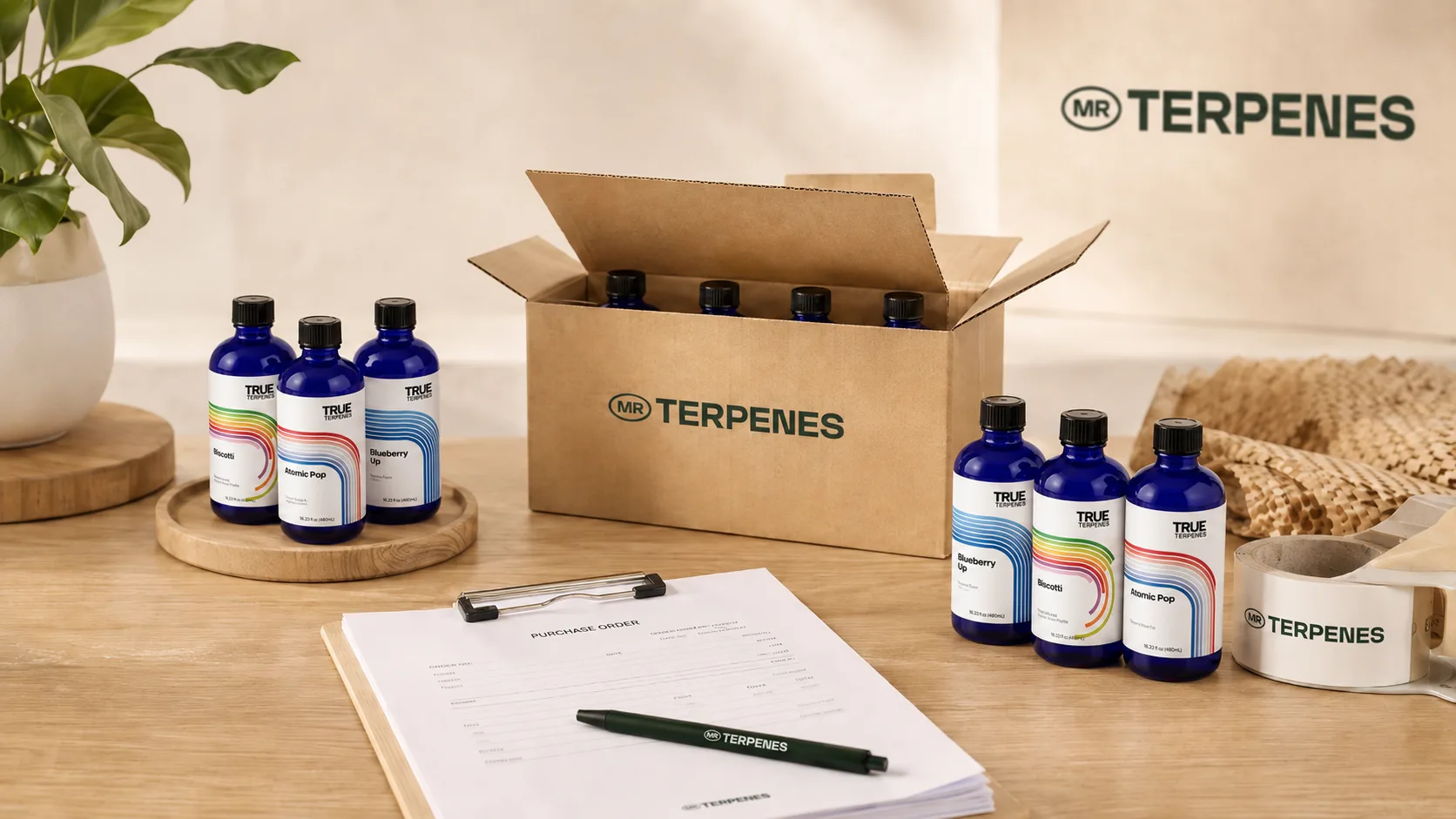
Common mistakes when importing terpenes
Even experienced teams slip up. The most frequent mistakes include:
- Choosing a supplier on price alone.
- Not checking the SDS/MSDS before ordering.
- Failing to ask for a COA or batch data.
- Ignoring inconsistencies between labels, documents and invoices.
- Assuming every terpene product is documented the same way.
- Overlooking shipping restrictions or carrier-specific requirements.
- Waiting until a shipment is already delayed to chase the paperwork.
Most of these are easy to avoid simply by asking the right questions up front.
Why sourcing from a UK/EU-focused terpene supplier can reduce risk
Buyers who need more than a single bottle benefit from working with a supplier built around their requirements. A UK/EU-focused terpene supplier like Mr Terpeenes tends to offer better documentation readiness, clearer batch and product information, and dependable support for both UK and EU customers — which makes repeat purchasing far more straightforward.
For B2B buyers, white label brands and manufacturers scaling into larger orders, that operational clarity matters. We won’t pretend documentation removes every variable in international shipping, but sourcing from a specialist that understands buyer concerns around traceability and labelling genuinely reduces avoidable risk. Buyers who also work with cannabis derived terpenes for UK and EU buyers may have extra product-specific checks, which makes a documentation-ready supplier even more valuable.
Final buyer checklist before importing terpenes
- Confirm your intended use.
- Confirm the product type.
- Ask for the SDS/MSDS.
- Ask for the COA or batch information.
- Review label details for consistency.
- Confirm the shipping route and delivery terms.
- Check who holds import and customs responsibility.
- Keep all documents organised before dispatch.
Make your paperwork the easiest part of the order
Importing terpenes into the UK and EU becomes far less stressful when the documentation is in order before you place an order — not after a shipment stalls. Strong SDS/MSDS records, batch-specific COAs, consistent labels and clear shipping terms turn a complex process into a routine one, and they give you a record you can rely on for every future purchase.
Looking to buy terpenes in Europe or the UK with clearer product documentation and supplier support? Explore the Mr Terpeenes range, or buy terpenes UK and contact the team at Mr Terpeenes before placing your next order.