
Custom Merchandise for Cannabis and CBD Brands: Apparel, Headwear and Accessories

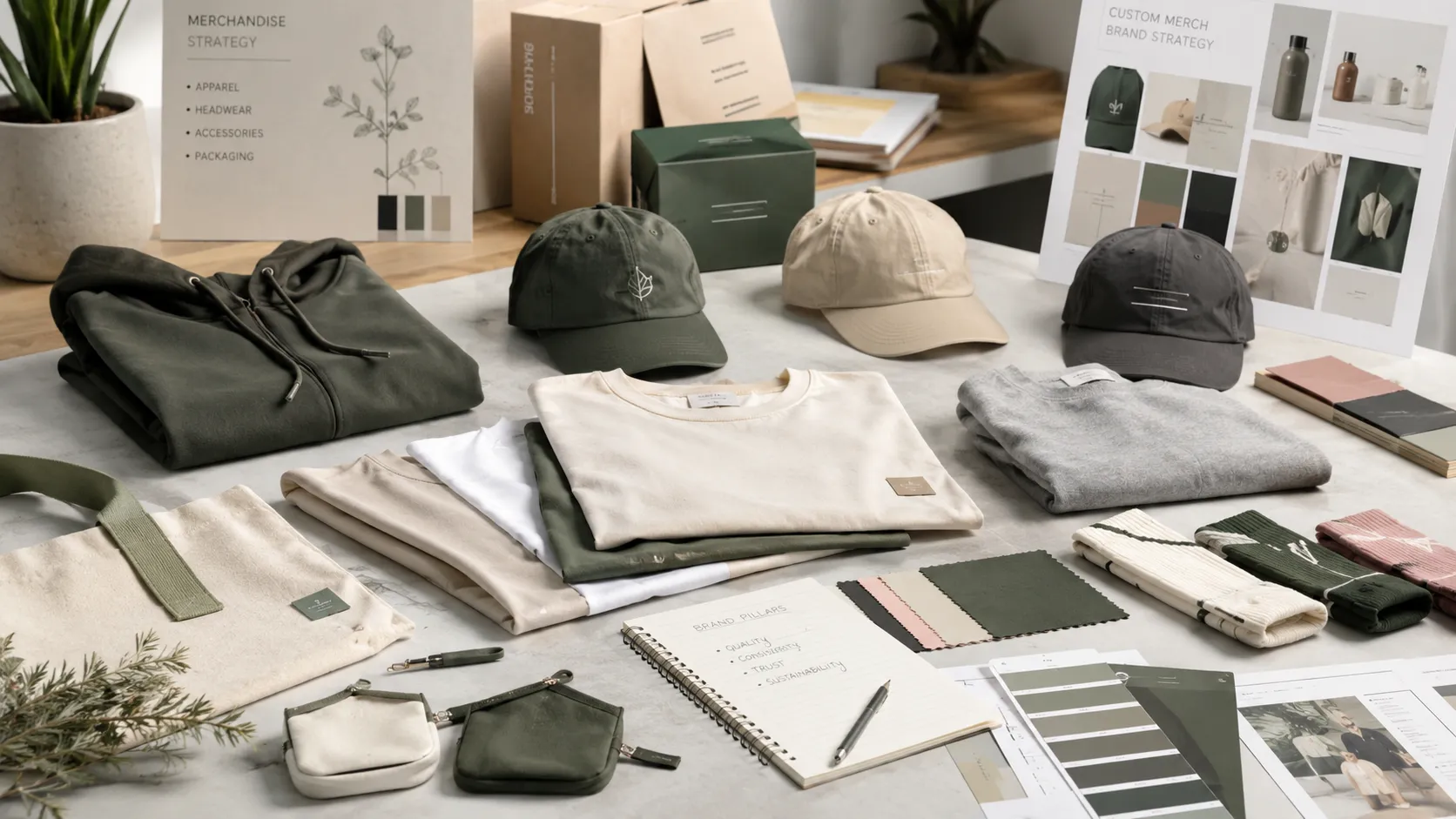
Custom merchandise is often treated as a simple add-on: a logo dropped onto a t-shirt and ordered in a hurry before an event. For cannabis and CBD brands, that approach leaves value on the table. Done well, custom merchandise for cannabis brands supports retail presence, staff uniforms, event visibility, loyalty campaigns, product drops and long-term brand recognition — all from the same collection.
The difference between merchandise that works and merchandise that sits in a stockroom usually comes down to planning. This guide walks brand owners, marketing managers and wholesale buyers through how to plan a range across apparel, headwear and accessories before choosing individual products, so every item earns its place.
Why merchandise matters for cannabis and CBD brands
In a category where advertising options are limited, branded merchandise becomes one of the most reliable ways to stay visible. A well-made piece of cannabis brand merchandise travels far beyond the point of sale.
- Brand visibility beyond the product itself. A cap or hoodie is seen in everyday settings where a product listing never appears.
- Retail, events and community touchpoints. Merchandise gives customers something to hold, wear and remember at trade shows, pop-ups and in store.
- Staff, partners and wholesale presentation. Consistent apparel makes a team look established and gives stockists a reason to trust the brand.
- Quality perception and customer trust. The weight of a garment and the finish of a print quietly signal how much care sits behind the wider business.
The reverse is also true: thin, poorly printed items work against you. Low-quality merchandise reads as a low-quality brand, so it is usually better to release fewer, better products than a large range that feels cheap.
Start with the purpose of the collection
Before comparing fabrics or prices, define what the collection is for. The purpose shapes every decision that follows — from product mix to quantities. Most cannabis, CBD and lifestyle brands are planning merchandise for one or more of these goals:
- Staff uniforms — consistent apparel for shops, stands and warehouses.
- Event giveaways — lower-cost items handed out at expos and launches.
- Retail merchandise — pieces sold as products in their own right.
- VIP or wholesale gifting — premium items for key accounts and partners.
- Limited drops — small, collectible runs that create urgency.
- Loyalty rewards — merchandise earned through repeat purchases.
- Launch campaigns — apparel that supports a new product or rebrand.
A giveaway cap and a retail hoodie are planned very differently. Naming the goal first stops a collection from drifting into a mix of items that never quite fit together.
See the merchandise range at Mr Terpeenes
Merchandise works hardest when it suits the audience rather than the logo. Browse the white-label range and see which items fit the brand you are building.
Building a balanced merchandise range
A strong range is layered rather than flat. Think in three tiers: core apparel that carries the brand year-round, seasonal or premium pieces that add perceived value, and smaller accessories that widen reach and support bundles. Together these cover different price points, use cases and audiences without overwhelming production.
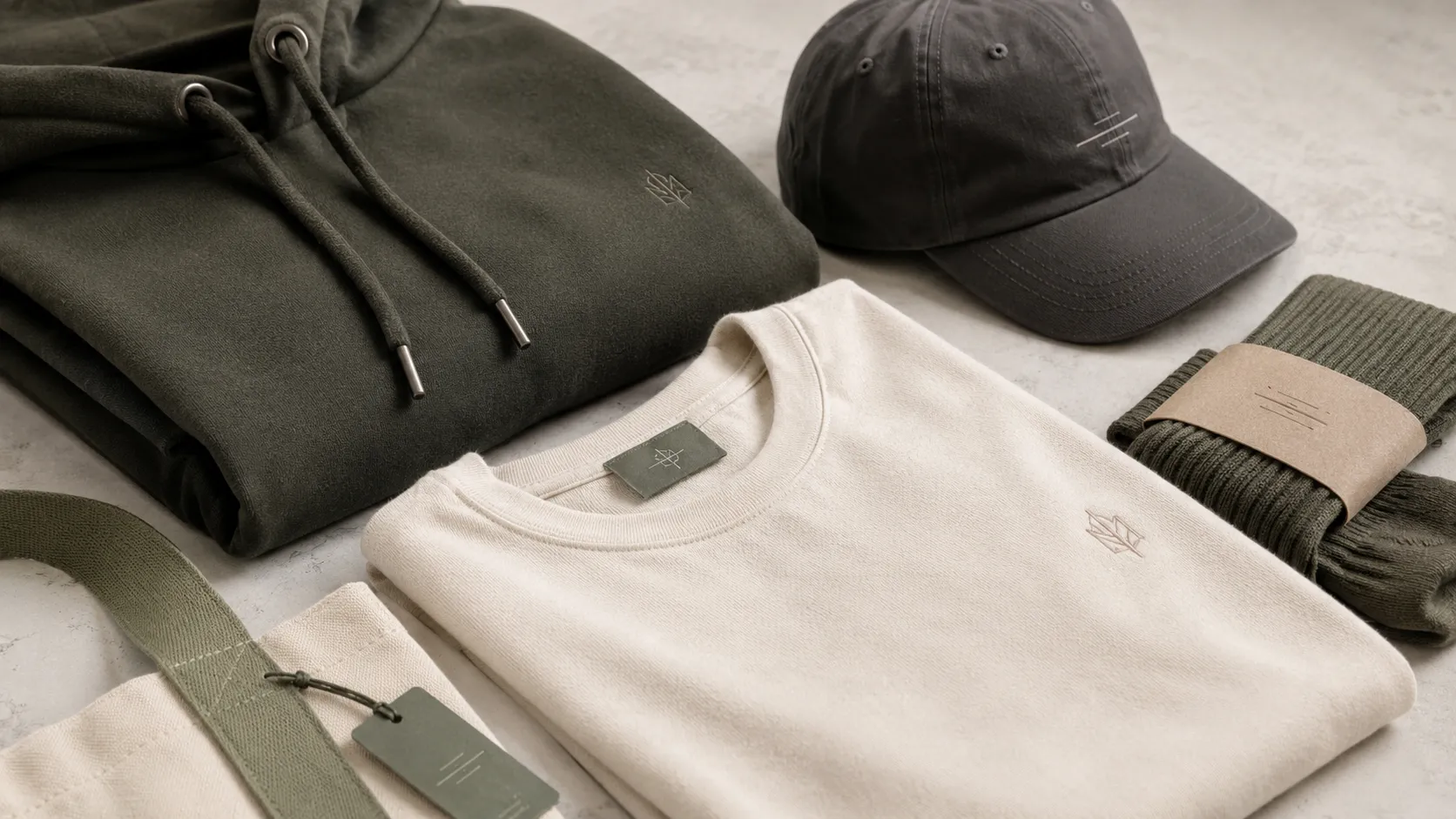
T-shirts and polos as everyday brand basics
T-shirts and polos are the workhorses of any collection. They suit staff floors, events, casual retail and everyday visibility, and they sit at an accessible price point that makes larger runs realistic. Polos in particular give a more uniformed, professional look for retail and trade teams. Explore formats and fits for custom t-shirts and polos when you map out your core layer.
Hoodies and crewnecks for premium comfort and seasonal drops
Heavier garments carry more perceived value, which makes them ideal for retail sales, premium staff apparel and colder-season campaigns. Hoodies and crewnecks are also the natural home for limited collections, where a higher price and a more considered design are expected. A single well-made hoodie often does more for brand image than several lighter pieces. Weight, fit and finish options for custom hoodies and crewnecks are worth reviewing early, as they influence budget the most.
Headwear for events, retail and everyday visibility
Caps and beanies are among the strongest everyday items in any range. They are easy to wear, one size fits most, and they keep the brand at eye level in almost every setting. Because headwear travels well and photographs well, it works equally hard as a giveaway, a retail product and a team essential. Options for branded caps and custom headwear add high-visibility, low-friction pieces to the collection.
Socks and accessories for lower-cost add-ons
Smaller items round out a range and lower the barrier to entry. Socks, pouches, tote bags and lanyards are inexpensive per unit, which makes them ideal for bundles, event giveaways and retail upsells at the till. They also give loyalty schemes affordable rewards to hand out. A line of custom socks and accessories lets you add volume and variety without a large increase in budget.
Choosing products that match the brand
Every item should feel like it belongs to the same brand. Before confirming products, check each choice against a few questions:
- Audience and positioning. Is this collection for retail customers, trade partners, staff, or all three?
- Premium vs entry-level feel. A wellness brand aiming upmarket needs heavier fabrics and subtler branding than a festival-focused label.
- Colour palette. Keep to the brand’s core colours so pieces photograph and merchandise together.
- Fabric weight and quality. Garment weight is the single clearest signal of quality to the person wearing it.
- Print or embroidery placement. Decide where the mark sits and how large it should be.
- Overall tone. Should the range feel subtle and lifestyle-led, or bold and event-focused? Consistency matters more than any single item.
Branding details that make merchandise look professional
The details are what separate branded apparel that looks bought-in from merchandise that looks designed. Small decisions add up:
- Logo placement — a smaller, well-positioned mark usually reads as more premium than a large chest print.
- Embroidery vs print — embroidery suits caps, polos and premium apparel; print suits detailed or full-colour artwork.
- Woven labels and swing tags — inexpensive touches that make retail pieces feel finished.
- Packaging — how an item arrives shapes the first impression, especially for gifting and drops.
- Colour consistency — match thread and print colours across every product.
- Restraint — avoid overcrowded designs and too many logos; keep the piece wearable so people actually choose to wear it.
Build your merch line with Mr Terpeenes
Quantities, decoration method and delivery dates shape what is worth producing. Share the plan and the merchandise programme can be costed before you commit.
Planning quantities, sizes and launch use cases
Even a well-designed collection can stumble at the ordering stage. Plan the practical side alongside the creative one:
- Size curves — order to a realistic spread of sizes rather than an even split; XS and XXL rarely sell in equal numbers to M and L.
- Colour variants — start with fewer colours and expand once you know what sells.
- Event deadlines — work backwards from the launch or expo date, allowing time for sampling and production.
- Minimum order quantities — check MOQs early, as they influence which products are viable.
- Sampling before production — approve a physical sample before committing to a full run.
- Stock planning — hold appropriate levels for wholesale, events or retail so you are not caught short or overstocked.
- Reordering bestsellers — keep proven pieces in stock rather than constantly launching new ones.
How cannabis and CBD brands can use merchandise commercially
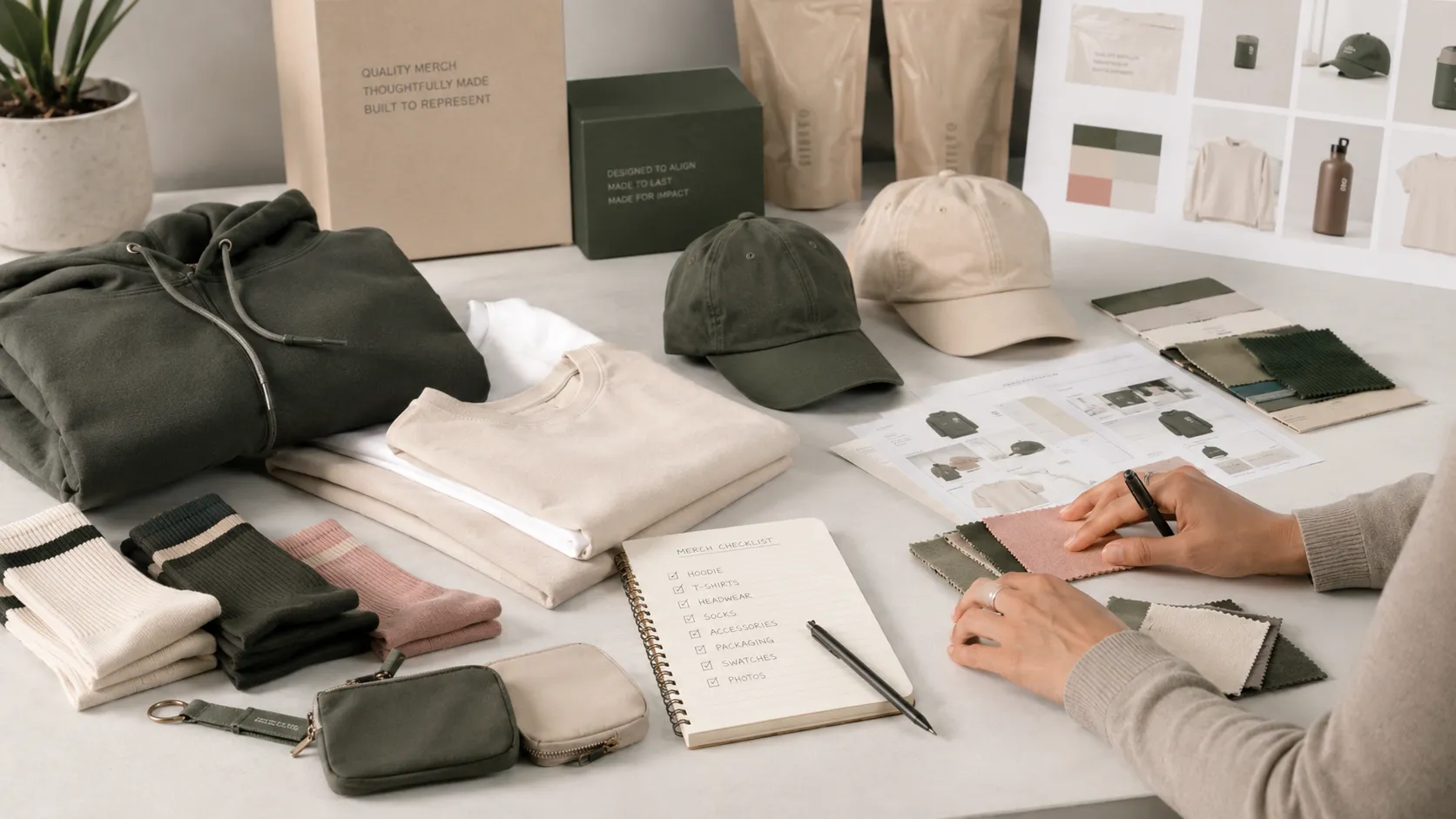
Once a collection exists, it can work across the whole business. The same range supports event stands and retail shelves, staff and ambassador kits, and product bundles that lift average order value. It gives loyalty campaigns tangible rewards, anchors seasonal launches, strengthens wholesale presentations to stockists, and provides ready-made pieces for brand collaborations. Merchandise planned this way becomes an ongoing asset rather than a one-off cost.
Common mistakes to avoid
- Treating merchandise as an afterthought instead of part of the brand.
- Choosing products on price alone and ending up with items that feel cheap.
- Using too many colours or logos across the range.
- Ignoring fit and sizing, so pieces go unworn.
- Skipping samples and discovering quality issues after production.
- Forgetting packaging and presentation, especially for gifting and drops.
- Creating items people simply would not choose to wear.
Planning your merchandise collection with Mr Terpeenes
Strong custom merchandise for cannabis brands starts with a clear plan, not a product list. Mr Terpeenes supports cannabis, CBD and lifestyle brands with custom merchandise across apparel, headwear and accessories — from everyday basics to premium drops — with consistent branding throughout.
The best starting point is to define four things: the purpose of the collection, the product mix, the branding approach and the launch timeline. With those in place, choosing products becomes straightforward.
FAQs
What is the best merchandise for cannabis brands?
There is no single best product — the right choice depends on the collection’s purpose. For everyday visibility and value, t-shirts, hoodies and headwear tend to perform best. For giveaways and bundles, socks and small accessories are more cost-effective. A balanced range usually combines core apparel with a few accessories.
Should cannabis and CBD brands start with apparel or accessories?
Most brands start with core apparel such as t-shirts, hoodies and caps, because these carry the brand best and suit staff, events and retail alike. Accessories are then added to support bundles, giveaways and loyalty rewards once the core pieces are in place.
Are hoodies and caps good for CBD brand merchandise?
Yes. Hoodies offer high perceived value and suit retail and seasonal drops, while caps are easy to wear and highly visible in everyday settings. Together they cover both premium and accessible price points, which makes them a reliable foundation for a CBD merchandise range.
How can merchandise support events and wholesale sales?
At events, branded apparel and headwear increase visibility on stands and give visitors something to take away. For wholesale, a consistent, well-made collection helps present the brand professionally to stockists and can be offered as sample kits or gifting for key accounts.
What should brands prepare before ordering custom merchandise?
Before ordering, prepare your logo files and brand colours, decide on product mix and quantities with a realistic size curve, set a budget and launch deadline, and request samples to check quality. Clear artwork and clear goals make production far smoother.