Wedding Cake Terpene Profile: Sweet, Creamy and Gas Notes Explained

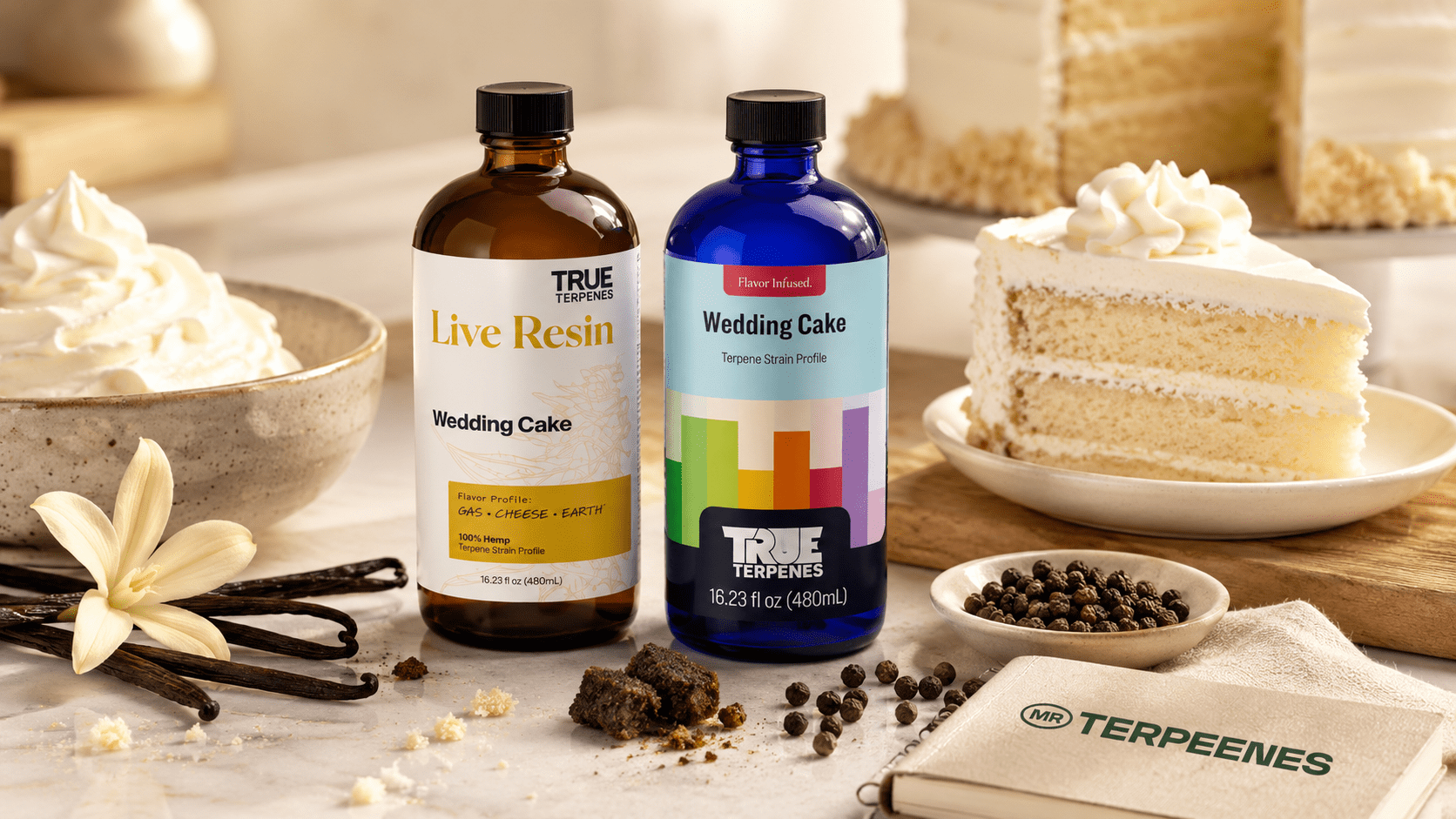
Wedding Cake is one of the most recognisable dessert-style strain names in the market, and the Wedding Cake terpene profile has become a reference point for brands building sweet, creamy and gassy flavour directions. For formulators and vape brands, the value sits in two places: the name recognition buyers already respond to, and the flavour architecture underneath it.
Understanding how that architecture is layered — sweet top notes, a creamy bakery body, and a peppery, gassy depth — is what separates a convincing Wedding Cake-inspired blend from a flat, sugary one. This article breaks down what the profile is associated with, which terpene families may contribute, and what to weigh when recreating it for distillate, vape or white-label development.
What Is the Wedding Cake Terpene Profile?
When buyers search for a wedding cake terpene profile, they are usually describing an aroma and flavour direction inspired by the Wedding Cake strain — not a single fixed formula. There is no universal recipe, and different cuts, phenotypes and source materials produce noticeably different results.
In practical terms, the profile is most often described around a few recurring impressions:
- Sweet dessert-style top notes that open the flavour
- A creamy or vanilla-like body that gives it the “cake” character
- A doughy or bakery quality underneath the sweetness
- A peppery, gassy depth that adds strain-like complexity
- Slight herbal or earthy undertones that round everything out
That combination is why Wedding Cake travels well into vape and distillate applications. It reads as indulgent and familiar, yet it carries enough complexity to feel premium rather than like a generic sweet flavouring. For brands, that balance is the commercial draw.
Wedding Cake Flavour Profile: The Main Notes
The Wedding Cake flavour profile is best understood as three layers working together. Each one matters, and the impression breaks down quickly if any single layer dominates.
Sweet and Vanilla-Like Notes
The opening is where most people first recognise Wedding Cake. It is sweet, slightly sugary and frequently described as vanilla-like or frosting-style.
The challenge for formulators is restraint. Pushed too far, sweetness can feel artificial, one-dimensional or cloying — closer to a confectionery flavouring than a strain-inspired profile. The sweetness needs to suggest dessert without flattening everything beneath it.
Creamy and Doughy Body
This is the “cake” in Wedding Cake. The mid-palate is typically rounded, smooth and creamy, often with a buttery or doughy quality that gives the profile its baked, comforting character.
This body is what stops the blend from reading as a thin, sharp sweet note. A well-built Wedding Cake terpene blend feels textured — almost soft on the palate — rather than sugary and flat. It is the layer that most reliably signals “dessert strain” to an experienced buyer.
Gas, Pepper and Earthy Depth
The gassy, peppery and earthy notes are what make the profile recognisably strain-inspired rather than a simple bakery flavour. This is the depth that grounds the sweetness.
A faint fuel-like or “gassy” edge, a dry peppery lift and a soft earthy base add contrast and complexity. Without them, the profile can drift toward a vanilla cupcake flavour and lose its connection to the original strain character. With them, it gains the layered, slightly savoury tension that defines Wedding Cake.

See dessert profiles at Mr Terpeenes
Sweet, creamy profiles behave differently once diluted. Browse the terpene range and compare the dessert-leaning options before committing to a single direction.
Which Terpenes Are Commonly Associated With Wedding Cake?
It is important to be careful here. The terpenes below are commonly associated with the kind of aroma Wedding Cake is known for — they are not a fixed or guaranteed formula, and no single combination will replicate every version of the strain.
With that caveat, the terpene families often discussed in relation to this kind of terpene flavour profile include:
- Caryophyllene — peppery, dry and slightly spicy, frequently linked to the gassy, savoury depth
- Limonene — a bright citrus lift that can support the sweeter, fresher top notes
- Myrcene — herbal, earthy and rounded, contributing to the fuller body
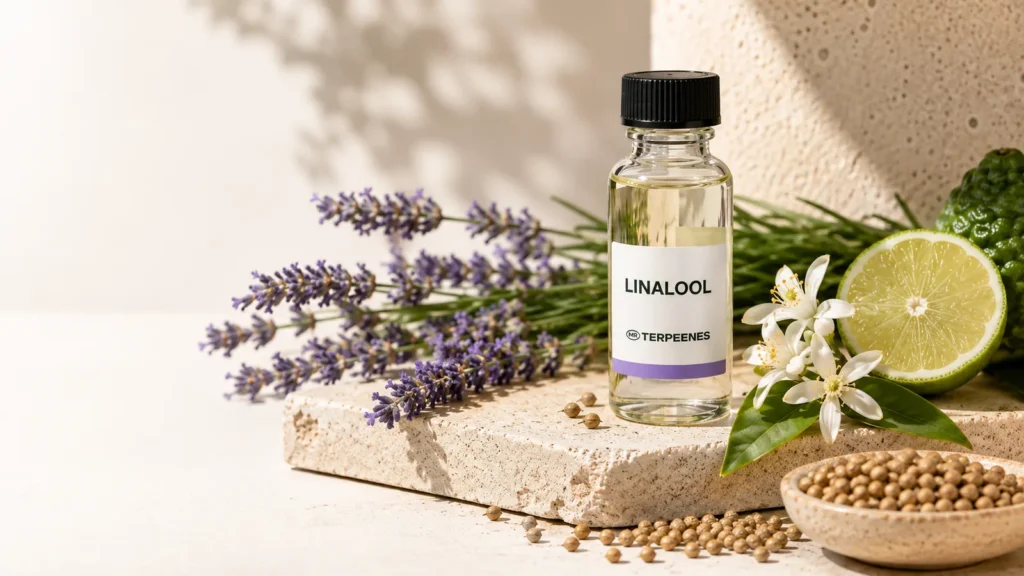
- Linalool — soft, floral and creamy, which can reinforce the vanilla-like impression
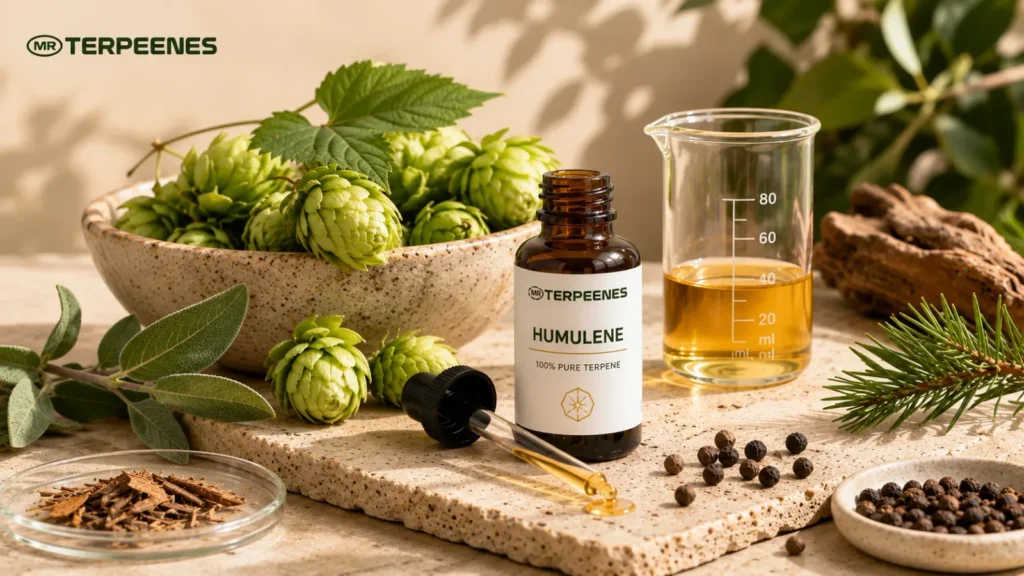
- Humulene — dry and herbal, adding subtle complexity and depth
- Pinene — a fresh, slightly sharp note used sparingly where lift is needed
The final impression depends far less on any one molecule than on balance. Concentration, the ratio between components, the carrier or base product, and the wider aromatic system all change how these notes present. The same terpenes can read as elegant in one blend and muddled in another.
Why Wedding Cake Terpenes Are Popular for Product Formulation
For brands and buyers, Wedding Cake terpenes are appealing because they sit in a commercially strong space: a dessert-style direction that is instantly recognisable yet still feels considered.
Several factors drive that demand:
- A familiar flavour direction that buyers already understand and ask for by name
- Strong commercial appeal in a category where sweet, creamy profiles consistently perform
- A balance of sweet and complex that suits both newer and more experienced audiences
- Suitability for distillate and vape-style development, where the profile translates cleanly
- Value for white-label products, where buyers often want a recognisable, strain-inspired profile without building one from scratch
Consistency is the quiet factor underneath all of this. A Wedding Cake profile only builds brand loyalty if it tastes the same across batches. For product teams, batch-to-batch repeatability matters as much as the flavour itself — a profile that drifts erodes trust faster than a slightly simpler one that stays stable.
How Brands Can Recreate a Wedding Cake Terpene Profile
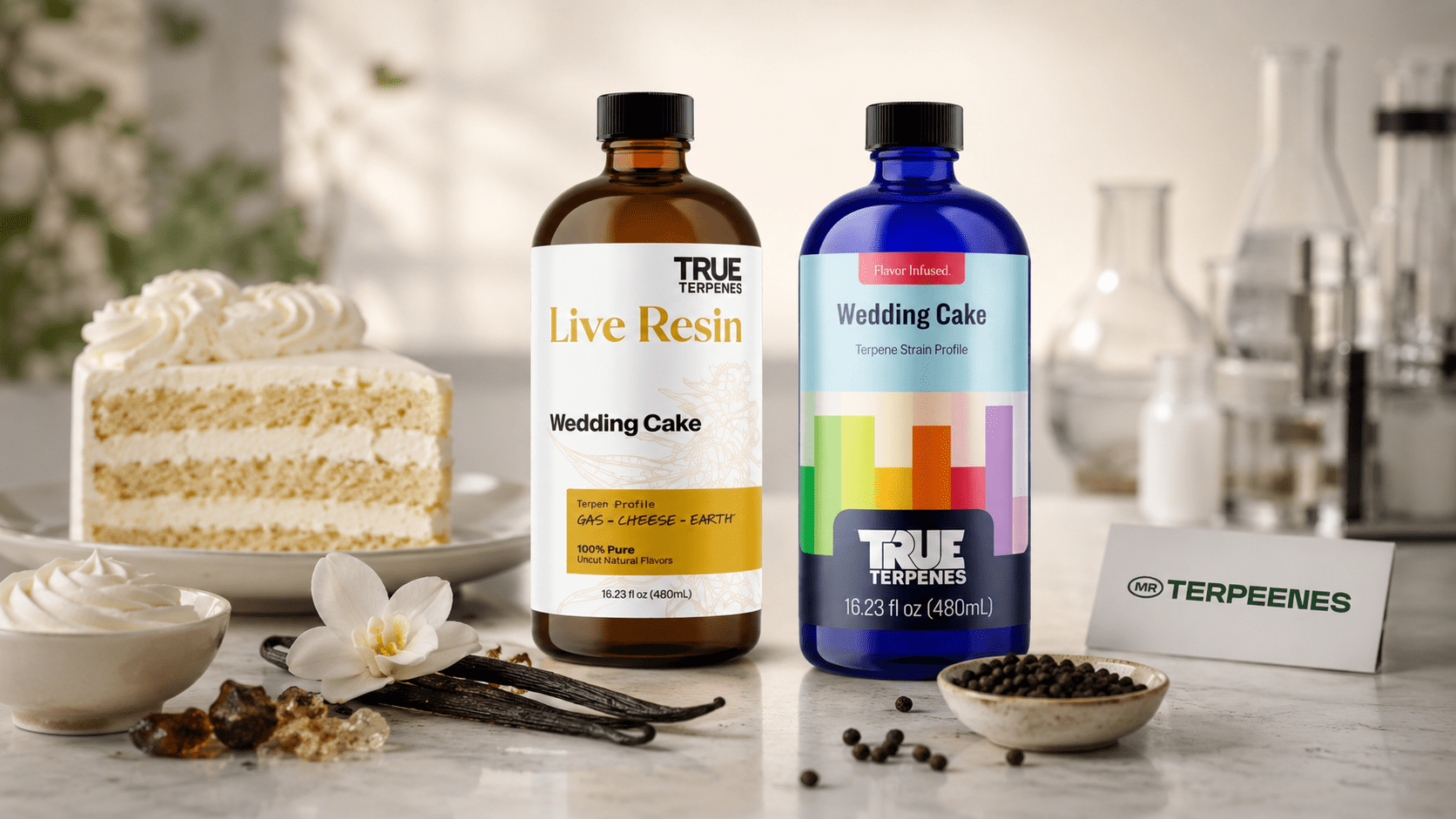
To recreate a Wedding Cake terpene profile well, it helps to treat it as building a layered flavour architecture rather than copying one exact recipe. The goal is the overall sensory direction, not a perfect one-to-one reproduction.
A practical way to approach it:
- Start with the target direction. Define the impression you want — sweet, creamy, doughy, with a gassy, peppery edge — before reaching for individual components.
- Balance sweetness against gas and spice. The sweet and creamy layers should never fully bury the peppery, fuel-like depth. That tension is the profile.
- Avoid an overly sugary finish. If the blend reads as artificial or confectionery-like, ease back the sweetness and let the body and depth carry more weight.
- Adjust for the application. A blend destined for distillate may behave differently from one built for another base, so the best terpenes for distillate workflows are worth reviewing before finalising ratios.
- Test in the final base, not the bottle. A blend can smell ideal neat and present very differently once diluted into the actual product. Judge it where it will live. Sound habits around mixing terpenes correctly make this far more repeatable.
- Document everything. Record ratios, sources and batch notes so the profile can be reproduced and adjusted with confidence.
Brands that need a more controlled or commercial-ready result can also work with Mr Terpeenes on custom terpene blends for brands, where the profile can be developed and stabilised for production rather than refined by trial and error.
Order Wedding Cake in bulk from Mr Terpeenes
Sampling settles the profile; volume settles the price. Discuss bulk quantities, lead times and packaging for production runs across the UK and Europe.
Wedding Cake Terpene Blend: What Buyers Should Check
When sourcing a Wedding Cake terpene blend, the flavour is only part of the decision. A few practical checks separate a reliable supply from a one-off sample:
- Intended use and application — confirm the blend suits your base, whether that is distillate, vape or another format
- Botanical or cannabis-derived options — clarify which type is relevant for your market and product
- COA and SDS availability — appropriate documentation should be available where applicable
- Flavour consistency — the profile should hold up across orders, not just the first batch
- Batch control — ask how the supplier manages repeatability over time
- Supplier experience — a track record with strain-inspired profiles is a meaningful signal
- Suitability for distillate and white-label — verify the blend fits production-scale development
- Ability to customise — the option to fine-tune sweetness, body or depth to your brief
Wedding Cake vs Other Dessert-Inspired Terpene Profiles
Wedding Cake sits within a broader family of dessert-style and strain-inspired profiles, but it occupies its own space.
Compared with fruit-forward profiles such as Zkittlez, Wedding Cake is usually less overtly fruity. It tends to be creamier than many citrus-led blends, and it carries more gas and spice than a straightforward vanilla dessert flavour. That blend of richness and gassy depth is what gives it a distinct identity among sweet profiles — and why it rarely gets mistaken for a simple cupcake note.
For brands exploring a wider range of strain-specific terpene profiles, Wedding Cake is a useful anchor point: clearly a dessert profile, but with enough structure to stand apart.
Building a Balanced Wedding Cake-Inspired Profile
A strong Wedding Cake terpene profile comes down to balance. The sweet top notes give it appeal, the creamy, doughy body gives it the dessert character, and the gassy, peppery depth gives it the complexity that signals a genuine strain-inspired blend. Lose any one layer and the profile slips — too sweet and it flattens, too sharp and it loses its comfort.
For brands developing dessert-led ranges, that balance is the whole brief. If you are building a recognisable, production-ready profile, Mr Terpeenes can support both strain-specific profiles and custom blend development tailored to your application.
Build Your Wedding Cake Profile With Confidence
Whether you are formulating for distillate, vape or a white-label range, getting the balance of sweet, creamy and gassy notes right is what turns a Wedding Cake-inspired blend into a commercially reliable one. If you would like support developing, refining or stabilising a production-ready profile, contact the Mr Terpeenes team to talk through your brief and application.
Frequently Asked Questions
What terpenes are usually found in a Wedding Cake terpene profile?
Terpenes often associated with this profile include caryophyllene, limonene, myrcene, linalool, humulene and sometimes pinene. These are not a fixed formula — the final character depends on balance, concentration and the base product used.
What does a Wedding Cake terpene blend taste like?
It is typically described as sweet and dessert-like, with a creamy, doughy, vanilla-style body and a peppery, gassy depth underneath. That combination of richness and complexity is what makes the profile recognisable.
Can brands recreate a Wedding Cake terpene profile?
Yes. Brands can build a Wedding Cake-inspired profile by layering sweet, creamy and gassy notes and balancing them for the intended application. It is best treated as recreating a flavour direction rather than copying one exact recipe, and no single blend will replicate every version of the strain.
Is a Wedding Cake terpene profile suitable for distillate?
It can be. The profile is often used as a formulation direction for distillate and vape-style products, though blends may need adjusting to suit the specific base. Testing in the final product, rather than judging from the bottle, gives the most reliable result.