


Oil Filling Machine Maintenance Checklist for Terpene Brands

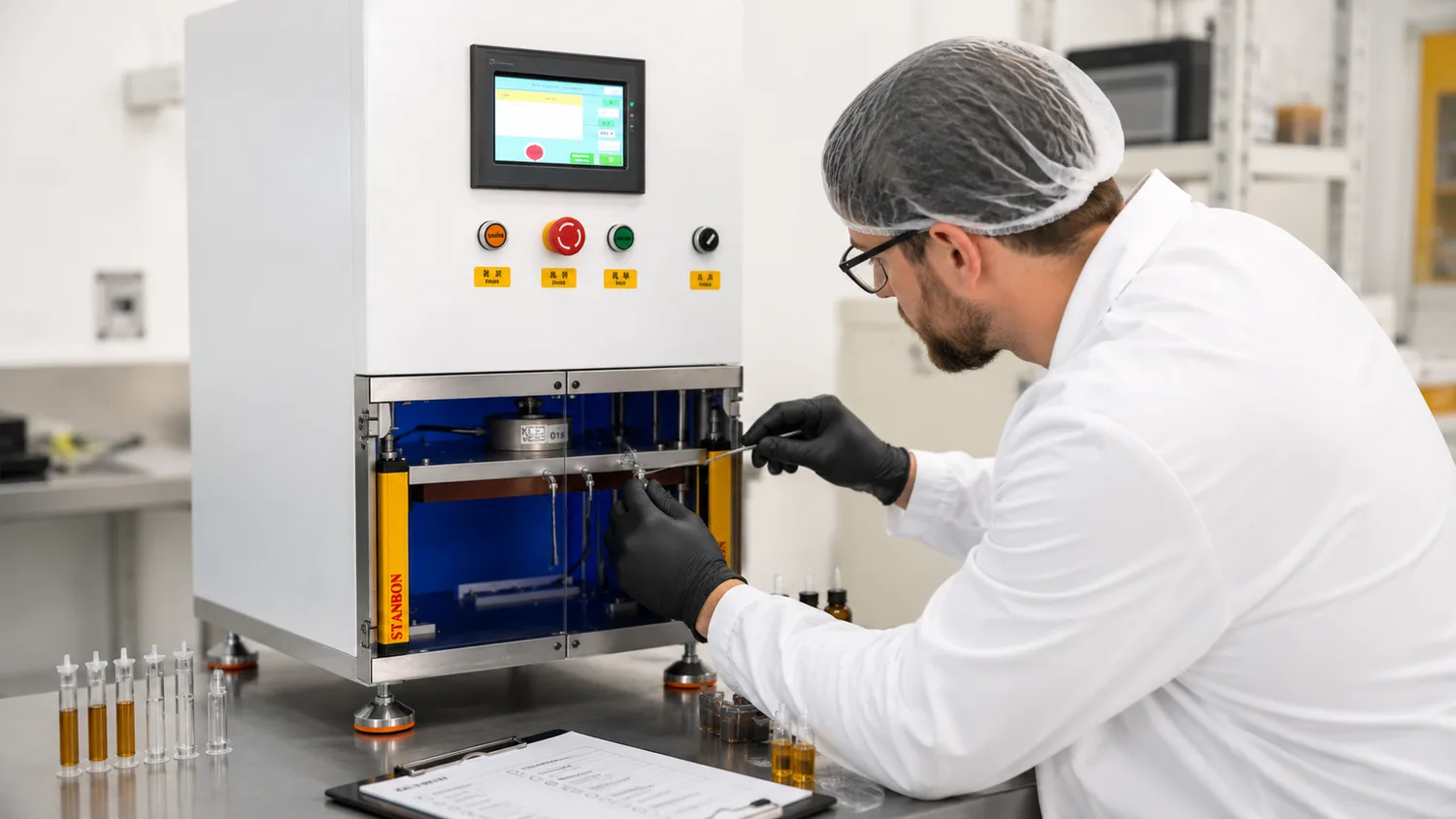
Proper oil filling machine maintenance is the fastest way to cut unplanned downtime, protect terpene aroma profiles and extend the working life of high-value equipment. The preventive cleaning, inspection and calibration routine below — broken down into daily, weekly, monthly and quarterly checks — keeps your cartridge filling line consistent, compliant and ready to scale.
In a high-throughput terpene, CBD or cannabis oil facility, the bottleneck is rarely the operator. It is the equipment they rely on. Residue build-up, blocked nozzles, drifting dose accuracy and seal failures all start small, then compound into rejected batches, leaking carts and product recalls. A documented routine turns a mechanical risk into a controllable, auditable process.
This guide walks you through a complete oil filling machine maintenance workflow: what to clean, how often, which solvents are safe near terpenes, what to inspect and when to escalate to a service engineer. It is written for production managers, QA leads and small-batch brands moving towards industrial volumes.
Why Does Oil Filling Machine Maintenance Matter for Terpene Products?
Terpenes are volatile, solvent-aggressive and easily contaminated. Even trace residues from a previous blend or a degrading gasket can flatten an aroma profile, shift viscosity and trigger off-notes the lab will catch but the customer will not forgive. Disciplined maintenance protects flavour fidelity batch after batch.
It also protects margin. A single afternoon of unplanned downtime on an automated filler can wipe out the cost of an entire month of preventive servicing. Add the value of scrapped product, late shipments and brand damage, and the case for a strict cartridge filling machine cleaning programme writes itself.
What Should a Daily Cleaning Routine Cover?
Daily cleaning is your first line of defence against cross-contamination and dose drift. The goal is to leave the machine in the same state it started in, ready for tomorrow’s first batch without a long warm-up.
- Drain and purge residual oil from the hopper, lines and nozzles immediately after the last fill.
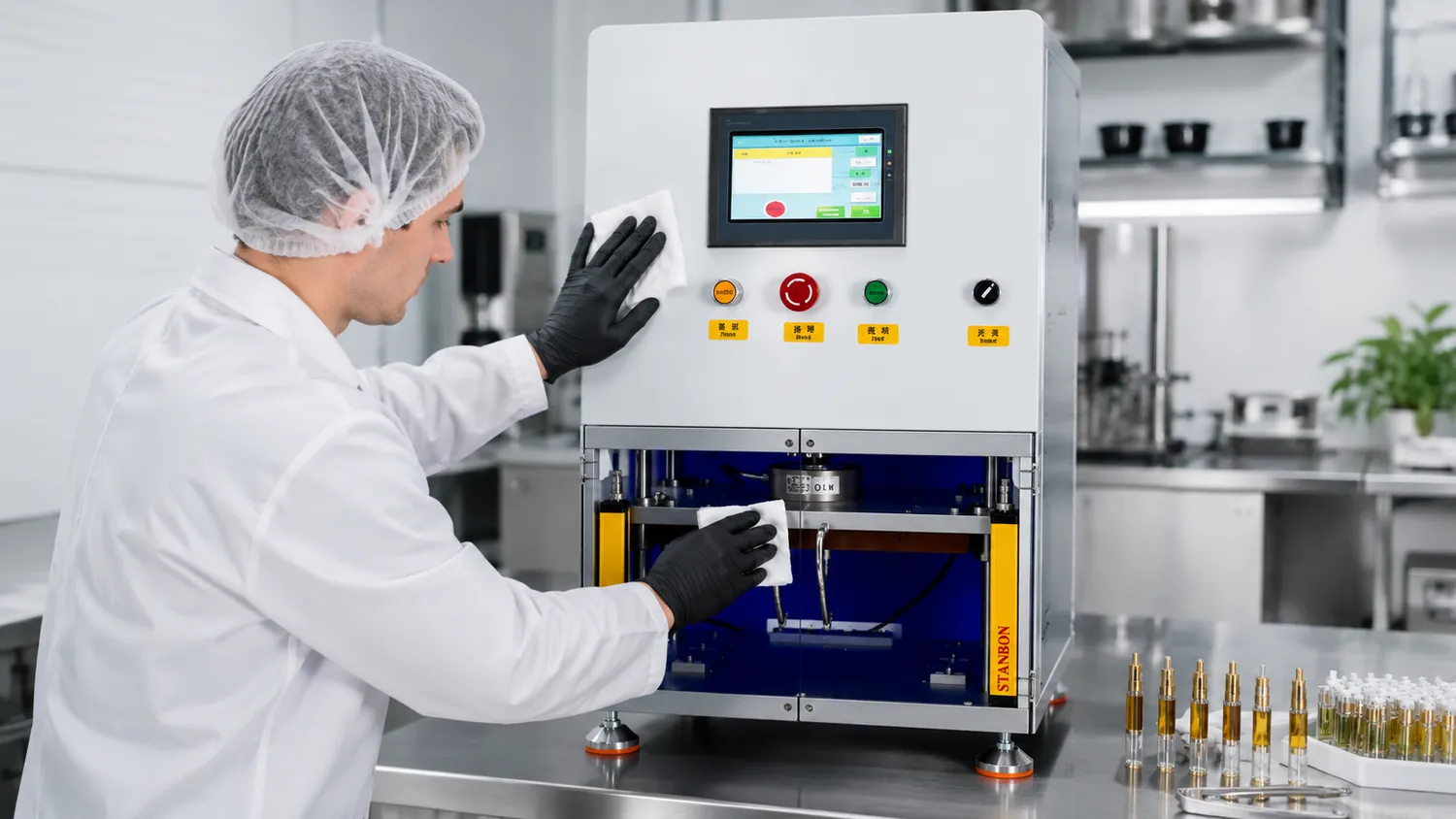
- Wipe down the nozzle block, drip trays and conveyor with a lint-free cloth dampened in food-grade ethanol or isopropyl alcohol.
- Flush the dosing line with the approved cleaning solvent recommended by the manufacturer, then with a neutral carrier oil if you are switching profiles.
- Inspect nozzles for terpene-attacked seals, gaskets and O-rings; replace anything showing swelling, cracking or colour change.
- Log the cleaning in the equipment record, with operator initials and time stamp.
Weekly and Monthly Maintenance Checklist for Cartridge Filling Machines
Weekly tasks catch the issues a daily wipe-down misses: small leaks, slight under-filling, a sensor reading that has crept outside tolerance. Combine them with a deeper monthly service and you avoid 80% of the failures that put a line down mid-shift.
Weekly Checks
- Full disassembly of nozzles and dosing pistons for ultrasonic or solvent bath cleaning.
- Verify dose accuracy against a calibrated scale across three sample fills per nozzle.
- Inspect heating elements and temperature probes; confirm the set point matches the reading within ±1 °C.
- Check pneumatic lines for moisture, oil mist or visible wear.
- Sanitise contact surfaces with a validated, food-grade sanitiser appropriate for your jurisdiction.
Monthly Checks
- Replace high-wear consumables on schedule: seals, O-rings, peristaltic tubing and filter elements.
- Lubricate bearings, guide rails and pneumatic cylinders with the lubricant grade specified by the OEM.
- Tighten fasteners and confirm machine alignment after weeks of vibration.
- Audit operator cleaning logs and flag any missing entries before the next QA review.
If you are still measuring terpenes accurately by hand alongside an automated filler, align the manual and automated tolerances during this monthly check so both routes deliver identical doses.
Quarterly Preventive Maintenance and Parts Replacement
Every quarter, treat the line to a proper service window. This is where you replace components before they fail, recalibrate against a traceable standard and update the SOPs that drive daily behaviour.
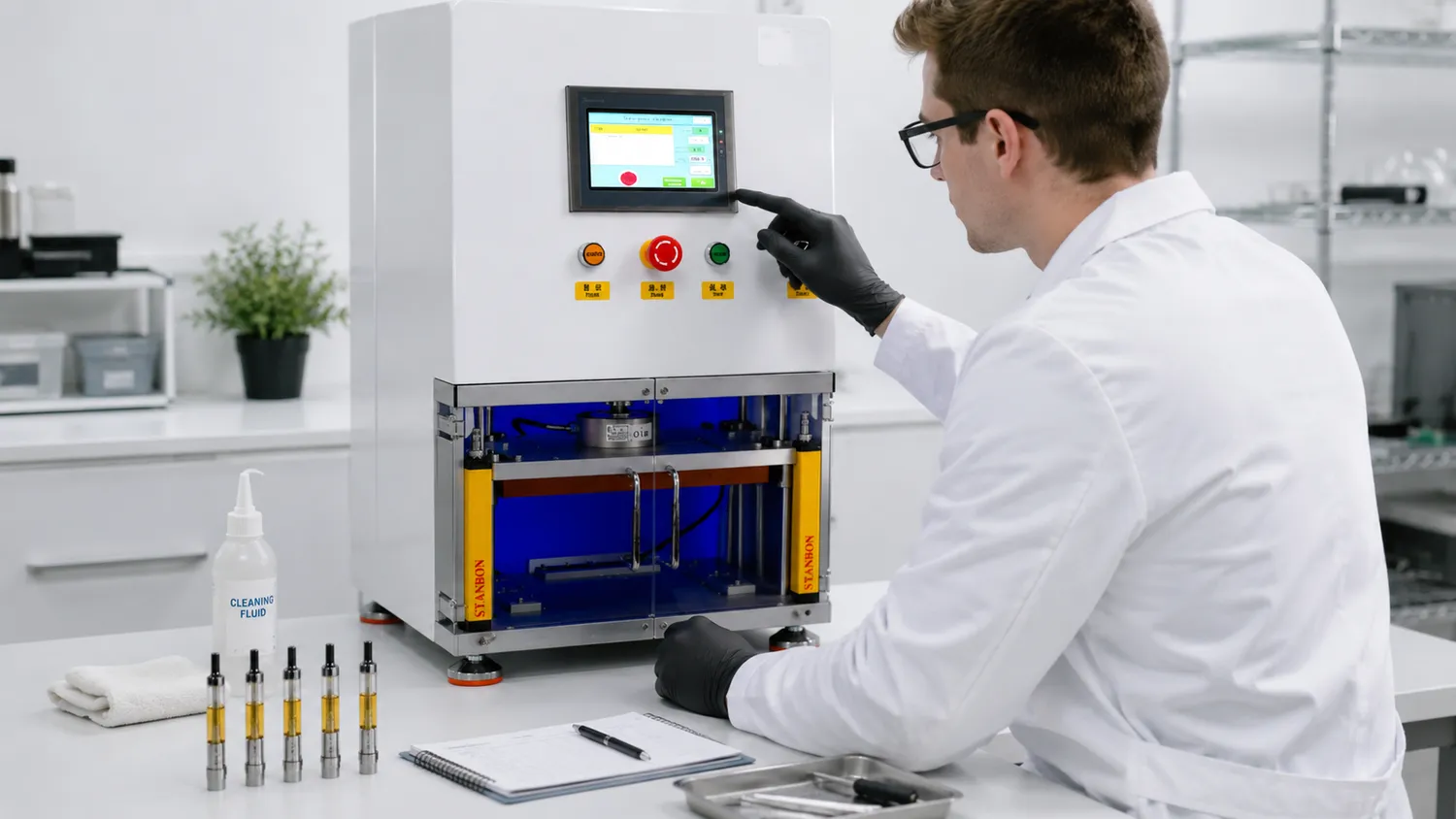
- Full strip-down clean of the dosing manifold, hopper and recirculation loop.
- Replacement of all wetted seals as a matched set, not one at a time.
- Calibration of load cells, flow meters and temperature controllers against certified references.
- Firmware updates and a back-up of recipe files before any change goes live.
- Inspection of safety interlocks, e-stops and guarding under load conditions.
For brands planning to expand capacity, this is also the moment to review whether your current equipment still fits the volume. Our guide to oil filling machines for terpenes, CBD and vape oils walks through the configurations that scale cleanly from pilot to industrial output, and the full oil filling machinery range shows the units we stock for B2B brands.
Which Cleaning Agents Are Safe for Terpene-Compatible Equipment?
Terpenes attack the wrong elastomer, polymer or coating in hours. The same is true for many cleaning solvents. Match the agent to the materials your filler actually contains, not the materials a generic SOP assumes.
- Food-grade ethanol (95%+) — the default for terpene residue; evaporates cleanly and is gentle on most seals.
- Isopropyl alcohol (IPA, 99%) — quick-drying, useful for external surfaces and sensor housings.
- Neutral carrier oil — best for flushing between profiles when you cannot afford trace solvent carryover.
- Avoid chlorinated solvents, acetone and aggressive degreasers unless the OEM explicitly approves them in writing.
Always validate a new cleaning agent on a single nozzle or test rig before rolling it out to a full production line. Reference your equipment manual and, where relevant, the FDA cGMP guidance for equipment cleaning and validation.
Equip your filling line with Mr Terpeenes
Cleaning cycles, changeovers and parts access all depend on the machine you choose. Browse filling machinery suited to your throughput and terpene blends.
How Do You Spot Early Warning Signs Before a Breakdown?
Most filler failures announce themselves days in advance. The cost of catching them is a five-minute walk-around; the cost of missing them is half a shift of downtime.
- Unexpected change in motor noise, vibration or duty cycle.
- Dose weights creeping towards the edge of tolerance over consecutive batches.
- Visible oil weep at fittings, gaskets or the base of the nozzle block.
- Temperature controllers cycling more aggressively to hit their set point.
- Operators reporting “the machine feels different” — front-line intuition is data; capture it in the log.
Documenting Maintenance for GMP and Audit Readiness
Maintenance that is not documented did not happen, at least not as far as an auditor or insurance claim is concerned. Build the paper trail at the same time you build the routine.
At a minimum, each machine should have a unique equipment ID, a written SOP for cleaning and calibration, a logbook (digital or paper) for every intervention, and a change-control record for SOP revisions. Tie the records back to batch numbers so the finished product can be traced to the exact state of the line that produced it.
If you are tightening up your wider quality system, our piece on terpene quality standards covers the buyer-facing checks that complement strong equipment hygiene, and terpene packaging solutions explains how storage and presentation protect everything the filling line achieves upstream.
Building a Long-Term Oil Filling Machine Maintenance Strategy for Growing Brands
One-off cleaning sprints fix today’s batch; a written strategy fixes next year’s growth. A mature programme treats maintenance as a planned cost — predictable, budgeted and assigned — rather than an emergency expense triggered by failure.
Start with a simple maintenance calendar tied to production volume, not just elapsed time. A line running ten shifts a week wears faster than one running three, and the schedule should reflect that. Assign clear ownership: an operator for daily and weekly tasks, a maintenance technician for monthly checks, and a senior engineer or external service partner for quarterly work and validations. Review the plan every six months against breakdown logs, scrap rates and audit findings so the programme keeps pace with the business.
Frequently Asked Questions About Oil Filling Machine Maintenance
How often should an oil filling machine be cleaned?
At a minimum, after every production run and at the end of every shift. A more detailed clean is required weekly, with a deep service monthly and a full preventive overhaul quarterly. The exact interval depends on throughput, the terpene profiles being filled and the OEM’s written guidance.
Can I use the same cleaning solvent for all terpene blends?
Usually yes, provided it is compatible with both the residue and your machine’s wetted parts. Food-grade ethanol is the most common choice. Always validate before switching solvents, especially when changing between high-terpene and low-terpene formulations.
What is the most common cause of cartridge filling machine downtime?
Degraded seals and clogged nozzles, almost always traceable to incomplete cleaning or overdue replacement of consumables. Both are preventable with a disciplined weekly inspection.
Do I need a calibrated scale for daily checks?
Yes. A traceable scale, recalibrated on its own schedule, is the cheapest way to confirm that your filler is hitting target weight. Without it, dose drift is invisible until QA or the customer finds it.
When should I bring in an external service engineer?
For quarterly preventive maintenance, firmware updates, recalibration of critical instruments, and any failure that is not resolved by your SOP. Treat it as planned investment, not a last resort.
Next Steps for Brands Scaling Their Filling Operations
Strong oil filling machine maintenance is the unglamorous foundation behind every consistent terpene product. Adopt the checklist above, tie it to your batch records, and review it every quarter.