Terpenes are the tiny plant chemicals that give cannabis (and many herbs/fruits) its scent — and they also shape the feel of a dose. If you want relaxing sleep, pain relief, or daytime focus, picking the right terpene profile matters. This guide (aimed at medical and recreational users in the UK) lists the most important terpenes, what they’re commonly reported to do, and how to choose or buy reliably (including True Terpenes products available to UK customers).
What are terpenes and why they matter
True Terpenes are volatile organic compounds produced by plants. In cannabis they contribute aroma and may modulate physiological effects (the so-called “entourage effect”). Scientific reviews show terpenes can have anti-inflammatory, analgesic, anxiolytic or sedative actions in lab and animal studies — but human data are limited and often preliminary. Treat claims with measured optimism: terpenes are promising, not miracle cures.
Top terpenes and what users usually experience
Below is a practical list you can scan quickly. For each terpene I note aroma, common botanical sources, reported effects, and a short practical tip. (Where solid studies exist I cite them.)
Myrcene — the “couch-lock” terpene
Aroma: Earthy, musky, fruity (mango).
Sources: Mango, hops, thyme, many cannabis strains.
Reported effects: Sedation, muscle relaxation, analgesia; may increase THC brain uptake in animal models. Useful for night-time use or pain relief.
Tip: If you want less sedation, avoid strains high in myrcene for daytime. (Many consumers swear by a pre-smoke mango for a stronger experience anecdotally tied to myrcene content.)
Limonene — uplift & mood
Aroma: Bright citrus/lemon.
Sources: Citrus peels, rosemary, cannabis.
Reported effects: Mood-lifting and anti-anxiety effects seen in preclinical studies and observational reports; commonly used in daytime blends.
α-Pinene — alertness & clarity
Aroma: Pine, fresh, herbal.
Sources: Pine needles, rosemary, basil.
Reported effects: May support alertness and memory retrieval; anti-inflammatory and bronchodilator properties noted in older studies. Good for daytime strains.
Linalool — calm & sleep
Aroma: Floral, lavender.
Sources: Lavender, mint, coriander.
Reported effects: Anxiolytic and sedative in animal models and widely reported anecdotally for anxiety relief and sleep aid. Consider for evening use.
Reported effects: Unique among terpenes because it binds to CB2 receptors giving clinically relevant anti-inflammatory and analgesic activity in multiple studies. Great for users seeking anti-inflammatory or pain relief action without strong psychoactivity.
Humulene — earthy & appetite-modulating
Aroma: Earthy, woody (hoppy).
Sources: Hops, coriander.
Reported effects: Anti-inflammatory and in some reports appetite-suppressant effects. Useful if you want inflammation control without extra munchies. ScienceDirect
Terpinolene — complex: uplifting or sedative
Aroma: Herbal, floral, slightly citrusy.
Sources: Apples, cumin, sage, some cannabis strains.
Reported effects: Can be uplifting in some contexts or slightly sedating in others; often part of daytime-oriented blends.
Nerolidol, Geraniol, Ocimene, Bisabolol, Eucalyptol — support players
Aroma & uses: These have floral/woody/cooling notes and show anti-anxiety, anti-fungal, skin-penetrant (nerolidol) or anti-inflammatory properties in lab studies. They often tweak the overall effect rather than drive it.
Key takeaway: For sleep/pain → look for myrcene, linalool, nerolidol. For daytime focus/anti-anxiety → limonene, pinene. For inflammation/pain without high psychoactivity → β-caryophyllene.
How confident are these claims?
Most of the evidence on terpene effects comes from laboratory and preclinical studies rather than large-scale human trials. Researchers have consistently observed that terpenes exhibit measurable pharmacological activity — including anti-inflammatory, antioxidant, analgesic and anxiolytic properties — but the translation of these effects to human experience is still being investigated.
A pivotal study published in the Proceedings of the National Academy of Sciences (Gertsch et al., 2008) identified β-caryophyllene as a selective CB2 receptor agonist, demonstrating its capacity to interact directly with the endocannabinoid system. Subsequent reviews, such as Russo (2011) in the British Journal of Pharmacology, proposed that terpenoids “are pharmacologically active and likely contribute significantly to the entourage effect of cannabis.”
Further evidence from a 2021 systematic review in Frontiers in Pharmacology analysed more than 200 papers and confirmed that compounds like myrcene, linalool, and limonene show clear biological activity related to inflammation, pain modulation, and anxiety reduction in animal and cell models. However, the review emphasised that controlled human data remain limited, and that dose–response relationships have yet to be clearly established.
A 2023 article in Molecules titled “Terpenes in Cannabis: From Aroma to Therapeutic Potential” (MDPI, 2023) reinforced this position, noting that while terpenes may enhance or modulate cannabinoid action through the so-called “entourage effect,” their exact contribution to perceived psychoactive outcomes has not been definitively quantified.
Real-world data from patient observations and consumer feedback add valuable context. Many users report consistent differences between terpene profiles — for example, myrcene-dominant strains promoting sedation, or limonene-rich blends enhancing mood and energy — but such outcomes are best described as potential trends, not guarantees.
Current evidence supports the idea that terpenes are biologically active molecules capable of influencing both the aroma and potential effects of cannabis. Yet, definitive human studies are still limited. For now, it is most accurate to state that terpenes may modulate the cannabis experience rather than directly cause specific outcomes.
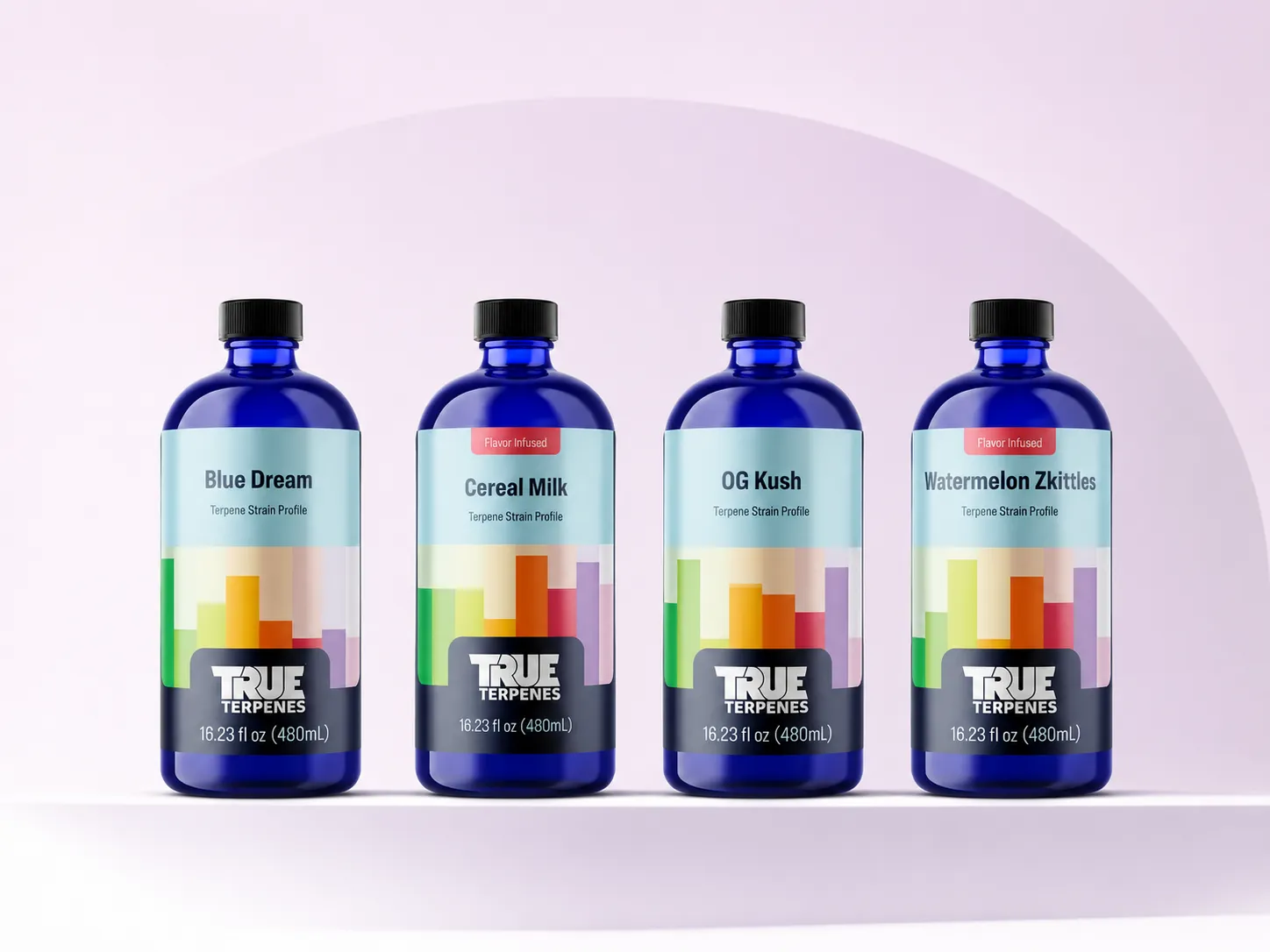
True Terpenes range at Mr Terpeenes
Reading about effects is a starting point; the profile on the bench decides the result. Browse the range and request documentation before ordering.
Read the terpene profile: Look for suppliers who list terpene percentages (not just names). If a product has 0.1% terpene and claims major effects, be skeptical.
Choose terpene-forward products for tailored effects: If you need daytime clarity, pick limonene/pinene-dominant profiles; for sleep, linalool/myrcene blends.
Source & purity matter: Use reputable suppliers — True Terpenes is a major commercial brand with global distribution and blends marketed to formulators and consumers. For UK purchases, check local distributors and compliance notes.
Start low with isolates: Concentrated terpene drops are potent. Add small amounts to edibles/oils or choose pre-diluted terpene blends.
Safety: Terpenes are generally recognized in botanicals, but in pure form they can irritate skin/airways or upset stomach if overused. Avoid ingesting industrial formulations not intended for human consumption.
Are terpenes from botanical extraction (not synthetic) if you prefer natural? ✔
Does the blend match your goal: sleep, pain, mood, focus? ✔
The science behind terpene synergy “entourage effect” explained
If you’ve ever wondered why two cannabis strains with the same THC percentage feel completely different, terpenes are the missing piece. THC or CBD are only part of the story — research shows that cannabinoids and terpenes interact in the body through a mechanism called the entourage effect.
This concept suggests that compounds like myrcene, limonene or β-caryophyllene modulate how cannabinoids bind to receptors, altering the overall experience. For example:
Myrcene may increase the permeability of the blood–brain barrier, subtly enhancing THC’s potency.
β-Caryophyllene binds directly to CB2 receptors, providing anti-inflammatory benefits without psychoactive effects.
Limonene may boost serotonin and dopamine signalling, which could explain why citrus-dominant strains tend to feel cheerful or energising.
While this synergy is still being investigated, it’s widely accepted by clinicians and formulators in the cannabis industry. True Terpenes and other scientific suppliers use this principle to design targeted blends such as “Focus,” “Calm,” or “Recover.” These formulations balance multiple terpenes to reproduce desired effects consistently, something raw plant material can’t always guarantee.
Understanding terpene quality natural vs synthetic
Not all terpenes are created equal. In the UK market you’ll find:
Botanically derived terpenes: Extracted from plants like oranges, lavender or pepper using steam distillation. They are chemically identical to cannabis terpenes and widely accepted in both food and cosmetic applications.
Cannabis-derived terpenes (CDTs): Taken directly from cannabis plants. They provide a more authentic aroma profile but are tightly regulated and costlier.
Synthetic terpenes: Created in labs. They’re cheaper but may lack subtle isomers found in natural sources, resulting in a flatter aroma and, potentially, less nuanced effects.
For safety and purity, always check whether the supplier offers GC-MS (Gas Chromatography–Mass Spectrometry) test results or Certificates of Analysis (COA). These ensure that the product is free from residual solvents, pesticides or heavy metals. True Terpenes, for example, includes batch-specific lab reports — a big green flag for anyone serious about quality control.
Terpenes are the sensory and functional signature of cannabis. They won’t replace medical advice, but using terpene knowledge helps you choose products that better match your goals — whether that’s sleep, pain relief, or daytime clarity. If you’re in the UK and ready to experiment safely, check terpene-labelled products from reputable suppliers (including True Terpenes distributors) and start with small doses to find your sweet spot.
If you found this useful, take a look at our True Terpenes products or contact us so we can create a personalized recommendation for terpene blends based on your goals.
About Georgio Constantinou
More than 15 years of international commercial experience across medical cannabis, hydroponics, CBD wellness, supply chain solutions and brand development. As Managing Director of Mr Terpeenes, he leads B2B sales, brand acquisition and wholesale/OEM partnerships across the terpene, vape hardware and packaging sectors