
Terpenes for Gummies and Edibles: How Brands Build Better Flavour Consistency

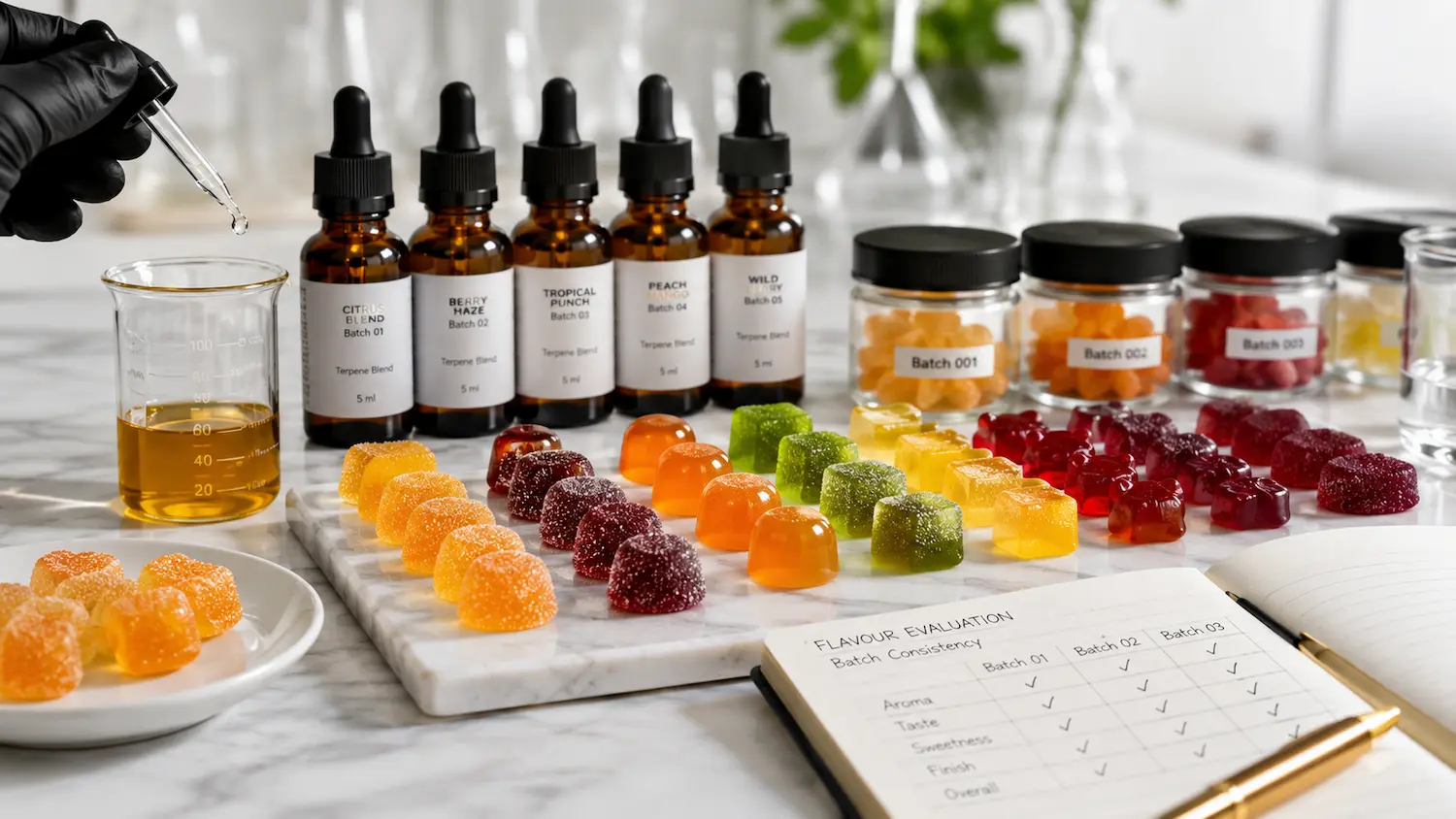
Flavour consistency has become one of the most important challenges for brands developing gummies, edibles and functional food products. A consumer may try a product once because of its format, packaging or positioning, but they often come back because the flavour experience feels familiar, balanced and repeatable.
This is where terpenes for gummies can play a valuable role. When selected and used correctly, terpene profiles can help brands create more recognisable flavour identities, improve batch-to-batch consistency and move beyond generic fruit flavours.
For manufacturers, formulators and product developers, the question is not only which flavour tastes good. It is how that flavour behaves in a gummy base, how it works alongside sweeteners and acids, and whether it can be reproduced across future production runs.
Why terpenes for gummies are gaining attention
Gummies are a highly sensory product. Texture, aroma, sweetness, acidity and aftertaste all influence how the final product is perceived. Even when the active formulation remains the same, a weak or inconsistent flavour profile can make the product feel less reliable.
Terpenes for gummies are often used by brands that want to create more defined, botanical or strain-inspired flavour profiles. Instead of relying only on conventional flavour systems, brands can work with terpene blends to create sharper citrus notes, deeper berry tones, herbal complexity, tropical profiles or more distinctive aromatic finishes.
For edible product developers, this can be especially useful when the base formula has strong natural notes that need to be balanced. Gummies, chews and other edibles often combine sweeteners, acids, extracts, oils or functional ingredients. These components can affect the final taste and aroma. A carefully chosen terpene profile helps shape the sensory direction of the product instead of leaving flavour as an afterthought.
The role of edible terpenes in flavour design
The term edible terpenes should be used carefully. Not every terpene product is suitable for food applications, and not every aromatic compound should be used in gummies or edibles. Brands should only work with materials that are suitable for the intended application and should always follow supplier guidance, formulation requirements and applicable food regulations.
In practical terms, edible-focused terpene use is about flavour design. Terpenes can contribute aromatic notes that are already familiar in many botanical sources: citrus peel, pine, herbs, berries, flowers, tropical fruits and spices. When blended correctly, these aromatic components can help make a gummy taste more layered and less flat.
For example, a citrus gummy may benefit from bright top notes that make the profile feel fresher. A berry edible may need a deeper aromatic finish to avoid tasting too sweet or artificial. A tropical gummy may need balance between sharpness, fruitiness and a clean finish. In each case, the terpene profile is part of the wider formulation, not a standalone solution.
Terpenes for edibles and the challenge of batch consistency
For brands producing at scale, consistency is often more important than novelty. A flavour that works once is not enough. The profile needs to perform across production batches, different storage conditions and commercial timelines.
This is one of the main reasons brands look at terpenes for edibles as part of their flavour development process. A consistent terpene blend can help give the finished product a recognisable aromatic signature. When the same profile is used under controlled conditions, brands can reduce variation and make the product experience easier to repeat.
However, consistency depends on more than choosing a blend. It also requires attention to dosage, mixing method, base ingredients, production temperature, packaging and storage. Terpenes are aromatic compounds, so they need to be handled with care during formulation. Poor storage, excessive heat or inaccurate dosing can affect the final result.
For this reason, product teams should treat terpene flavouring as a technical ingredient. The best results usually come from structured sampling, small-batch trials and clear documentation before moving into larger production.

See food-grade options at Mr Terpeenes
Edible work narrows the field to food-grade material. Browse the profiles suitable for gummies and confectionery before you commit to a flavour direction.
Choosing flavour terpenes for gummies
Selecting flavour terpenes for gummies starts with the product concept. A brand should define the target flavour experience before choosing a blend. Is the gummy meant to taste fresh and citrus-led? Sweet and tropical? Herbal and botanical? Berry-rich? Dessert-like? Clean and subtle?
Once the direction is clear, the terpene profile can be chosen to support that sensory goal.
Citrus-led gummies
Citrus profiles are popular because they can make gummies feel bright, clean and refreshing. Orange, lemon, lime and grapefruit-style profiles can work well when the formula needs a sharp top note or a fresher finish.
These profiles may be useful for brands that want a familiar flavour direction while still adding more aromatic complexity than a basic fruit flavour.
Berry and fruit profiles
Berry-style terpene profiles can support gummies designed around strawberry, raspberry, blueberry, grape or mixed berry concepts. These blends can help create a more rounded aroma and reduce the risk of the product tasting overly sweet or one-dimensional.
Fruit-led profiles are especially useful when the brand wants broad consumer appeal but still needs a flavour identity that feels more premium.
Tropical and exotic profiles
Tropical profiles can work well for brands that want a stronger lifestyle or wellness-led positioning. Mango, pineapple, passionfruit and similar flavour directions can make gummies feel more distinctive and less generic.
The challenge is balance. Tropical profiles can become too sweet or heavy if not supported with the right acidity and aroma structure.
Herbal and botanical profiles
Botanical terpene profiles can create a more mature flavour experience. Herbal, floral, piney or earthy notes can be useful for brands that want to move away from standard confectionery flavours.
These profiles need careful formulation because they can easily dominate the base if used too heavily. In gummies, subtlety is often more effective than intensity.
Terpene blends for edibles: why blends matter
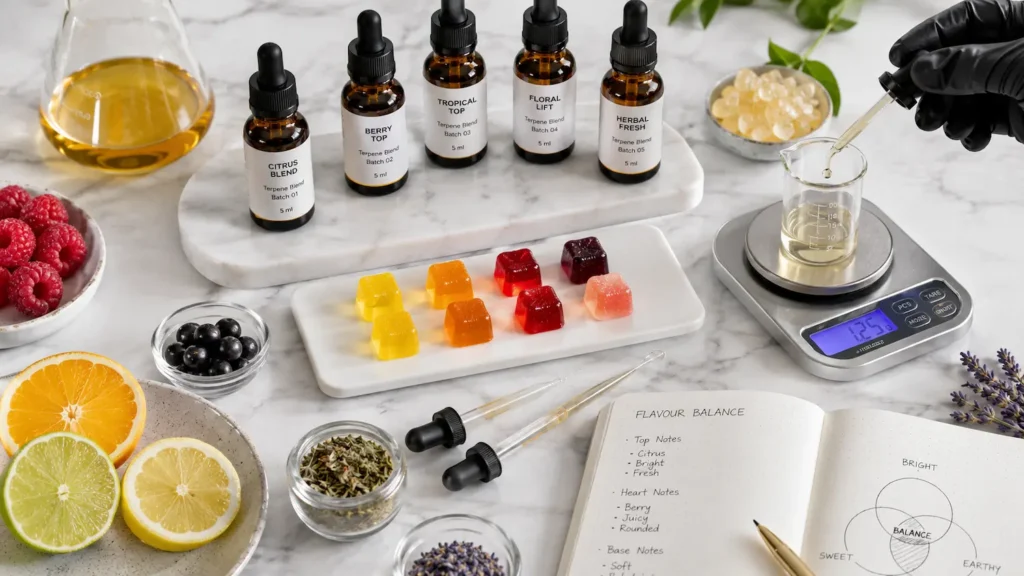
Using terpene blends for edibles allows brands to work with a finished aromatic profile instead of building every flavour note from scratch. This can be useful for product teams that want faster development, clearer flavour direction and better repeatability.
A blend can combine top notes, middle notes and base notes in a more controlled way. Top notes may provide the first aromatic impression. Middle notes help build the body of the flavour. Base notes can create depth, warmth or a longer finish.
For gummies and edibles, this matters because flavour is not experienced all at once. The consumer notices aroma first, then sweetness, acidity, texture and aftertaste. A good terpene blend supports the full experience rather than only the first impression.
Brands should still test blends in the actual product base. A profile that smells excellent on its own may behave differently once it is mixed into a gummy formula. Sweeteners, acids, colours, oils and other ingredients can all influence the final perception.
Supply your edible line with Mr Terpeenes
Consistency across batches depends on buying the same material every time. Talk through bulk quantities and repeat supply for confectionery production.
Botanical terpenes for food products
Botanical terpenes for food products are often chosen by brands looking for flavour profiles inspired by natural aromatic sources. This can support a cleaner, more premium positioning, especially when the brand wants to avoid flavours that feel synthetic or overly standard.
Botanical profiles can also help create a stronger connection between flavour, product identity and brand storytelling. A citrus botanical profile can suggest freshness. A herbal profile can suggest sophistication. A tropical profile can suggest energy, warmth or lifestyle appeal.
For commercial brands, the advantage is not only taste. It is differentiation. Many gummies compete in crowded categories where the format looks similar from one brand to another. A more distinctive flavour profile can help a product feel more memorable without relying only on packaging or marketing.
Practical formulation considerations
When working with terpenes for gummies and edibles, brands should think beyond flavour selection. The way the ingredient is handled can influence the final result.
Start with controlled sampling
Small-batch testing helps brands understand how the terpene profile behaves in the real formula. This is especially important when the base contains strong flavours, oils, botanical extracts or active ingredients.
A structured sampling process should compare different profiles, different dosage levels and different storage conditions before a final decision is made.
Avoid overpowering the base
Terpenes are highly aromatic, so more is not always better. A profile that is too strong can dominate the gummy, create harshness or make the product less enjoyable. In many cases, the most effective use is subtle and balanced.
The goal is to support the flavour architecture, not cover the entire formula.
Consider heat and production process
Manufacturing conditions can affect aroma. If a gummy formula is exposed to heat during processing, brands need to consider when and how the terpene profile is introduced.
The correct approach depends on the production method and ingredient system, so brands should work with formulation specialists and supplier guidance before scaling.
Document every test
Consistency depends on documentation. Brands should record the terpene blend used, batch number, dosage, mixing method, timing, temperature exposure, base formula and sensory notes.
This makes it easier to repeat successful tests and identify what changed if a future batch tastes different.
How terpenes support brand consistency
Flavour is part of brand recognition. When consumers associate a product with a specific taste and aroma, that sensory memory becomes part of the brand experience.
For gummies and edibles, this is particularly important because many products use similar formats, shapes and fruit flavour directions. Terpenes can help brands build a more recognisable profile that feels consistent across repeat purchases.
A brand may use one signature terpene profile across a hero product, or develop different profiles for different product lines. For example, a citrus-led line may feel fresh and bright, while a berry-led line may feel sweeter and more indulgent. A botanical line may appeal to consumers looking for a more refined flavour experience.
The key is to treat flavour as a strategic product asset, not a final decoration.
Working with a specialist terpene supplier
Choosing the right supplier is essential when developing gummies and edibles. Brands need more than a catalogue. They need clear product information, reliable batch supply and guidance on which profiles may be suitable for their intended application.
A specialist terpene supplier can help brands compare flavour directions, explore botanical profiles and select blends that match the product concept. This is especially useful for businesses developing multiple SKUs or preparing to scale from test batches to commercial production.
Mr Terpeenes supports brands looking for high-quality terpene profiles for formulation, flavour testing and product development. From citrus and fruit-led profiles to more complex botanical blends, the catalogue gives brands a practical starting point for building more consistent edible flavour experiences.
Building better gummies starts with better flavour control
The market for gummies and edibles continues to become more competitive. Brands cannot rely only on format, packaging or novelty. The product needs to taste consistent, feel intentional and deliver a flavour experience consumers can recognise.
Terpenes for gummies can help brands create that consistency when they are selected carefully, tested properly and used within the right formulation framework.
For product developers, terpene blends offer a way to build more distinctive flavour profiles, improve repeatability and create a stronger connection between product concept and consumer experience. The best results come from treating terpenes as part of the full formulation strategy: measured, documented and aligned with the brand’s flavour goals.
For brands developing gummies, edibles or botanical food products, working with the right terpene profiles can turn flavour from a production challenge into a competitive advantage.