
Best Terpenes for CBD Oil and Tinctures: How to Choose

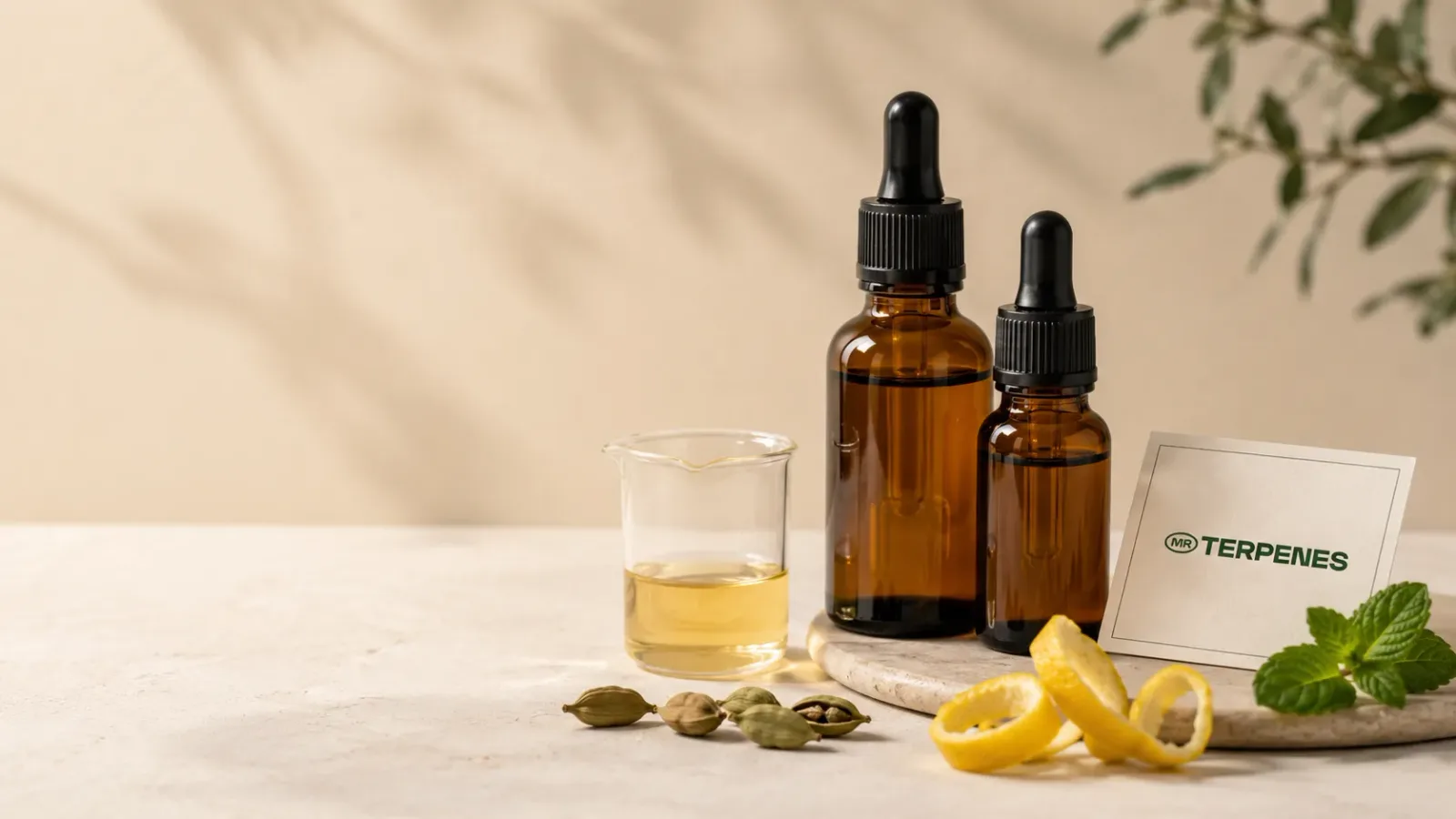
The best terpenes for CBD oil and tinctures are the ones that match your brand’s aroma direction, stay stable in your carrier oil, dose cleanly at oral-product concentrations, and stay consistent batch after batch. Flavour and product identity matter far more here than picking a single “strongest” terpene.
What makes a terpene “best” for CBD oil and tinctures?
For oral CBD products, the winning terpene profile is judged on four practical things, not buzzwords:
- Flavour and aroma on the tongue and in the dropper — does it match your brand story?
- Carrier-oil compatibility with MCT, hemp seed or olive oil — does it dissolve cleanly without separation?
- Concentration sweet spot at oral dosing — usually 0.5–2% by weight in a finished tincture.
- Batch-to-batch consistency from a supplier you can audit (COA, GC-MS, terpene composition).
If a terpene blend nails all four, it is the right pick — regardless of how trendy a single component sounds on the label.
Which terpene aromas suit CBD oil best?
Think in aroma directions, not isolated molecules. Four directions cover most successful CBD tinctures on the UK and EU market:
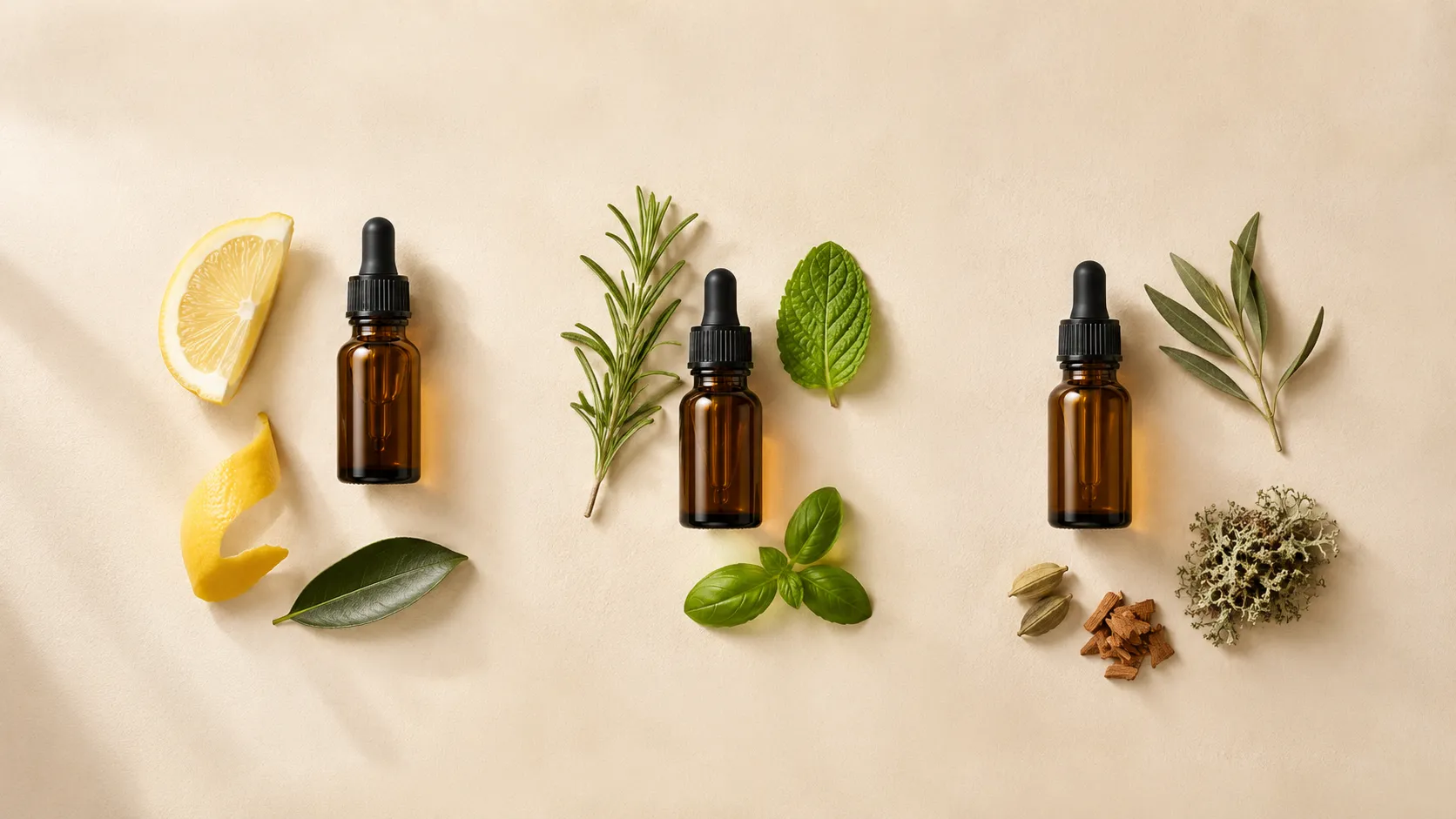
- Citrus and bright — fresh, uplifting, easy entry point for new CBD buyers. Pairs well with MCT carriers.
- Herbal and green — clean, “natural product” identity. Strong fit for wellness and apothecary brands.
- Floral and soft — premium, calm positioning. Works best in evening or sleep-leaning ranges.
- Earthy and woody — grounded, full-spectrum-feel without needing cannabis-derived compounds. Pairs with olive or hemp seed oil.
Pick the direction first, then choose a botanical terpene blend tuned to it. Single-molecule tinctures rarely taste rounded — blends almost always win.

Browse tincture terpenes at Mr Terpeenes
Tinctures reward restraint, so the starting range matters more than the dose. Browse the profiles that sit well in carrier oils before choosing.
How do you choose botanical terpenes for CBD tinctures?
Use this short checklist before you commit to a litre order:
- Match the aroma direction to your packaging, brand voice and price point.
- Sample at the real concentration you plan to sell at — never judge a terpene neat.
- Test in your actual carrier oil (MCT behaves differently from hemp seed).
- Check oxidation stability — leave a sample at room temperature for two weeks and re-taste.
- Ask the supplier for a COA with terpene composition by GC-MS, not just a single “purity” line.
For deeper supplier checks, see our terpene quality standards guide.
How does terpene concentration affect a CBD tincture?
Concentration is where most formulations win or fail. As a practical starting band for oral products:
- 0.25–0.5% — subtle, brand-safe. Aroma is there in the bottle, gentle on the palate.
- 0.5–1.0% — the typical commercial range for flavoured CBD tinctures.
- 1.0–2.0% — bold, identity-led products. Needs a steady hand on bitterness and mouthfeel.
- Above 2.0% — risks harshness, off-flavours and separation in low-viscosity carriers.
Always log the exact percentage on your master formulation sheet. Drifting by 0.2% between batches is enough for an attentive customer to notice — and complain.
How do you keep flavour and aroma consistent batch to batch?
Consistency is a process, not a product feature. Three habits matter most:
- Lock the blend. Once you sign off a profile, the supplier should ship you the same composition every time, with a fresh COA per lot.
- Mix at controlled temperature. Adding terpenes to a warm carrier oil disperses better than to a cold one, but never go above 40 °C — you will lose top notes.
- Store finished tinctures dark and cool. UV light and warm warehouses oxidise terpenes faster than the CBD itself.
For more on protecting a profile across batches, our walkthrough on how to recreate a terpene flavour profile covers the exact match-improve-replace workflow.
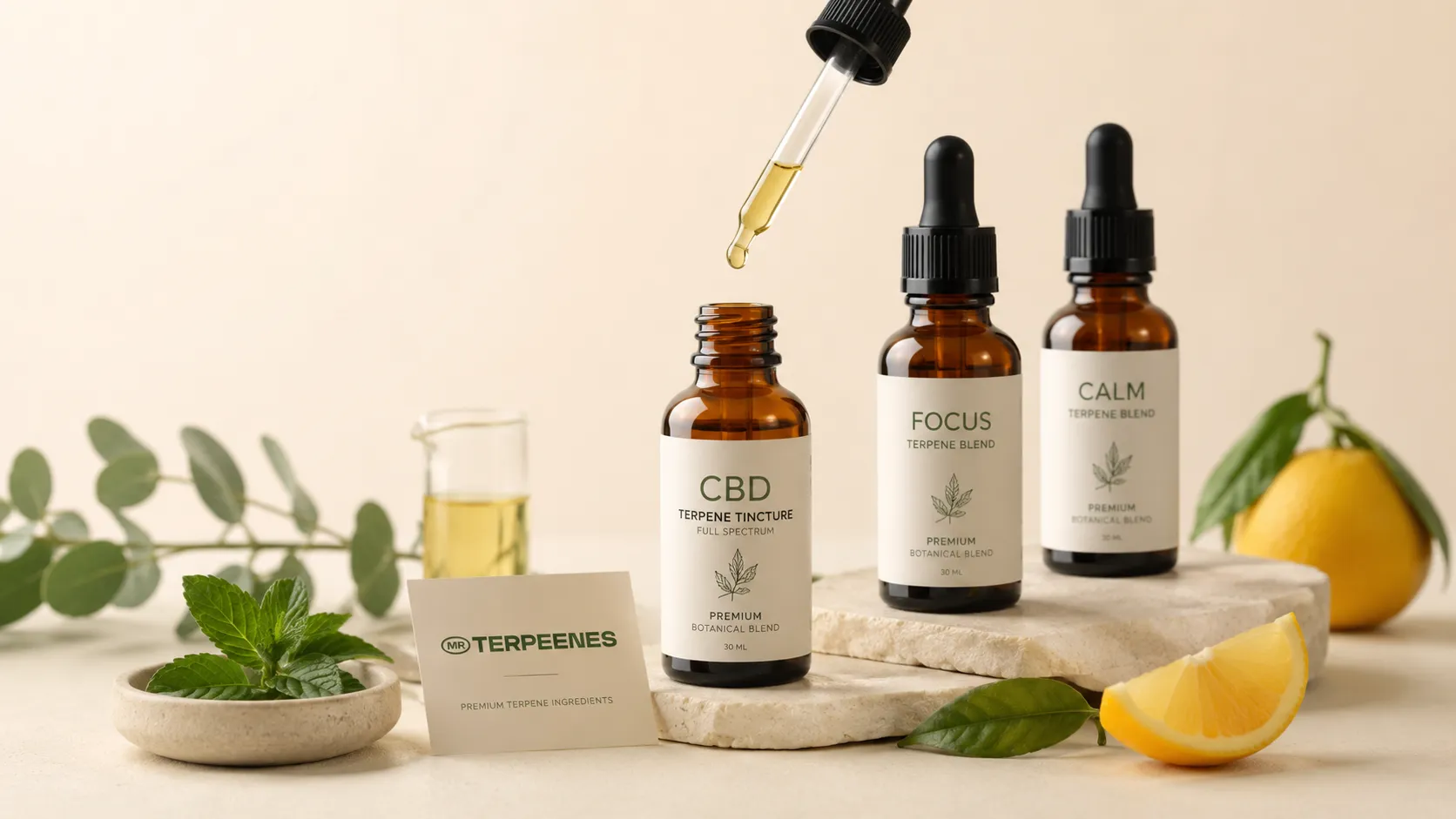
What should UK and EU brands check before buying terpenes for CBD?
UK and EU buyers face stricter labelling and trade rules than the US market. Before placing a bulk order:
- Confirm food-grade or cosmetic-grade documentation matching how the tincture is sold.
- Request the SDS alongside the COA — both are needed for compliant warehousing.
- Verify allergen disclosures for any natural extract used in the blend.
- Check minimum order quantity (MOQ) and lead time against your forecast — terpenes are not the place to run out of stock mid-launch.
Our common mistakes when buying terpenes for production guide covers the avoidable supplier mistakes that catch most new CBD brands.
Buy tincture terpenes in bulk from Mr Terpeenes
Once a tincture formula settles, supply has to stay identical. Discuss bulk volumes, minimum orders and lead times for ongoing CBD production.
Where to buy botanical terpenes for CBD oil in the UK and EU
Mr Terpenes supplies botanical terpene blends and single-molecule terpenes to CBD brands, formulators and white-label producers across the UK and EU. Every blend ships with a fresh GC-MS COA, an SDS for warehousing, and a sample protocol so your formulation team can validate the profile at the exact concentration you plan to sell at.
If you are scaling from R&D into commercial production, see our bulk terpene supplier UK checklist for MOQ, lead time and supply-security questions to ask before signing a contract.
FAQs about choosing terpenes for CBD oil and tinctures
Are botanical terpenes safe to use in CBD tinctures sold in the UK?
Botanical terpenes used inside their declared food-grade or cosmetic-grade scope are widely used in CBD tinctures sold in the UK and EU. Always match the grade of your terpene to the regulatory route of your finished product, and keep a current SDS and COA on file.
What is a sensible terpene concentration for a CBD tincture?
Most commercial flavoured CBD tinctures sit between 0.5% and 1.0% terpenes by weight. Start at 0.5%, sample with end-users, and only push higher when a stronger profile is clearly part of the product identity.
Botanical or cannabis-derived terpenes for CBD oil — which should I pick?
For most UK and EU CBD brands, botanical terpenes are easier to source, document and price competitively. Cannabis-derived terpenes can suit premium positioning but bring tighter supply, higher cost and more documentation work.
Will terpenes change the colour or viscosity of my CBD oil?
At typical 0.5–2% loadings, the impact on colour and viscosity is minimal. Above 2% — or with certain heavy sesquiterpenes — you can see slight tinting and a thinner mouthfeel. Always run a full visual and stability check on the finished tincture.
Can I use the same terpene blend across my whole CBD range?
A signature blend across a range builds brand recognition, but most successful CBD lines use two to four profiles tuned to use cases (daytime, evening, unflavoured). Anchor on one hero blend, then build variants around it.
Choose terpenes that match your CBD brand, not just your bottle
The best terpenes for CBD oil and tinctures are the ones a customer remembers — by aroma, by mouthfeel and by consistency from one bottle to the next. Pick your aroma direction, lock a documented blend, and treat concentration and storage as part of the recipe, not afterthoughts.
Ready to sample botanical terpene blends for your next CBD oil or tincture? Talk to the Mr Terpenes team about profiles, MOQs and COAs tailored to UK and EU buyers.