


White Label Vape Hardware: What CBD and Terpene Brands Should Check Before Ordering

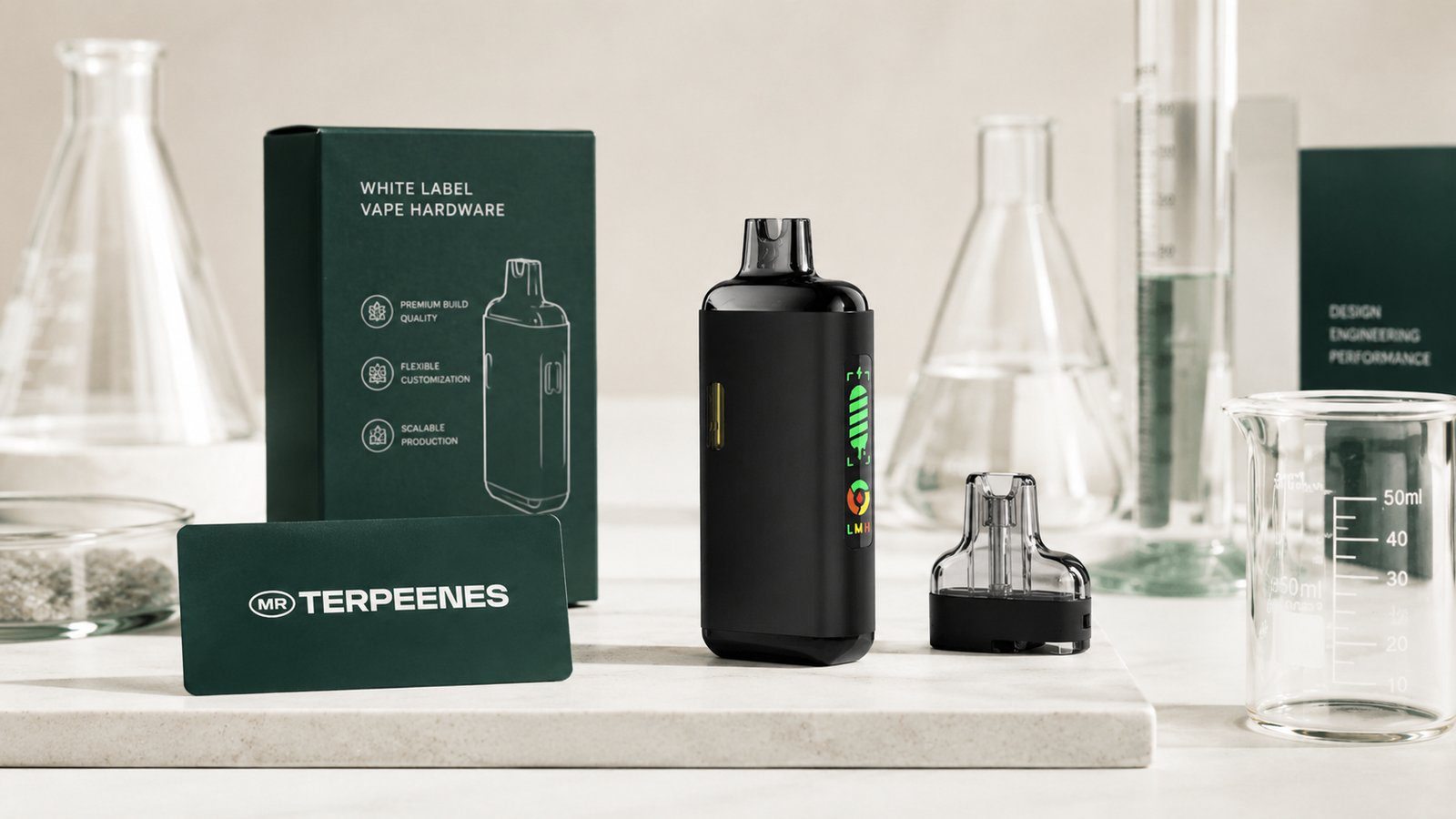
Choosing white label vape hardware is one of the most commercially important decisions a CBD or terpene brand will make before launch. The device, cartridge or disposable you select shapes how your product looks on the shelf, how reliably it performs in the customer’s hand, how cleanly your oil fills and how consistent every batch feels. Get it right and you have a repeatable, on-brand product. Get it wrong and you inherit leaks, clogging, returns and packaging that no longer fits. This guide walks through what brands should check — compatibility, hardware type, branding, MOQ, testing, packaging and documentation — before placing an order.
What Is White Label Vape Hardware?
In a B2B context, white label vape hardware is hardware produced by a manufacturer or supplier that brands buy unbranded or custom-branded, then sell as their own. It covers cartridges, disposables, batteries, full kits and the packaging around them.
The terms overlap, so it helps to separate them:
- White label usually means a ready, proven product that you apply your branding to. It is the fastest route to market.
- Private label is similar but often implies a closer, more exclusive arrangement around a product line.
- Custom hardware means tooling, components or finishes built more specifically to your specification, typically at higher cost and longer lead times.
Most brands start with white label because it lowers the barrier to entry: the hardware already works, so you can focus on your formulation, presentation and route to market rather than engineering a device from scratch.
Hardware Type: Cartridges, Disposables or Full Kits?
The first practical decision is format. Each suits a different buyer, price point and level of brand responsibility.
510 Vape Cartridges
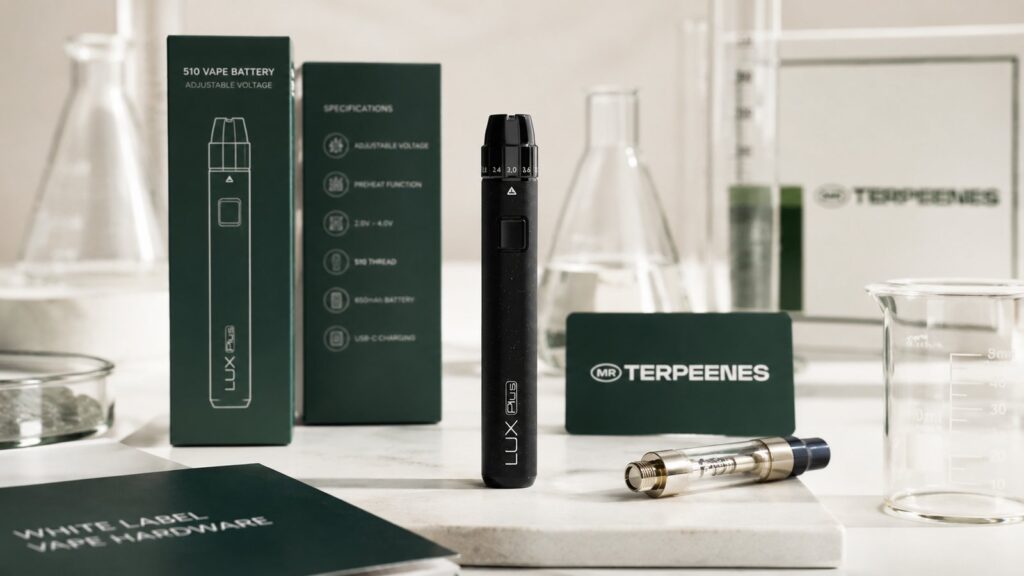
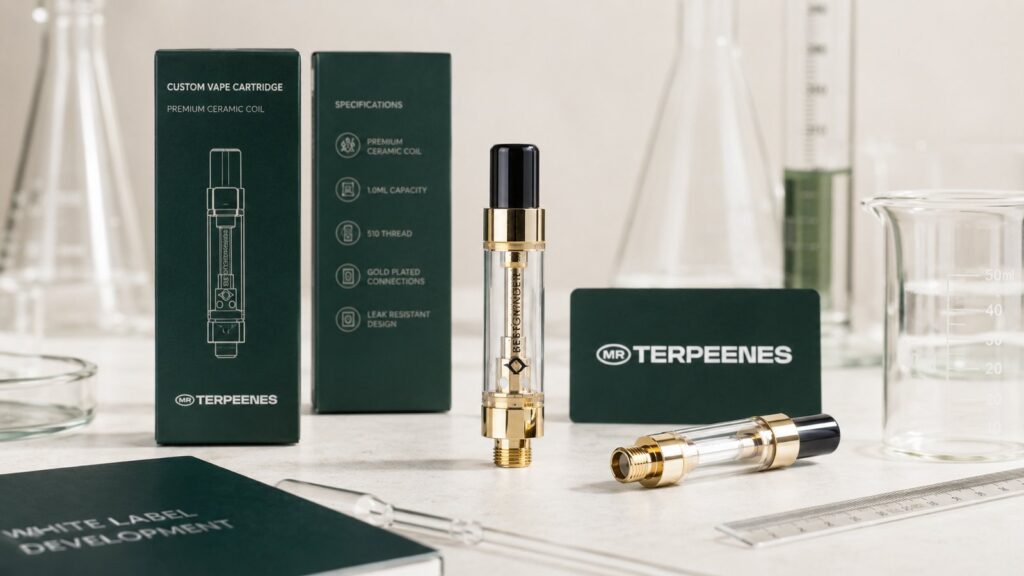
The 510 thread is the most widely used standard in the industry, which is exactly why so many brands choose it. A 510 cartridge pairs with a huge range of compatible batteries, giving customers flexibility and giving you a familiar, interchangeable platform.
For filling, 510 cartridges are well supported by both manual and automated equipment, which matters as you scale. When assessing 510 vape cartridges, check the core type, intake hole sizing and how the cartridge behaves with your specific oil — not just the headline specification. Compatibility with the customer’s battery and voltage is part of the experience you are selling.
Disposable Vape Hardware
Disposables combine the cartridge, battery and mouthpiece into one sealed, ready-to-use device. They are convenient for the customer and present your brand as a single, polished object — a strong retail proposition.
The trade-off is responsibility. Because everything is integrated, the finished-product performance rests on you and your supplier together. Battery life, draw activation, consistent heating and leak resistance all need to be verified on the filled device, because a disposable cannot be serviced once it is in a customer’s hands.
Batteries and Full Vape Kits
Branded batteries and full kits give customers a reusable device they associate with your brand — and a reason to come back. Here, check charging method, voltage settings, build quality and how the kit presents in its box.
Retail presentation is part of the product. A well-considered kit, with clear instructions and tidy packaging, supports repeat purchase and reinforces brand recognition far more than loose components do.
Compatibility With CBD, Distillate and Terpene Formulations
Hardware should never be assessed in isolation. The single most common mistake is choosing a device on appearance, then discovering it does not suit the formulation.
Key factors to consider:
- Viscosity and oil thickness — thicker distillate and thinner, more terpene-rich blends behave very differently in the same cartridge.
- Terpene concentration — higher terpene content can affect wicking, clogging and how aggressively the oil interacts with seals and components.
- Core type — ceramic, cotton and other core constructions heat and wick differently; the right choice depends on your oil.
- Leakage resistance and clogging risk — both are strongly influenced by the viscosity-to-hardware match.
- Heating behaviour — consistent, controlled heating protects flavour and the customer experience.
The essential principle: test the hardware with your final formulation, not a generic oil. A cartridge that performs beautifully in a lab sample can still clog or leak with your particular blend.
For formulation context, our guides on best terpenes for distillate and mixing terpenes correctly are useful background, and vape oil viscosity and filling temperature explains why oil thickness changes how hardware performs. This article stays on hardware; the formulation detail lives there.
Branding Options: What Can Usually Be Customised?
White label hardware can typically carry your brand in several ways, though what is possible depends on the supplier, the MOQ and the hardware type.
Common options include:
- Logo placement on the device or cartridge
- Colour options and device finish
- Mouthpiece style or material
- Cartridge or disposable branding
- Outer box packaging and inserts
- Labels and batch information
Presentation tiers range from basic, where you primarily apply a logo and label, to premium, where finish, colour, mouthpiece and packaging are coordinated into a cohesive identity. Decide early how much customisation your budget and order volume support, because it influences both cost and lead time.
MOQ, Lead Times and Ordering Practicalities
For newer brands, the operational details often matter as much as the product itself.
Before ordering, check:
- MOQ — the minimum order quantity for both hardware and any custom branding.
- Sample availability — whether you can order samples before committing.
- Prototype or pre-production samples — particularly important for custom finishes.
- Production and shipping timelines — and how they shift as order size grows.
- Re-order planning — lead times for repeat production so you avoid stockouts.
- Storage — where finished stock will live and in what conditions.
- Scalability — how smoothly you can move from a first order to repeat, larger runs.
Mapping these out before you buy prevents the two classic problems: ordering more than you can store, or under-ordering and running dry just as demand builds.

White label hardware from Mr Terpeenes
Branding, minimum quantities and compatibility testing all shape a first hardware order. Explore the range and check the specification against your own product.
Quality Checks Before Committing to a Supplier
Treat this as your pre-order checklist. Working through it with samples — ideally filled with your own oil — is the best protection against a disappointing first production run.
- Sample testing with your final formulation, not a stand-in oil
- Leak testing across normal handling, temperature changes and time
- Clogging checks over repeated draws
- Battery performance — life, consistency and draw activation
- Mouthpiece fit and finish quality
- Packaging quality — does it protect the product and present well?
- Material quality across components
- Supplier communication — responsiveness and clarity before you have even paid
- Consistency across batches, not just a single good sample
- Documentation where applicable
Consistency deserves particular attention. A supplier that delivers one excellent sample but cannot repeat it at volume is a risk to your brand.
Packaging and Compliance Considerations
Hardware and packaging belong together. The device determines how it must be boxed, labelled and protected.
Points to consider:
- Outer packaging that protects the product in transit and on shelf
- Adequate labelling space for your branding and required information
- Batch codes for traceability
- Ingredient or product information where applicable
- Warnings and market-specific requirements
- Child-resistant or tamper-evident options where relevant
Requirements vary by market and product type. UK and EU buyers are responsible for confirming what applies to them, and should speak with an appropriate compliance or regulatory advisor rather than relying on general guidance. This is not legal advice. For the physical side, coordinating hardware with custom packaging early avoids redesigns later.
How White Label Vape Hardware Supports Brand Growth
Used well, white label hardware is a growth tool, not just a product choice.
- Faster launch — proven hardware removes engineering delays.
- Consistent presentation — every unit looks and feels on-brand.
- Lower barrier to entry than fully custom tooling.
- Product-market testing — validate demand before heavy investment.
- Stronger brand recognition through coordinated devices and packaging.
- Easier expansion into related SKUs once your format is established.
Mr Terpeenes supports brands across this journey, combining vape hardware with broader white label solutions, packaging and terpene-related support — useful when you want hardware and formulation considered together.
Questions to Ask Before Ordering White Label Vape Hardware
A concise list to take into any supplier conversation:
- What formulation will the hardware be used with?
- Has the hardware been tested with similar oil viscosity?
- What is the MOQ?
- Can I order samples first?
- What branding options are available?
- What packaging can be supplied?
- What are the production and shipping timelines?
- What documentation is available?
- Can the supplier support repeat orders?
Choosing White Label Vape Hardware With Confidence
A strong vape product is the sum of its parts: the right hardware type, genuine compatibility with your formulation, thorough sample testing, a workable MOQ, branding that fits your positioning, packaging that protects and informs, and documentation suited to your market. Check each before you order, and your first production run is far more likely to behave like your hundredth.
Frequently Asked Questions
What is white label vape hardware?
White label vape hardware is unbranded or custom-branded hardware — cartridges, disposables, batteries, kits and packaging — that a brand buys from a supplier and sells as its own, allowing a faster launch than developing hardware from scratch.
What should CBD brands check before ordering vape hardware?
Brands should check compatibility with their formulation, hardware type, MOQ, sample availability, branding and packaging options, production and shipping timelines, batch consistency and any available documentation.
Can vape hardware be customised with a brand logo?
Yes, white label vape hardware can usually be customised with a logo, along with colour, finish, mouthpiece and packaging options. Exactly what is possible depends on the supplier, the hardware type and the order quantity.
Why is compatibility testing important before ordering vape hardware?
Because oil viscosity and terpene content affect leaking, clogging and heating, hardware should be tested with your final formulation — not a generic oil — so the device performs reliably for the customer.