

Vape Cartridge Hardware Types: Ceramic, 510 and Disposable Compared

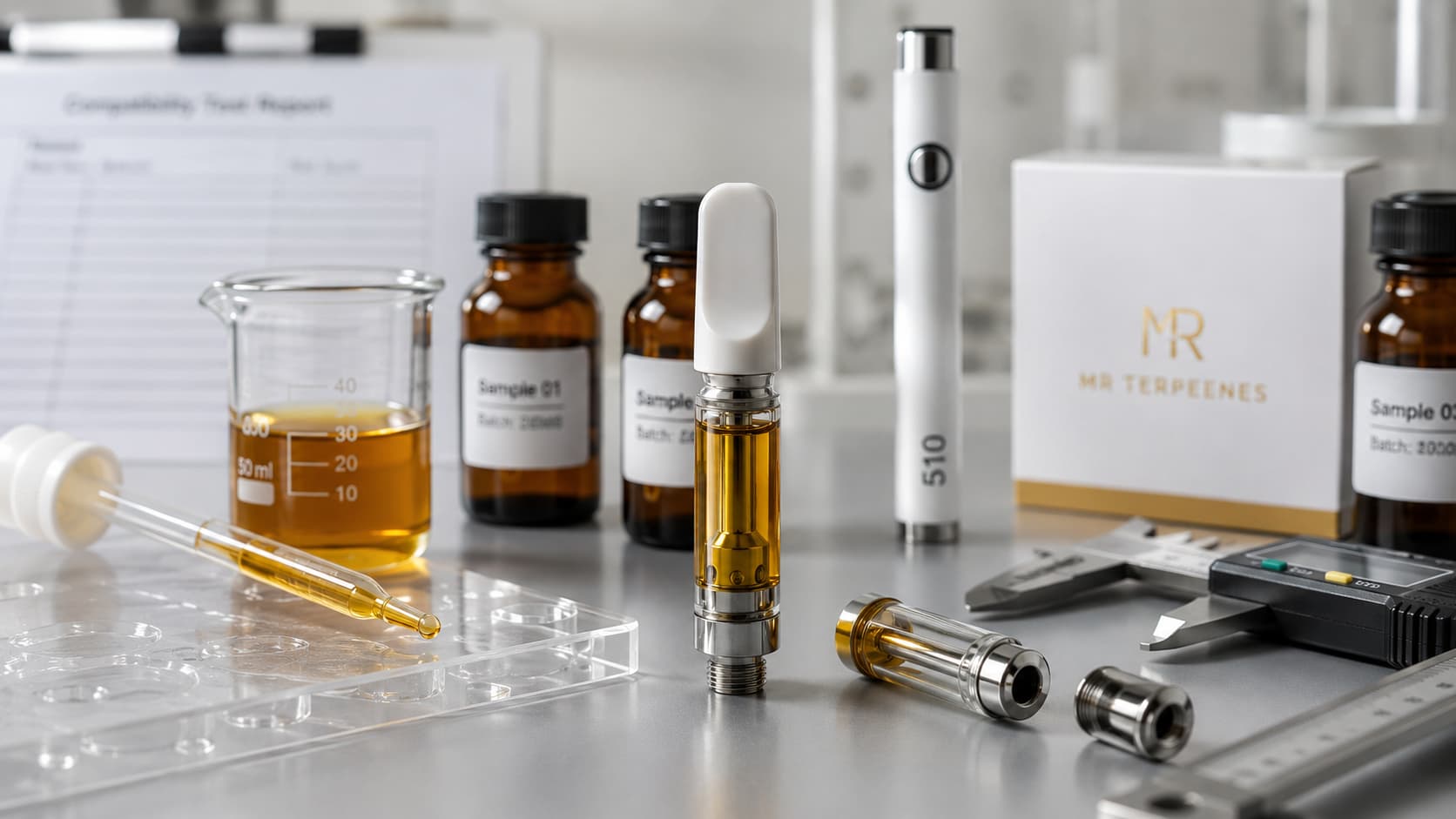
Choosing vape cartridge hardware is one of the first commercial decisions a brand faces when developing a CBD, terpene or distillate-based product — and it shapes far more than appearance. The cartridge or device you select affects compatibility with your formulation, how cleanly flavour is delivered, how reliably the hardware fills, leakage risk, shelf presentation and the experience your customer has on the very first draw. This guide compares the main hardware types — ceramic cartridges, 510 cartridges and disposable devices, alongside glass tank options — and sets out the practical checks that separate them, so a brand can decide which format fits before approaching a supplier. It stays on hardware selection; where formulation detail matters, we point to dedicated guides rather than repeat them here.
What Are Custom Vape Cartridges?
For a B2B buyer, “custom vape cartridges” usually means cartridges supplied for a branded product rather than sold generically off the shelf. The “custom” element can cover several things at once:
- Branding — your logo, colours or packaging applied to the cartridge and its box.
- Hardware specification — the core type, intake holes, capacity and mouthpiece chosen to suit your product.
- Formulation fit — selecting hardware that behaves well with your particular oil or blend.
The difference from a generic option is intent. An off-the-shelf cartridge is designed to be broadly acceptable; a custom cartridge is selected and presented to match one brand, one formulation and one route to market. That distinction matters most at scale, because consistency and compatibility become harder to fix after a large order is placed.
510 Vape Cartridges: The Standard Option for Many Brands
The 510 thread is the most widely used connection standard in the sector, which is precisely why so many brands start here. A 510 cartridge pairs with a large range of compatible batteries, giving customers flexibility and giving you a familiar, interchangeable platform.
There are practical reasons 510 cartridges remain popular:
- Battery compatibility — they work with many standard 510 batteries, which customers already recognise.
- Filling support — they are well supported by both manual and automated filling equipment, which helps as volumes grow.
- Retail familiarity — buyers and shops understand the format, lowering friction at the point of sale.
None of this makes 510 universally “best”. The headline thread tells you nothing about how a specific cartridge behaves with your oil. Core type, intake-hole sizing and capacity still vary widely between 510 cartridges, so brands should test with their final formulation — not a generic sample — before committing to a run.
Ceramic Vape Cartridges: Why Material Choice Matters
Ceramic vape cartridges use a ceramic heating element or core rather than a fibre wick. Brands often consider ceramic because of how it is perceived: many buyers associate it with clean flavour delivery and even heat distribution.
In practical terms, material choice can influence:
- Flavour delivery — a ceramic core may be suited to preserving the character of terpene-rich blends, depending on formulation.
- Heat behaviour — how evenly the element warms the oil during a draw.
- Viscosity suitability — different cores wick thicker or thinner oils differently, so the right match depends on your blend.
Ceramic is one option to consider, not a guaranteed upgrade. The only way to know how a ceramic cartridge performs with your product is to test for clogging, leakage and flavour consistency using your actual oil. Because customers often equate flavour and reliability with quality, material choice can affect perceived product quality — which is exactly why testing, rather than assumption, should drive the decision.
See the hardware range at Mr Terpeenes
Cartridge choice shapes flavour long before the oil does. Browse the vape hardware stocked for UK and European brands and see which formats suit your formulation.
Disposable Vape Hardware: Convenience and Brand Presentation
Disposable hardware takes a different route from cartridges. Instead of a separate cartridge and battery, the tank, battery and mouthpiece are combined into one sealed, ready-to-use device.
For some brands this is attractive:
- Convenience — nothing to assemble or charge separately for the end user.
- Presentation — the whole product is a single, polished object, giving you more control over how the brand looks in the hand and on the shelf.
The trade-off is responsibility and testing. Because everything is integrated, battery life, charging behaviour, draw activation, consistent heating and leak resistance all rest on the finished device — and a disposable cannot be serviced once it reaches a customer. That raises the importance of pre-production testing, and usually brings different MOQ and lead-time considerations than a simple cartridge order. Disposables may suit brands prioritising a complete, controlled presentation, while cartridges may suit brands that want a flexible, battery-agnostic platform. Neither is inherently superior.
Cartridge Compatibility: Oil Viscosity, Terpenes and Filling
This is where many first orders succeed or fail. Hardware should never be judged on appearance alone — it has to suit the oil going into it.
Key factors to weigh up:
- Oil thickness (viscosity) — thick distillate and thinner, terpene-rich blends behave very differently in the same cartridge.
- Terpene concentration — higher terpene content can change wicking, clogging and how the oil interacts with seals and components.
- Heating behaviour — consistent, controlled heating protects flavour and the customer experience.
- Leakage and clogging — both are strongly influenced by how well viscosity matches the wick or core.
- Fill volume and capping — the capacity and capping method affect leakage, transit and shelf life.
- Storage and transport — temperature changes during shipping and storage can reveal weaknesses a quick bench test misses.
The principle that ties these together: test the cartridge with your final formulation, in conditions close to real handling. A cartridge that performs beautifully with a standard oil can still clog or leak with your particular blend. For formulation context, our guides on mixing terpenes correctly and the best terpenes for vape cartridges are useful background — this article stays on hardware, and the blending detail lives there.
Custom cartridges from Mr Terpeenes
Hardware only performs when it suits the oil going into it. Explore 510, ceramic and disposable options and match the format to your formulation.
Branding Options for Cartridge Hardware
Once the format works with your oil, presentation is where a custom cartridge earns its place. Depending on the supplier, hardware type and order volume, brands can often customise:
- Cartridge colour and finish
- Mouthpiece style or material
- Logo placement on the device or cartridge
- Outer packaging box, inserts and label design
- Batch or product information for traceability
- Premium finishes for a higher-tier presentation
The aim is coherence: cartridges, device and box should match your wider brand identity rather than look like generic stock with a sticker added. Hardware and packaging are best planned together — coordinating custom packaging early avoids redesigns later and keeps labelling space, inserts and box sizing aligned with the device you have actually chosen.
How to Choose Between 510, Ceramic and Disposable Hardware
There is no single right answer — the best format depends on your formulation, budget, brand strategy and how much production responsibility you want to carry. The table below summarises the trade-offs.
| Hardware type | Best suited for | Key checks before ordering |
|---|---|---|
| 510 cartridges | Brands wanting a familiar, battery-flexible, widely supported platform | Core type, intake-hole size and behaviour with your final oil; battery/voltage compatibility |
| Ceramic cartridges | Brands prioritising clean flavour delivery for terpene-rich blends | Clogging, leakage and flavour consistency tested with your actual formulation |
| Disposable vape hardware | Brands wanting a complete, controlled, ready-to-use presentation | Battery life, charging, draw activation, leak resistance on the filled device; MOQ and lead time |
| Full branded kits | Brands building reusable, repeat-purchase products | Build quality, charging method, packaging presentation and consistency across batches |
Use it as a starting point for conversations with a supplier, not a substitute for testing. Once a format is settled, the next decisions are specification and supply — finish, mouthpiece, capacity, branding and volumes — which is where our cartridge sourcing and branding options pick up.
What Brands Should Ask a Vape Cartridge Supplier
A concise checklist to take into any supplier conversation:
- Can I order samples first?
- What formulations has this hardware been tested with?
- What is the MOQ for hardware and for custom branding?
- What branding options are available?
- What packaging options are available?
- What are the lead times for first and repeat orders?
- Are documents or specifications available?
- How is quality checked, and is it consistent across batches?
- Can the supplier support repeat orders as you scale?
- Can the supplier support related products such as terpenes, packaging or oil-filling machinery?
Working through this list with samples — ideally filled with your own oil — is the best protection against a disappointing first production run.
Where Custom Vape Cartridges Fit in a Finished Product Strategy
Hardware is one component of a finished product, and it performs best when considered alongside the others:
- Terpene flavour profile — the character your customer experiences, supported by custom terpene blends.
- CBD or distillate base — the formulation the hardware has to handle.
- Filling process — how reliably and consistently each unit is produced.
- Packaging — protection, labelling and presentation.
- Quality control — sample testing, batch consistency and documentation.
- Retail presentation — how the finished product reads on the shelf.
Mr Terpeenes works with brands across this picture, combining vape hardware with terpenes, packaging and product-development support — useful when you want hardware and formulation considered together rather than in isolation. For brands going further into branded devices, our white label vape hardware options cover that route in more depth.
Building a Better Vape Product Starts With the Right Hardware
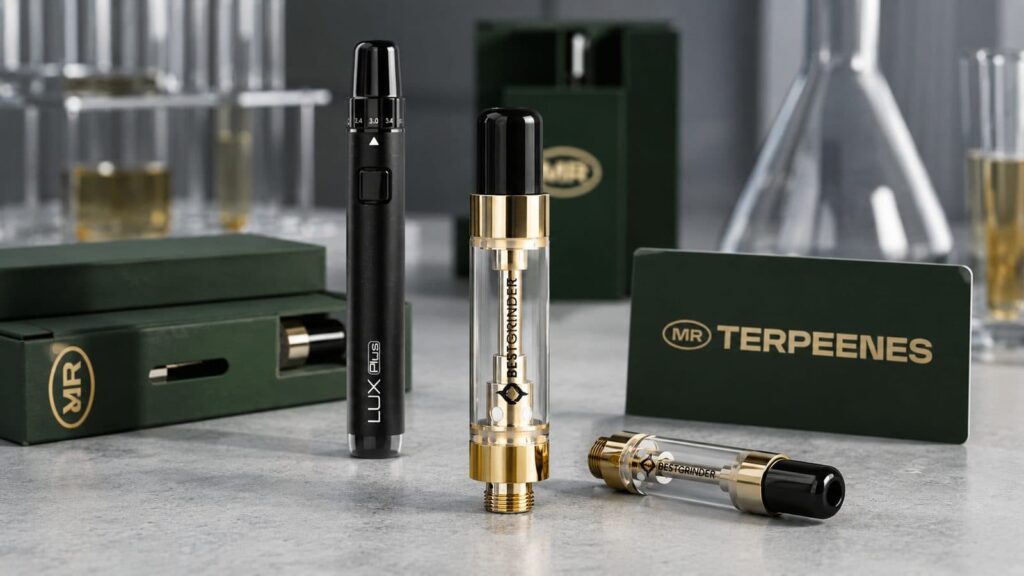
Choosing custom vape cartridges is not only about how the device looks. The stronger decision weighs hardware type, genuine compatibility with your formulation, thorough sample testing, a workable MOQ, branding that fits your positioning, packaging that protects and informs, and a supplier who can support repeat orders. Check each before you order, and your first production run is far more likely to behave like your hundredth.
Frequently Asked Questions
What are custom vape cartridges?
Custom vape cartridges are cartridges supplied for a specific brand rather than sold generically. The customisation can include branding, such as logo and packaging, as well as hardware specification and selection to suit a particular oil or formulation.
Are 510 vape cartridges suitable for branded vape products?
510 vape cartridges are a widely used option because they are compatible with many standard batteries and are well supported by filling equipment. Whether they suit a particular brand depends on the formulation, so brands should test with their final oil before ordering.
What is the difference between ceramic cartridges and standard cartridges?
Ceramic cartridges use a ceramic heating element or core, while other cartridges may use a fibre wick. Ceramic is often associated with clean flavour delivery and even heating, but the right choice depends on viscosity and formulation, and should be confirmed through testing.
Should brands test vape cartridges before placing a bulk order?
Testing before a bulk order is strongly advisable. Oil viscosity and terpene content affect leaking, clogging and heating, so hardware should be tested with the final formulation to confirm it performs reliably for the customer.