


How to Choose Packaging for Vape Hardware: Boxes, Inserts, Labels and Display Units


Vape hardware packaging is the outer box, internal insert, product labels and retail presentation that a brand builds around a physical device before it reaches a shelf. Choosing it well means matching each of those elements to the specific hardware — a cartridge, a 510 battery, an all-in-one device or a multi-component kit — and to the channel where the product will sell. This guide sets out how to make those decisions in a practical order, so the packaging protects the device, identifies it clearly and arrives retail-ready.
The principle underneath every choice is simple: vape hardware packaging is designed around the device, not the other way round. A product’s size, weight, fragility and number of components should be settled before any box, insert or label is drawn, because those physical facts decide what will actually hold and present it on a counter.
What Is Vape Hardware Packaging?
Vape hardware packaging is the complete set of components that carry a finished vaping device from production to point of sale. It is a system rather than a single box, and depending on the product it can include:
- Outer packaging — the box or carton that contains and protects the device.
- Internal insert — the tray or holder that positions each part.
- Product identification — the model, variant or capacity a buyer needs to recognise.
- Instructions — a card or leaflet where the device needs one.
- Accessory compartments — space for a charging cable, spare mouthpiece or cartridge.
- Labels — branding, information and reference marks.
- Retail display — the unit that groups several boxed products together in store.
The mix changes with the device. Cartridge packaging is compact and built around a small, fragile part; battery packaging often houses a device plus a cable and instructions; all-in-one device packaging wraps a single sealed unit; and hardware kit packaging separates several components in one box.
Start with the Hardware, Not the Box
Before comparing formats, describe the product in physical terms. The brief becomes far easier once these are known:
- Device measurements — length, diameter or width, and depth of every item.
- Number of components — one device, or a device plus accessories.
- Accessories — charging cables, spare mouthpieces or additional cartridges.
- Movement inside the box — how much the parts can shift in transit.
- Presentation order — what a customer should see first on opening.
- Ease of removal — how the device lifts out without a struggle.
These details define the internal volume, the insert and the box footprint, and settling them first prevents a device rattling in an oversized carton or a cable with nowhere to sit.
Choosing the Right Box for Vape Hardware
The outer box carries the brand and does the protecting, so it is usually the first commercial decision. Weigh it against a few criteria: the size and shape of the device, the value and positioning of the product, the number of components, the shipping conditions it must survive and the unboxing experience you want a customer to have.
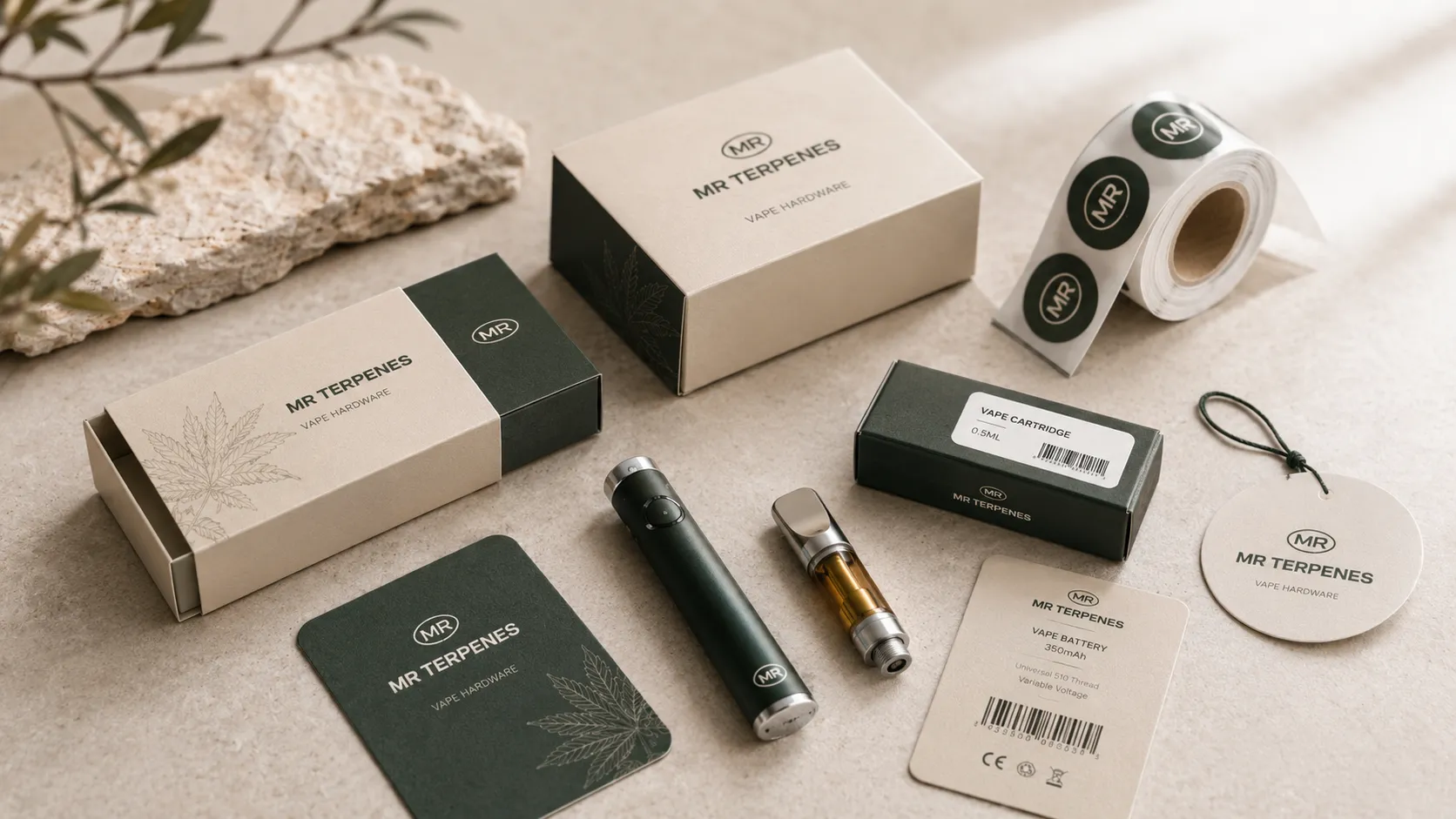
The box is the most visible part of any vape hardware packaging system, and vape packaging boxes fall along a spectrum. Simple folding cartons suit lower-cost, high-volume items and single cartridges. More structured cartons add rigidity for devices that need protection. Structured rigid boxes give the most protective, premium feel and a deliberate opening sequence, which suits higher-value devices and gift-style presentations. A single-device box stays tight to one unit, while a kit box is sized to hold several parts together. Matching the format to the product keeps cost, protection and presentation in balance rather than forcing every device into the same shell.

See packaging options at Mr Terpeenes
Hardware and packaging are chosen together or not at all. Browse the white-label packaging built around cartridges, batteries and disposables before the artwork stage begins.
Why Custom Inserts Matter
An insert is what turns a box into packaging that actually holds a device. Custom packaging inserts hold the hardware securely, separate components, reduce movement in transit and make accessories easier to identify, so cartridges, batteries and cables each have a defined place rather than sitting loose. The insert also sets the presentation, deciding what a customer sees first.
An insert should be cut to the product rather than bought off the shelf. Documented options for rigid boxes include EVA foam, paperboard, blister or formed trays and custom-cut slots, each suited to different weights and shapes. Which one fits depends on the device, so the insert is specified per project alongside the box.
Labels and Product Information
Labels do more than carry a logo. On vape hardware they usually cover several jobs at once, and it helps to separate them when planning artwork:
- Branding labels — logo, colours and identity.
- Product identification labels — what the device is.
- Model or SKU labels — which version and variant.
- Barcode areas — space for retail scanning.
- Batch or reference information — for traceability.
- Instructional information — basic use or handling notes.
- Market-specific information — details a particular market expects.
Custom product labels are also the quickest way to tell variants apart, distinguishing device models, capacities, colours, cartridge formats and hardware versions without redesigning the whole box. What a label must carry depends on the product, the market and the jurisdiction, so it is worth confirming rather than assuming one rule applies everywhere; in the UK, for instance, businesses that supply packaging have defined packaging producer responsibilities. This is a commercial and practical point, not legal advice.
Packaging for Vape Cartridges, Batteries and All-in-One Devices
The three most common formats each pull the packaging in a different direction. Designing for the specific device keeps the box efficient and the presentation clear.
Vape Cartridge Packaging
A cartridge is small, glass-bodied and fragile, so its packaging is compact and protective. The priorities are a tight format that avoids wasted space, secure positioning so the cartridge cannot move, protection for the glass and heating core, and clear identification of the format or variant. Custom vape cartridge boxes with a fitted slot handle this in a small footprint, and brands often match the box to their custom vape cartridge options so the slot fits the tank.
Vape Battery Packaging
A battery usually travels with more than itself. Packaging for 510 batteries often needs space for the device, a charging cable where one is supplied, and a short instruction card, with separation between the components so they do not knock together. Clear technical identification matters here too, because buyers choose between models and variants. Vape battery packaging is easiest to plan once the accessories are confirmed, and it pairs naturally with branded 510 battery hardware.
All-in-One Vape Device Packaging
An all-in-one device is a single sealed unit, so packaging for all-in-one vape devices is matched closely to the whole product with little unnecessary space. The focus shifts to brand visibility, clear product information and a retail-ready feel, since the device sells largely on its finish and presentation. A snug box and a simple identification system are usually enough for all-in-one vape devices.
Brief your packaging with Mr Terpeenes
Format, print method and order quantity shape what is actually possible. Send the hardware you are packing and the requirement can be costed properly.
When to Use Retail Display Units
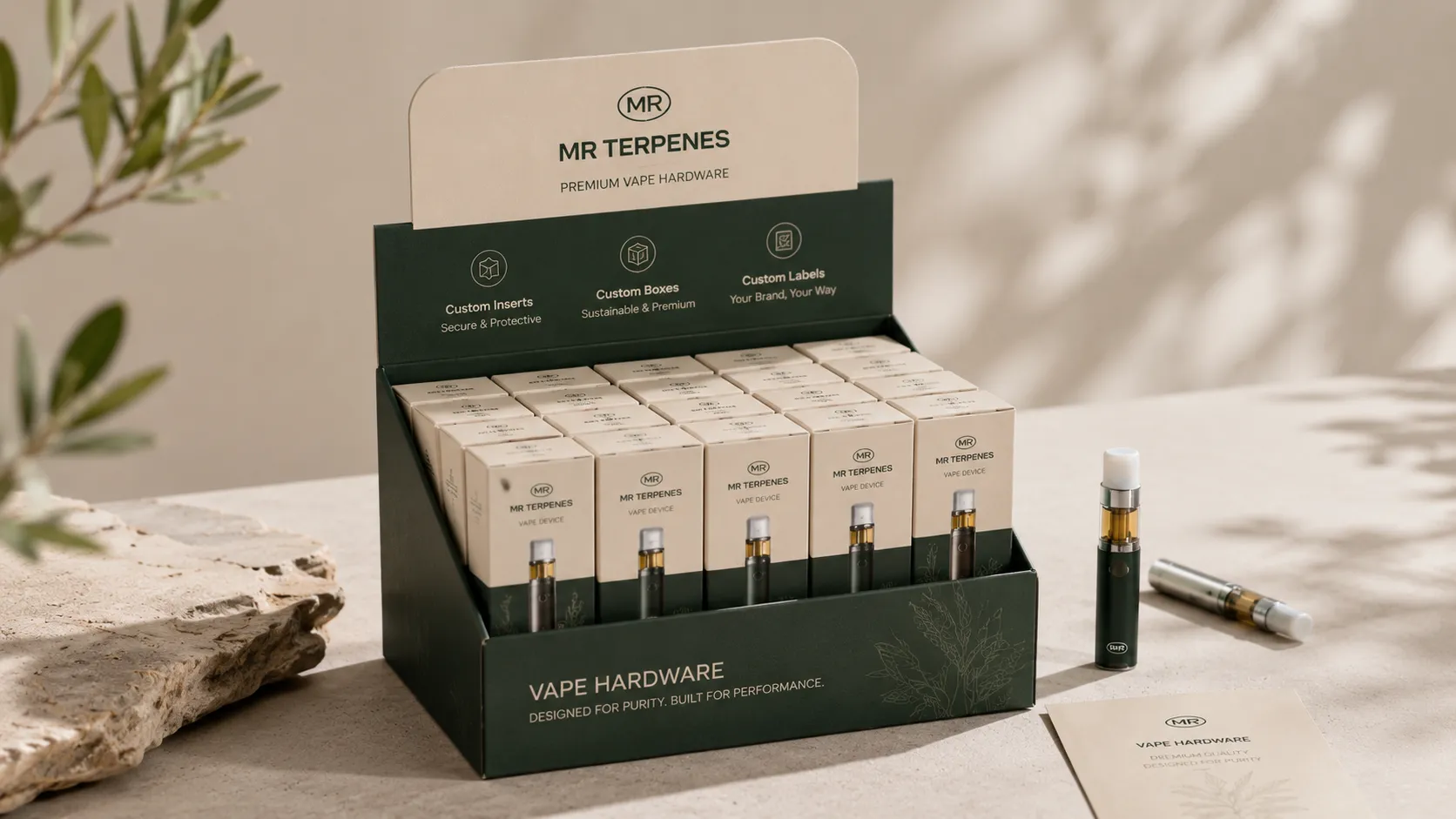
Where a box presents one product, a display presents the range. Retail display units for vape products help in shops, on counters and with distributors by grouping several units into one branded presence. A well-judged display organises different models, improves visibility, supports product discovery, keeps branding consistent, makes restocking easier and presents multiple SKUs side by side.
Displays earn their place once a brand has more than one product to show or wants a stronger counter presence at launch. Countertop display units are the natural step for presenting boxed cartridges, batteries and devices as a set rather than as loose stock.
Vape Hardware Packaging Comparison
Vape hardware packaging shifts with the device, and each hardware type tends toward a different packaging shape. The table below is a quick way to match a device to a format, an insert and its retail role.
| Hardware type | Typical packaging format | Insert requirements | Information needs | Retail display considerations |
|---|---|---|---|---|
| Cartridge | Compact carton or fitted box | Snug slot to protect fragile glass | Format and variant identification | Groups well on a small display |
| 510 battery | Structured box with room for accessories | Separation for device, cable and card | Model and technical variant | Benefits from model-based grouping |
| All-in-one device | Snug box matched to the unit | Minimal, close-fitted holder | Brand and product identity | Presentation-led, finish on show |
| Hardware kit | Larger box with compartments | Separate slots per component | Contents and assembly guidance | Sold as a set, fewer facings |
| Accessory set | Small box or flexible pack | Organised holding of small parts | Compatibility and reference | Suits add-on placement near devices |
How to Keep Packaging Consistent Across Several Hardware SKUs
As a range grows, the challenge is looking like one brand while still telling devices apart at a glance. A shared system does both. Align these elements across every hardware SKU:
- Shared box structure — the same core format, scaled per device.
- Consistent logo placement — the same mark in the same position.
- Colour coding — a predictable colour cue for each line.
- Model naming — a clear, repeatable naming pattern.
- Capacity identification — a consistent way to show variants.
- Label hierarchy — the same order of information on every pack.
- Product imagery or device outline — a repeatable visual cue.
- Consistent display design — units that echo the product identity.
Applied together, these keep branded vape packaging coherent across the range while making it obvious which pack holds a cartridge, which holds a battery and which holds a full device.
What to Prepare Before Requesting Vape Hardware Packaging
A clear brief leads to a faster, more accurate quotation. Before getting in touch, it helps to have the following ready:
- Hardware model and exact product dimensions
- Number of components and any accessories included
- Packaging quantity and number of SKUs
- Brand files, logos and colours
- Required label areas and barcode requirements
- Preferred box format and insert requirements
- Retail or ecommerce channel and intended display format
- Target launch date and destination markets
Minimum quantities, materials, finishes and timelines are confirmed per project, so sharing these details up front is the quickest route to a specification that fits the product.
Coordinating Hardware and Packaging with One Supplier
Sourcing the device and its packaging together has practical advantages. It aligns the box and insert to the real dimensions of the device, reduces sizing errors, keeps branding consistent across hardware and packaging, and makes it easier to coordinate cartridges, batteries and accessories into one coherent retail presentation — with fewer suppliers to brief and match.
Mr Terpeenes works as a B2B supplier across both areas, producing the wider vape hardware range alongside custom packaging services and broader white label product development. Working across the two lets a brand line up device, box, insert and display within one commercial project rather than stitching them together afterwards.
Frequently Asked Questions
What packaging is best for vape cartridges?
A compact box with a fitted insert suits most cartridges. It holds the cartridge securely, protects the fragile glass and heating core, and leaves room to identify the format or variant, all in a small footprint.
Do vape hardware boxes need custom inserts?
In most cases, yes. An insert stops the device moving in transit, separates components such as a battery and cable, and improves presentation. For a single small item a simple fitted slot may be enough; multi-part products benefit from separate compartments.
What should be included in vape battery packaging?
Battery packaging typically holds the device itself, a charging cable where one is supplied and a short instruction card, with separation between the parts and clear identification of the model or variant. The exact contents depend on what ships with the battery.
Can different vape devices use the same box design?
Yes. A shared box structure with consistent logo placement, colour coding and model naming keeps a range looking like one brand, while labels and colour cues tell cartridges, batteries and devices apart.
What information should appear on vape hardware labels?
Labels usually combine branding, product and model identification, a barcode area and batch or reference details. The specific information required depends on the product and the market it sells into, so it should be confirmed per jurisdiction.
When does a vape brand need a retail display unit?
A display unit makes sense once a brand has several products to show together or wants a stronger counter presence. It groups boxed devices into one branded unit, improves visibility and makes restocking and multi-SKU presentation easier.
Can vape hardware and packaging be sourced together?
Yes. Sourcing hardware and packaging within one project keeps the box and insert matched to the device, keeps branding consistent and simplifies coordination across cartridges, batteries and accessories.