
White Label Apparel for Cannabis Brands: How to Build a Branded Clothing Range

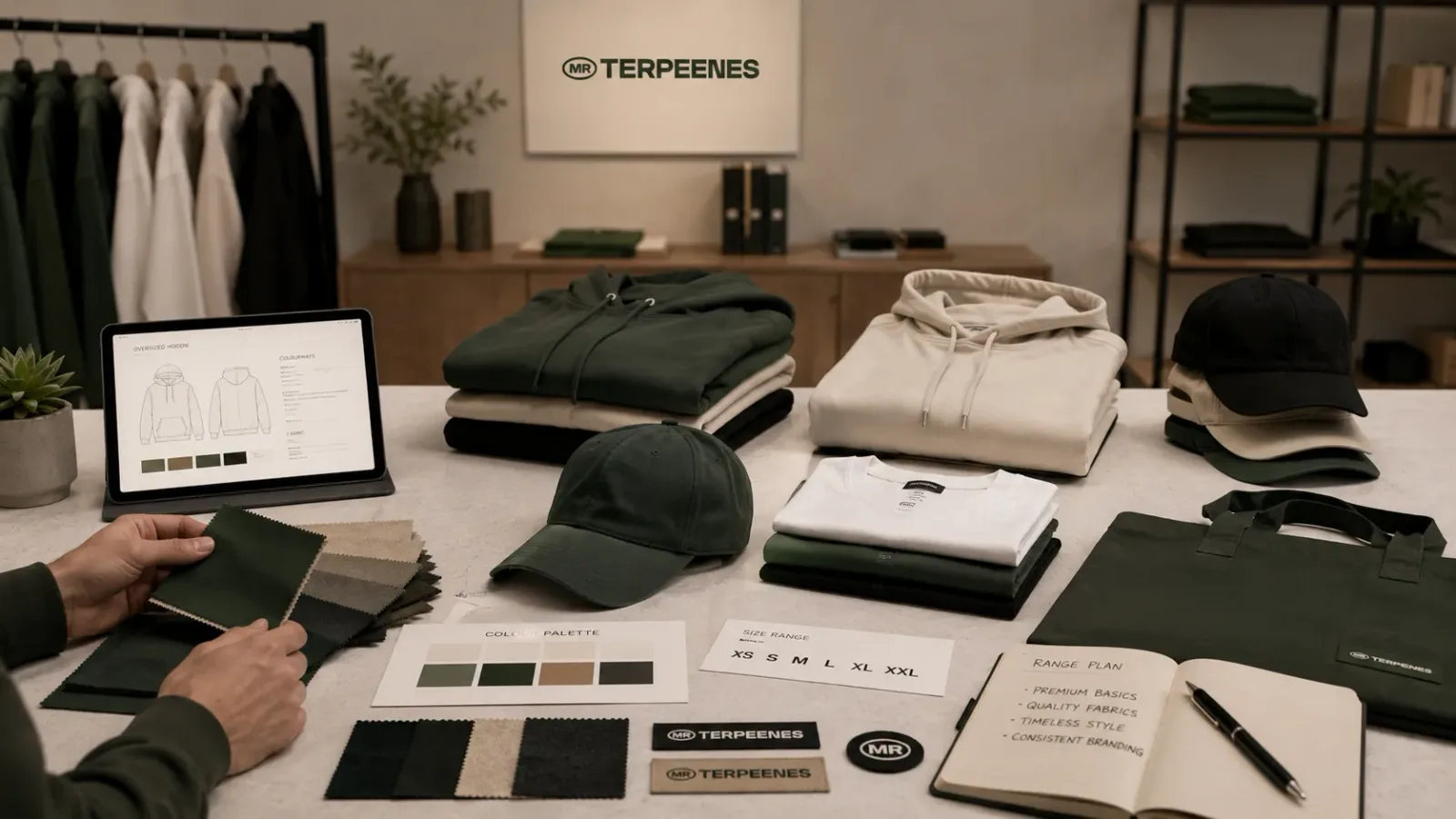
White label apparel for cannabis brands is ready-made clothing — T-shirts, hoodies, caps, socks and outerwear — produced by a supplier and branded as your own, rather than designed from scratch. You choose the garments, colours, fits and finishing, and the collection ships under your label.
A good range is not a logo on a blank T-shirt. It is a set of connected decisions: who the clothing is for, which garments carry the brand, how it is sized, what it is made from, how it is branded, and how much you can commit to. This guide takes those in the order they matter.
What Is White Label Apparel for Cannabis Brands?
White label apparel uses garment blocks a supplier already produces — a hoodie body, a polo cut, a cap shape — which you finish as your own product. The garment is the starting point; the brand is applied to it.
That differs from generic promotional merchandise, picked from a catalogue on price and handed out. White label clothing for cannabis brands is specified: fabric weight, colourway, fit, label position and packaging are your decisions, and the piece is meant to be worn or sold. Personalisation can include garment colour, embroidery, printed artwork, woven labels, neck labels, patches, hang tags and packaging. Our guide to custom merchandise for cannabis and CBD brands covers the wider strategy across headwear and accessories.
Why Apparel Can Strengthen a Cannabis Brand
Clothing is not a guaranteed sales channel. What branded cannabis apparel does reliably is give a brand physical presence where a product listing cannot reach:
- Branded retail products — pieces sold in their own right.
- Staff uniforms — one look across shops, stands and warehouses.
- Trade shows and industry events — a stand team that reads as one brand.
- Product launches — an identity for a drop beyond packaging.
- Influencer and community campaigns — wearable pieces suited to content.
- Customer loyalty — rewards customers keep and use.
- Lifestyle positioning — a signal of where the brand sits culturally.
The effect runs both ways: a thin, badly finished garment communicates as clearly as a well-made one.
Start With a Clear Apparel Range Plan
Before comparing garments, write down what the collection is for. A range plan should answer six questions:
- Target audience — retail customers, trade partners, staff, or a combination.
- Purpose — selling, gifting, uniforming or supporting a campaign.
- Price range — what the audience will pay, which caps fabric and finishing.
- Season — heavier garments have a narrower selling window than basics.
- Sales channels — online store, stand, stockists or internal distribution.
- Visual consistency — colours, marks and finishes shared across every piece.
Start small and coherent: three to five products in a tight palette, branded the same way. Expanding later is straightforward; unwinding an oversized first order is not.
Choosing the Right Garments
| Garment category | Best suited for | Key decisions |
|---|---|---|
| T-shirts and polos | Everyday basics, staff floors, events, entry price points | Cotton weight, fit, neck shape, print vs embroidery |
| Hoodies and crewnecks | Retail sales, premium staff apparel, colder-season drops | Fleece weight, brushed vs loopback interior, rib quality |
| Jackets and headwear | Outdoor stands, team kit, higher perceived value | Outer fabric, lining, closures, cap panel structure |
| Socks and accessories | Bundles, gifting, giveaways, loyalty rewards | Knit density, size banding, colour matching |
Not every brand needs all four at once. Most begin with the layer their audience actually wears — often custom T-shirts and polos as an accessible core — and add heavier garments once the range has proven itself.
Planning Sizes, Fits and Colourways
Decide which sizes the collection needs before ordering, and expect demand to cluster in the middle — an even split leaves the extremes unsold. Fit is separate: regular suits uniforms and retail, while relaxed or oversized changes how a garment sizes up. Unisex simplifies stock but does not fit every body equally.
Sizing is not standardised. Measurements vary between manufacturers and garment types, so one supplier’s chart will not describe another’s stock, and a T-shirt chart will not describe a jacket. This matters most for structured garments such as custom jackets and headwear. Work from the specification for the garment you are ordering and confirm it against a sample.
Pick one or two core colours and treat the rest as secondary — every colourway multiplies against every size. Review samples first: screen colours do not predict how a dye or thread reads on fabric.
See white-label apparel at Mr Terpeenes
Apparel carries a cannabis brand further than most paid placements. Browse the white-label garments available to UK and European brands before choosing what to print.
Materials and Garment Quality
Fabric is the clearest quality signal, felt before any branding is noticed:
- Cotton weight — quoted in GSM; heavier feels more substantial and costs more.
- Cotton blends — polyester or elastane affects shape retention and print behaviour.
- Fleece — brushed interiors feel softer; loopback is lighter and holds structure.
- Durability and stitching — seams, cuffs and collars fail first.
- Shrinkage — cotton moves after washing unless pre-shrunk.
- Wash performance — colour hold and print survival over repeated washes.
- Comfort — an uncomfortable garment is not worn, and unworn apparel returns nothing.
Match the specification to the job. A giveaway T-shirt does not need the fabric weight of a garment someone pays for. Retail pieces are judged against high-street clothing at a similar price, which is why white label hoodies and crewnecks carry so much of a range’s perceived value.
Choosing the Right Branding Method
No method is best in general — each suits particular artwork, garments and quantities. Most ranges combine two or three.
| Branding method | Suitable for | Main consideration |
|---|---|---|
| Screen printing | Flat jersey garments, bold artwork, larger runs | Cost driven by colour count; gradients reproduce poorly |
| Embroidery | Caps, polos, fleece, premium finish | Small text limited by stitch resolution |
| Heat transfer | Detailed artwork, smaller quantities | Feel and wash durability vary by type |
| Woven labels | Internal and external marks on retail pieces | Placement agreed before production |
| Neck labels | Replacing the blank’s branding | Sits against skin, so comfort matters |
| Patches | Jackets, headwear, textured fabrics | Attachment affects durability and cost |
| Hang tags | Retail presentation and pricing | Adds a finishing step and artwork |
| Branded packaging | Gifting, drops, direct shipping | Adds unit cost; shapes first impression |
Artwork that works on screen may not translate to stitch or ink, so supply source files. Colour consistency also needs managing: the same brand green reads differently as thread, ink and dye.
Understanding MOQs and Production Planning
A minimum order quantity (MOQ) is the smallest number of units a supplier will produce in a run. It exists because setup work — screens, embroidery digitising, label production, machine changeovers — costs the same whether you order the minimum or many times more.
MOQs are rarely one number: they are influenced by garment, style count, sizes, colourways and branding, and these multiply. One hoodie in one colour across five sizes is one order; three garments in three colours across six sizes is fifty-four combinations. Variant count, not total units, is what complicates a range — so brands asking about low MOQ branded apparel are often better served by narrowing colourways than cutting quantity.
Build sampling and approval into the schedule; approval sits before production, not alongside it. If the range is tied to an event, work backwards from that date, and confirm quantities, MOQs and lead times with your supplier for your specific range, since they vary by garment and branding method.
Apparel for Events, Retail and Brand Teams
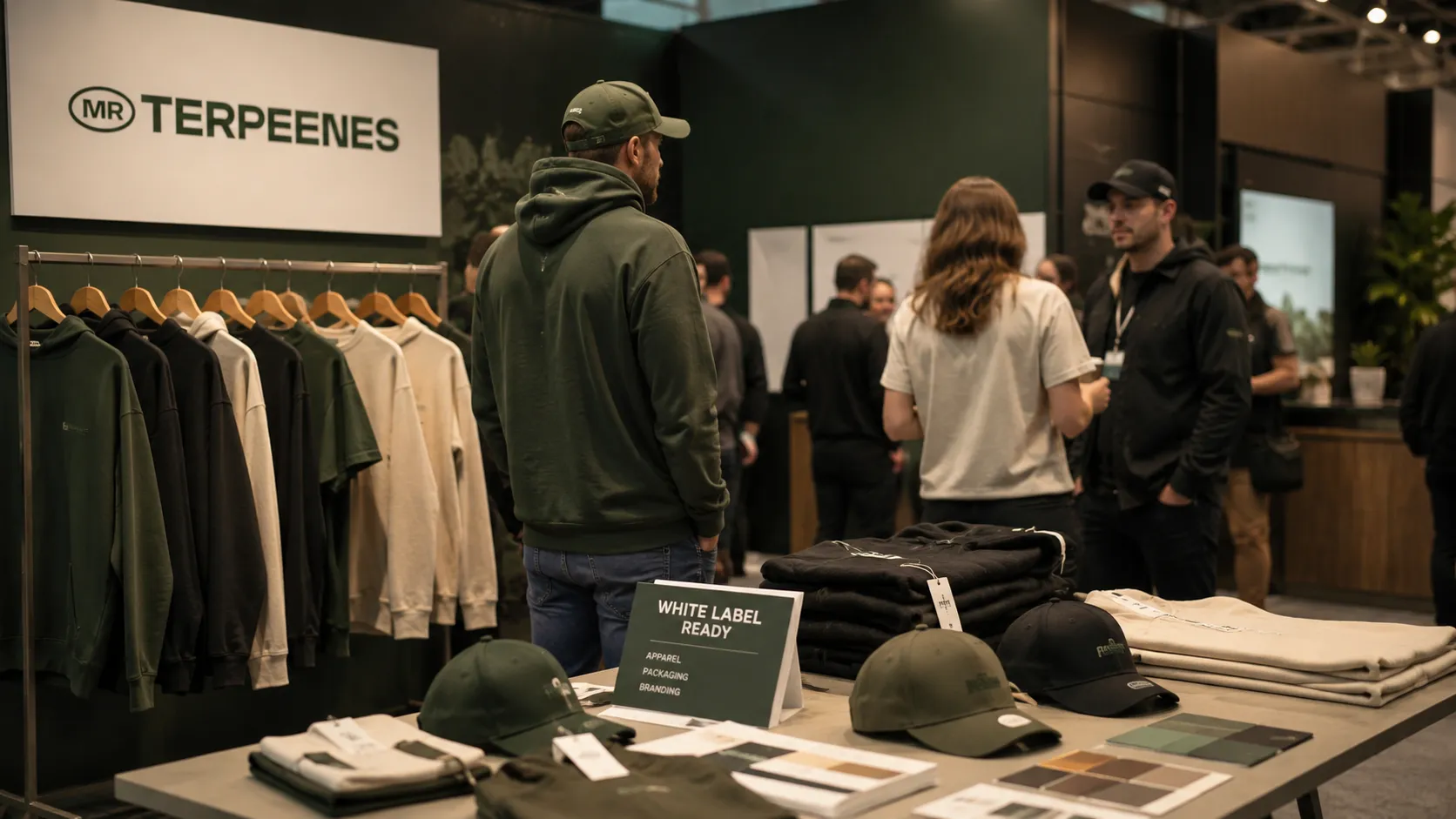
The same hoodie is a different product depending on who receives it. Let the use drive the decisions:
- Garments to sell — judged against retail clothing at the same price, so fabric, fit and finishing decide it.
- Garments for employees — worn and washed repeatedly, so durability outranks trend, and the garment should still be available to reorder as staff change.
- Garments for events — a stand team in one colourway is instantly readable; a mixture is not.
- Gifting and influencer campaigns — these pieces are photographed, so fit and presentation matter more than volume.
- Limited-edition drops — quantities are deliberately small and the value sits in the finishing: distinct labelling or a colourway outside the core range.
A line of branded socks and accessories can serve as a retail add-on, a giveaway and a loyalty reward at once, without the sizing complexity of a full garment.
Plan your apparel drop with Mr Terpeenes
Fabric weight, print method and order quantity decide both cost and finish. Tell the team what you are launching and the run can be planned around it.
What to Check Before Choosing a White Label Apparel Supplier
Before committing to a cannabis merchandise supplier for private label apparel in the UK or elsewhere, work through this checklist:
- Garment options — broad enough to grow into?
- Fabric specifications — weights and compositions documented, or only adjectives?
- Size range — which sizes per garment, and are measurements published?
- Sample process — how samples are produced, their cost, and approval time.
- Branding methods — which suit which garments, and what artwork is needed.
- Colour consistency — how colour is matched across garments and reorders.
- MOQ structure — how minimums apply per garment, colour, size and branding.
- Packaging options — for retail, gifting and direct shipping.
- Production communication — who you speak to, and how approvals are confirmed.
- Delivery planning — how lead times are quoted and tracked against your launch date.
Building a White Label Apparel Range With Mr Terpeenes
Mr Terpeenes supports cannabis, CBD, vape and lifestyle brands as a B2B partner for white label apparel for cannabis brands, across T-shirts and polos, hoodies and crewnecks, jackets and headwear, and socks and accessories. That covers garment selection from catalogue-backed options, branding methods, packaging support and range planning, so the collection arrives brand-ready rather than as a set of unrelated items.
Branding and finishing options can be discussed based on your order requirements, and options may vary by project, quantity and specification.
FAQs
What is white label apparel for cannabis brands?
White label apparel is ready-made clothing produced by a supplier and branded as your own. A cannabis or CBD brand selects garments such as T-shirts, hoodies, jackets or caps, then specifies colours, fits and branding methods. The result is sold, worn by staff or used at events under the brand’s own label.
What garments should a cannabis brand launch first?
Most brands start with core basics — T-shirts, polos or a single hoodie — in one or two brand colours. These are the most widely worn pieces, sit at accessible price points and are simplest to sample and reorder. Heavier garments and accessories follow once the first pieces have proven themselves.
What is the difference between white label apparel and promotional merchandise?
Promotional merchandise is typically selected from a catalogue on price, branded once and given away. White label apparel is specified: you choose fabric weight, fit, colourway, labelling and packaging, and the garment is built to be worn or sold as a product. The difference shows in quality and consistency.
Can apparel be customised with private labels and packaging?
Yes. Depending on the garment, options can include woven labels, printed or woven neck labels replacing the blank’s branding, patches, hang tags and branded packaging, alongside print or embroidery. Which options are available varies by garment and branding method, so confirm them for your pieces before production.
How do MOQs work for custom clothing?
A minimum order quantity is the smallest run a supplier will produce, set by the fixed setup work behind each order. MOQs are usually influenced by garment, style count, sizes, colourways and branding method rather than being one flat number. Because variants multiply, minimums are confirmed per range with the supplier.
Should a brand order samples before production?
Ordering samples before a full run is strongly advisable. A physical sample is the only reliable way to check fabric weight, fit, colour and branding placement — screen colours and specification sheets cannot show how a garment feels or how a print sits. Allow time for approval before production.
Can white label apparel be used for events and staff uniforms?
Yes, and both are common uses. For events, a stand team in one colourway is instantly recognisable. For uniforms, durability, wash performance and a size range covering the actual team matter most, along with being able to reorder the same garment later as staff change.