
Terpene SDS & MSDS Guide for Vape, CBD & White Label

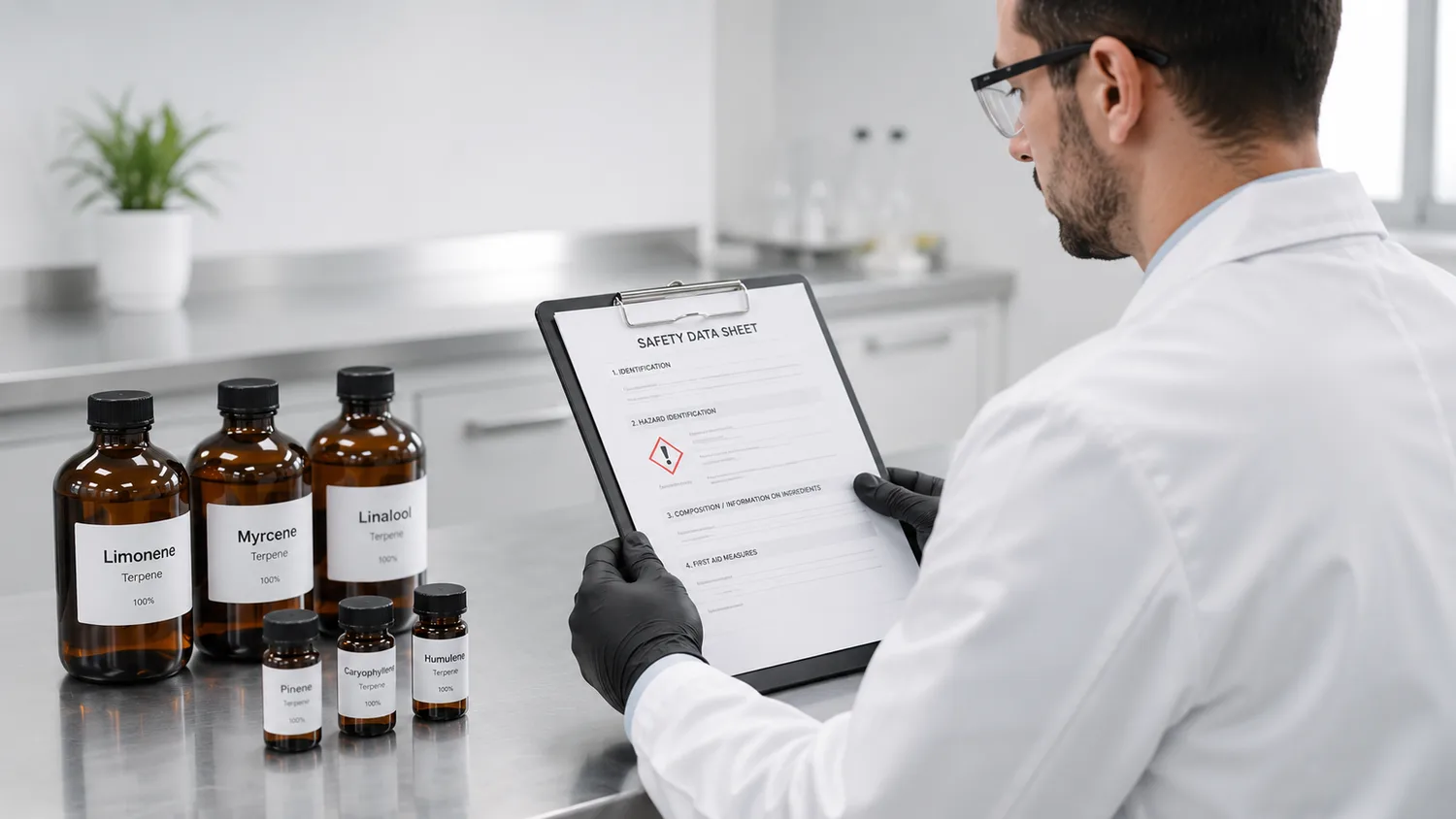
A terpene SDS (Safety Data Sheet) is the regulatory document every professional buyer should request before formulating with terpenes for vape, CBD or white label production. It confirms identification, hazard classification, composition and handling — but it does not, on its own, prove purity or food‑grade status. Pair the SDS with a current COA and supplier provenance before placing any production order.
What is a terpene SDS, and how does it differ from an MSDS?
The terpene SDS is the current 16‑section document defined by the Globally Harmonised System (GHS) and adopted across the UK and EU through CLP regulation. It replaced the legacy terpene MSDS format more than a decade ago, although the older acronym is still widely used by buyers searching for documentation. For practical purposes, when a supplier offers an MSDS today they are usually providing a modern GHS‑compliant safety data sheet under the older name.
For B2B buyers sourcing isolates such as Limonene, Myrcene, Linalool, Pinene, Caryophyllene or Humulene, the SDS is the baseline compliance artefact. Without it, the material cannot legally enter a manufacturing workflow inside the UK or EU.
What does a complete terpene safety data sheet contain?
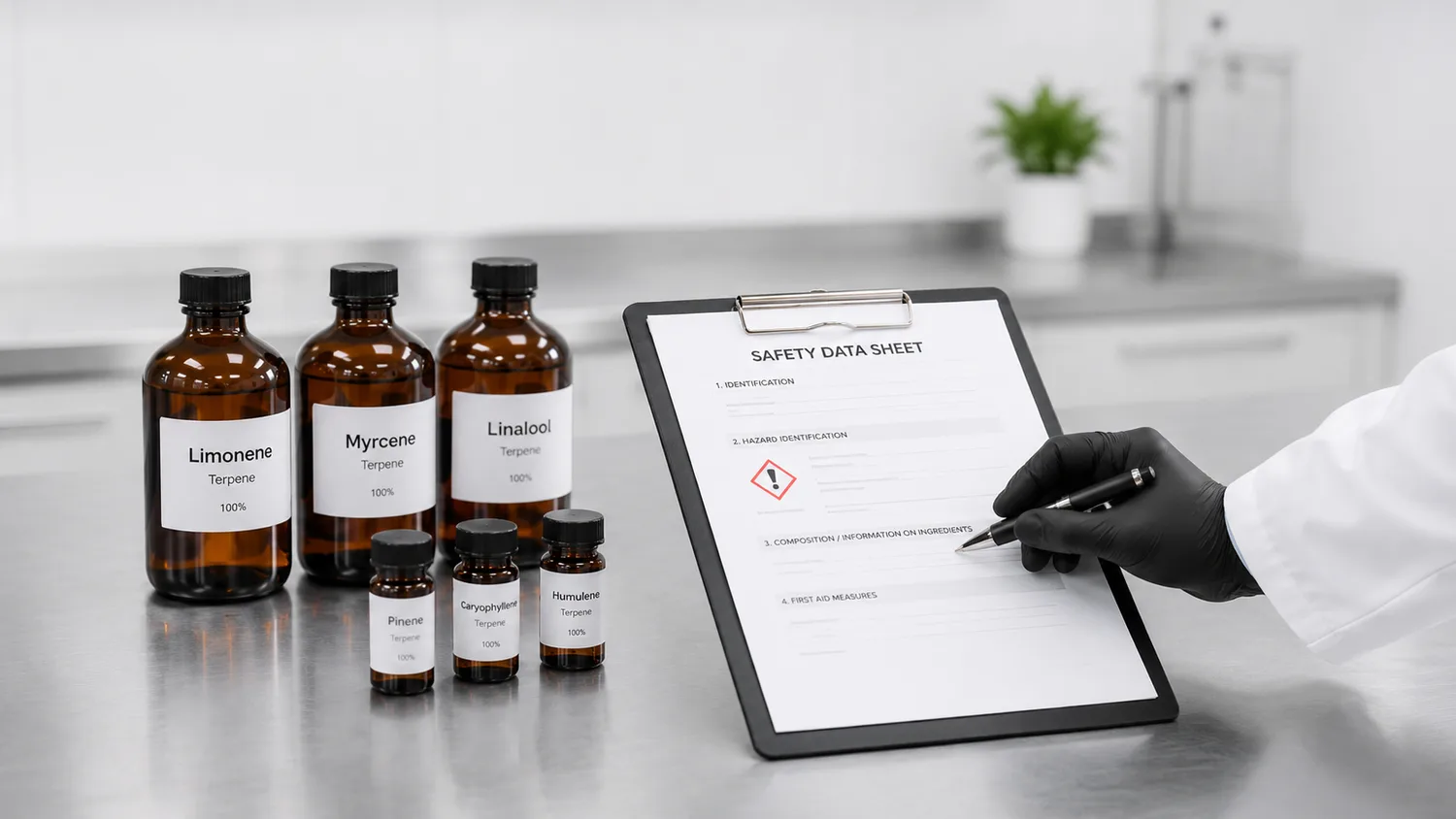
A complete safety data sheet for terpenes follows the 16‑section GHS layout. When auditing supplier documentation, professional buyers should verify that every section is populated with substance‑specific data rather than generic placeholders.
- Section 1 — Identification: product name, CAS number, supplier and emergency contact.
- Section 2 — Hazard identification: GHS pictograms, signal word, hazard and precautionary statements.
- Section 3 — Composition: isolate or blend ratio, with declared purity.
- Section 4 — First‑aid measures.
- Sections 5–8 — Fire‑fighting, accidental release, handling and storage, exposure controls and PPE.
- Section 9 — Physical and chemical properties.
- Sections 10–12 — Stability, toxicological and ecological information.
- Sections 13–16 — Disposal, transport (UN number, ADR class), regulatory information and revision history.
Any missing section, expired revision date or absence of a supplier address should be treated as a hard stop. These gaps are common in low‑cost or unverified imports and are routinely flagged in customs inspections.

See documented terpenes at Mr Terpeenes
Safety documentation is only useful when it matches the material you bought. Browse the range and see what accompanies each profile as standard.
Why a terpene SDS matters for vape production
For brands producing vape cartridges, the terpene SDS for vape production is more than a compliance formality. It dictates how the raw material can be stored, blended, decanted and shipped. The flashpoint declared in Section 9, for example, determines transport classification and warehouse zoning; the hazard statements in Section 2 govern operator PPE and ventilation requirements.
Operations that scale up terpenes for vape cartridges without referencing the SDS during process design tend to discover the gap during their first regulatory inspection — or, worse, during an avoidable incident. Building the SDS into standard operating procedures from day one removes that risk and shortens the audit trail when a wholesaler or distributor requests evidence.
Why a terpene MSDS matters for CBD products
A terpene MSDS for CBD products serves a parallel role for formulators working with oils, tinctures, edibles and topicals. CBD brands are under particular scrutiny in the UK following the Food Standards Agency novel food authorisation process, and a missing or incomplete SDS will surface during retail onboarding, marketplace listings and pharmacy distribution checks.
Pairing the SDS with documented terpene quality standards gives a CBD brand a defensible position when challenged on safety or origin. It also simplifies private‑label conversations, where the contracting manufacturer will almost always require both the SDS and the latest COA before accepting the raw material into their facility.
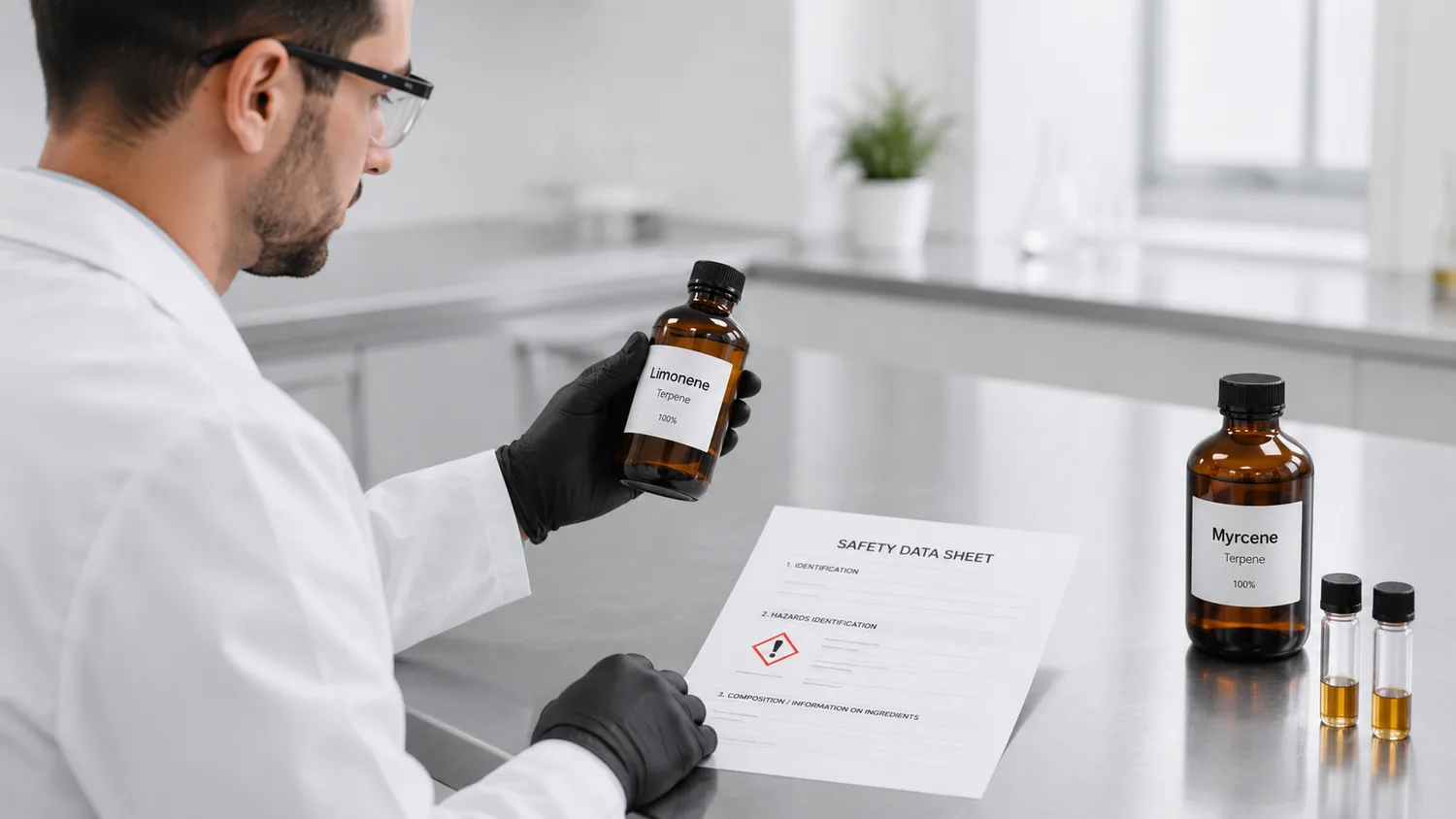
What the SDS cannot tell you
A safety data sheet is a regulatory hazard document. It does not, on its own, confirm:
- Whether the terpene is food grade — that is confirmed by the COA, supplier specification and origin certification. UK formulators sourcing food grade terpenes UK should request both documents together.
- Whether the material is natural or synthetic — a distinction that has commercial, sensory and labelling implications. The difference is examined in detail in our natural vs synthetic terpenes comparison.
- Batch‑level purity or contamination profile — this is the role of the COA and, where appropriate, third‑party residual solvent and pesticide testing.
- Suitability for a specific end product — vape, edible, cosmetic and pharmaceutical applications each demand additional specification beyond the SDS.
Terpene documentation checklist for buyers
- Current 16‑section terpene SDS, in English, signed and dated.
- Batch‑specific COA matching the lot number on the container label.
- Supplier specification sheet referencing purity, organoleptic profile and storage.
- Allergen declaration where applicable (Linalool, Limonene and several others are listed allergens under EU 1223/2009).
- Transport documentation (UN number, packing group, ADR class) for the shipped quantity.
Request bulk documentation from Mr Terpeenes
Production quantities bring documentation requirements with them. Discuss bulk supply and the paperwork that needs to travel with each consignment into your facility.
How to compare terpene SDS documents from different suppliers
When a sourcing team places the same isolate from three suppliers side by side, the SDS is the most efficient document to start the comparison. The substance identification in Section 1 and the composition in Section 3 should match across suppliers within reasonable tolerance; if they do not, the materials are not interchangeable, regardless of what the marketing copy claims.
Section 2 hazard statements should also align. Significant divergence — for example, one supplier omitting a skin‑sensitisation H‑statement that two others include — is a red flag that points either to incomplete classification or to a meaningfully different grade of material. The revision date in Section 16 confirms the document is current; anything older than three years should be re‑requested before purchase.
For brands building a white label terpene production programme, this comparative discipline is what separates a defensible supply chain from one that fails its first compliance audit. The SDS is the cheapest and fastest filter available.
Frequently asked questions
Is a terpene SDS the same as a terpene MSDS?
In practical terms, yes. The GHS replaced the older MSDS format with the 16‑section SDS, but many buyers and suppliers still use the MSDS label informally. A reputable supplier should issue a current GHS‑compliant safety data sheet regardless of which acronym appears on the file name.
Does a terpene SDS confirm that the material is food grade?
No. The SDS confirms hazard classification and handling, not regulatory grade. Food‑grade status is confirmed by the supplier’s specification, the COA and, where required, food contact and origin documentation. Always request these alongside the SDS.
How often should a terpene safety data sheet be updated?
Best practice is a review at least every three years, or sooner whenever the formulation, classification, supplier or regulatory framework changes. A document with no revision date, or one older than five years, should be replaced before the material is used in production.
What documents should accompany an SDS in a B2B terpene order?
A batch‑specific COA, the supplier specification sheet, allergen declaration where applicable and the transport documentation appropriate to the shipped quantity. For white label and CBD work, an origin or naturalness statement is also commonly requested.
Can a buyer request an SDS before placing the order?
Yes, and they should. A serious supplier will provide the current SDS on request without a purchase commitment. If documentation is gated behind an order, that is itself a signal worth noting before contracting.