
Terpinolene Terpene Profile: Fresh, Sweet and Complex Notes for Modern Blends


The terpinolene terpene profile is one of the most distinctive in the aromatic toolkit, offering a fresh, sweet and faintly herbal character that few single terpenes can match. For brands, product developers and flavour houses, understanding terpinolene is less about a single headline note and more about its versatility: it can lift a blend, add brightness, or introduce a layered, almost piney-floral complexity that gives a finished profile real depth. This guide looks at terpinolene from a formulation perspective — its aroma direction, flavour role, pairing logic and the practical ways it earns a place in modern terpene blends.
What is terpinolene?
Terpinolene is a monoterpene found naturally across a wide range of botanical sources, including nutmeg, cumin, lilac, apple, tea tree and several conifers. Among the terpenes commonly used in formulation it is one of the less abundant, and that is part of what makes it interesting. Where molecules such as myrcene terpene effects dominate the base of many profiles, terpinolene tends to appear in smaller proportions and contributes a far more nuanced signature.
Chemically, terpinolene sits within the terpinene family as a structural isomer, and its multi-faceted makeup is often associated with the complex, hard-to-place aroma that experienced formulators recognise the moment they smell it. Because it is usually present at lower concentrations in source material, terpinolene is generally treated as an accent or modifier rather than a foundation note when a team builds a profile from the ground up.
Terpinolene aroma: fresh, sweet, herbal and complex
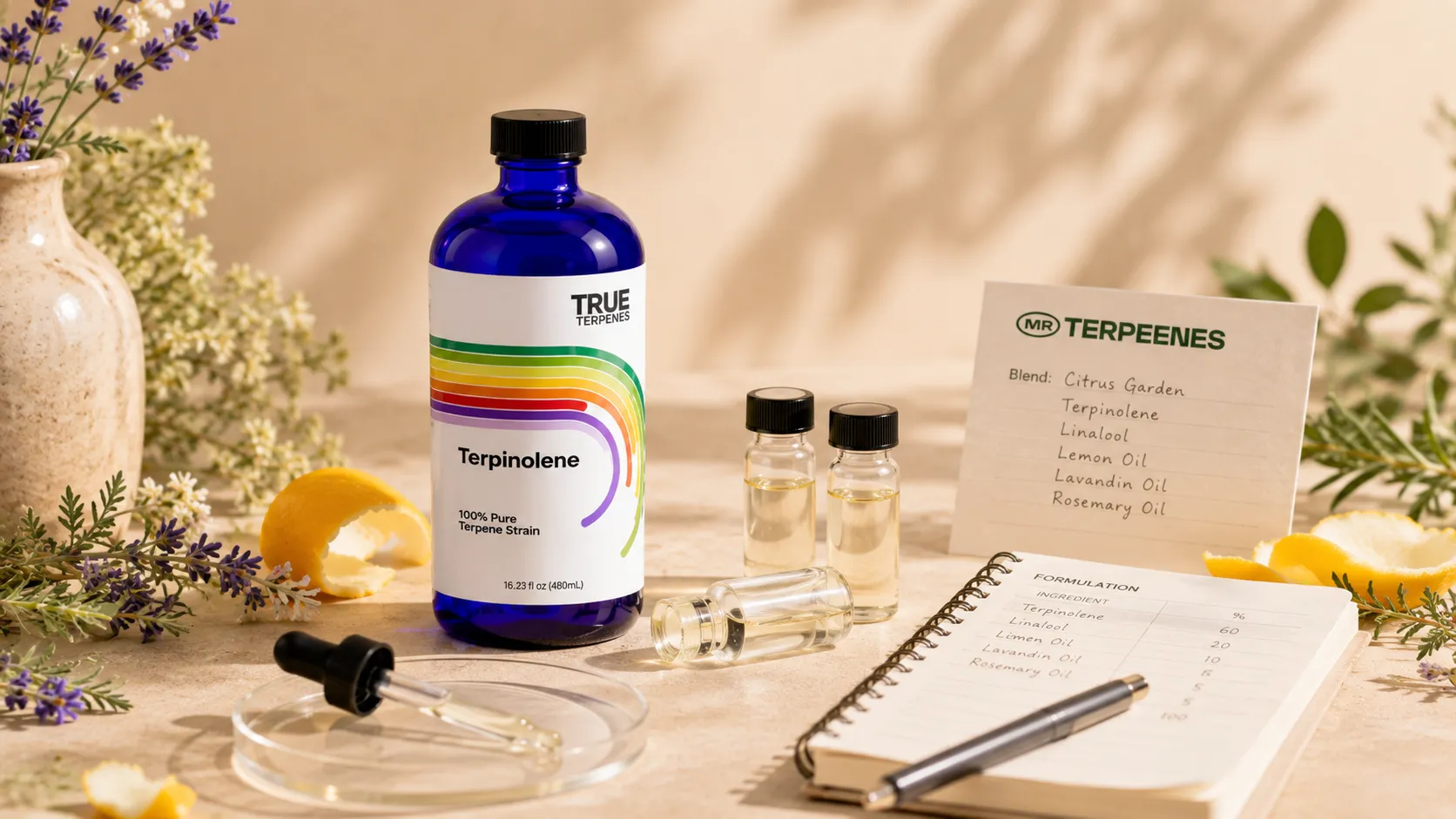
The terpinolene aroma is best described as fresh and uplifting, with a natural sweetness that stops it ever reading as harsh or solvent-like. What sets it apart is that it is genuinely layered: there is pine and fir on one side, a soft floral and citrus tone on the other, and a herbal, faintly woody undertone running underneath. This combination is why so many people struggle to name it in isolation — it behaves less like a single note and more like a small bouquet in its own right.
In sensory terms, the terpinolene aroma is often associated with a clean, outdoorsy freshness with a sweet edge. That duality is useful in formulation, because it lets one ingredient cover ground that would otherwise need two or three. It is the reason terpinolene is frequently described as the “complex” terpene: its aroma direction reads as bright at first, then reveals herbal and green facets as it settles.
Terpinolene flavour profile in formulation
On the palate, the terpinolene flavour profile carries its aroma through faithfully: fresh, lightly sweet and subtly herbal, with the same green-piney lift in the background. It is rarely the dominant taste in a finished product, but it can help create the impression of crispness, cleanliness and movement — the sense that a flavour is lifting rather than sitting flat. This makes it a valuable tool when a profile feels heavy, dull or one-dimensional and needs a top-end sparkle.
For teams working to recreate or refine a terpene flavour profile, terpinolene is often the missing piece that explains why a reference sample feels more “alive” than an attempted match. Its formulation role is to add freshness and complexity at the edges, not to define the core. Used carefully, it rounds out a profile and gives it the layered, modern character that buyers increasingly expect.

See single terpenes at Mr Terpeenes
Terpinolene rarely works alone, which is why the surrounding range matters. Browse the isolates and blends stocked before building anything around it.
Where terpinolene fits inside modern terpene blends
Within a blend, terpinolene typically works as a top-to-mid transition note. It sits above the heavier, more grounding terpenes and below the sharpest volatile citrus, acting as a bridge between them. In practice, it connects bright citrus character such as a limonene terpene profile with the greener, sharper, more resinous side of a pinene terpene profile. Because it shares facets with both, it smooths the join between them and stops a blend feeling like two separate ideas bolted together.
That bridging behaviour is what makes terpinolene so useful in contemporary, multi-layered profiles. Modern blends rarely rely on a single dominant note; they are built to feel rounded, fresh and slightly complex. Terpinolene supports that direction by filling the gap between citrus brightness and herbal-green depth, giving the overall profile a more finished, professional feel.
Terpinolene terpene uses for product and flavour development
Common terpinolene terpene uses centre on three things: lift, freshness and complexity. Product and flavour developers commonly reach for it to brighten a blend, to add an interesting top note, or to introduce a layered character that a simpler formulation would lack. It is frequently used to support fresh, sweet, herbal or “outdoor” directions, and it pairs naturally with profiles that aim to feel clean and uplifting rather than rich and heavy.
Across categories — from vape and concentrate formulations to edibles, beverages, cosmetics and household fragrance — terpinolene is commonly used to support a sense of crisp freshness and to add nuance at the top of a profile. In each case the principle is the same: it is an accent that shapes the impression of a blend, working alongside the dominant terpenes rather than competing with them. For developers building toward a specific sensory target, that makes it a precise, controllable tool.
Terpinolene blend guide: pairing ideas and formulation logic
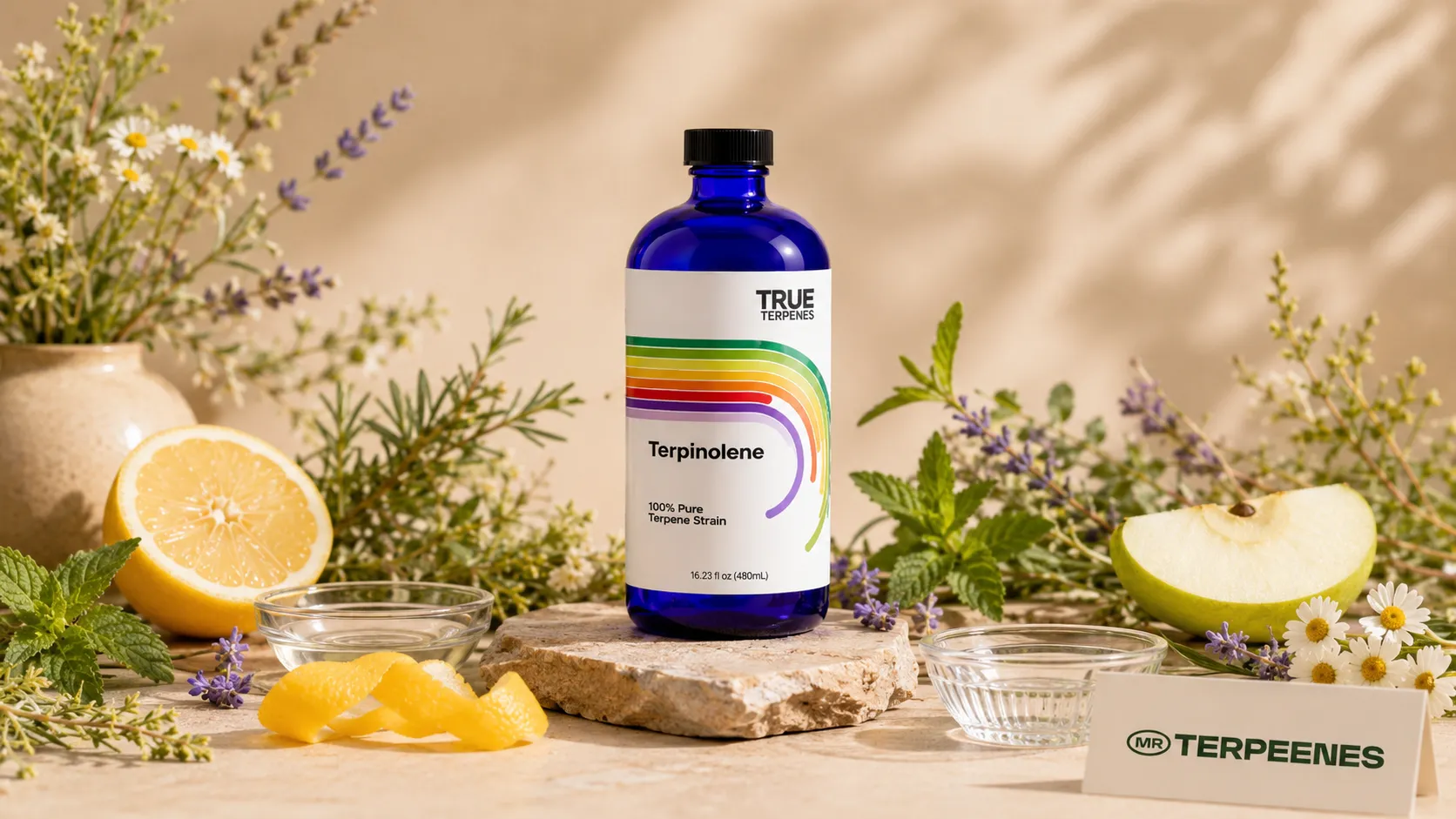
This terpinolene blend guide is built around a simple idea: terpinolene works best when it has something to lift and something to balance against. Pair it with the wrong partners and its complexity gets lost; pair it well and it becomes the detail that makes a profile memorable.
Pairing with citrus and fresh terpenes
Terpinolene and citrus terpenes are a natural fit. Against bright, zesty notes, terpinolene extends the freshness further into the herbal and green register, so the citrus reads as cleaner and longer-lasting rather than purely sharp. This is a reliable starting point for fresh, sweet and uplifting profiles.
Pairing with herbal, woody and piney terpenes
On the greener side, terpinolene softens and sweetens sharper piney and woody notes, taking the edge off without flattening them. The result is a profile that feels outdoorsy and natural rather than raw. This pairing logic is useful when a blend needs to feel earthy and fresh at the same time.
Building layered, modern profiles
For more complex blends, terpinolene is the connective tissue. A small amount placed between a citrus top and a herbal-woody base gives the profile a continuous, layered feel — exactly the kind of structure that defines modern, premium-feeling blends. The formulation logic is to use it as a bridge, not a headline.
Source terpinolene in volume from Mr Terpeenes
Formulation decisions eventually meet purchasing decisions. Go through bulk pricing, minimum quantities and lead times for terpinolene and the blends built around it.
How brands can use terpinolene without overpowering a profile
Terpinolene is potent and characterful, which means a little goes a long way. The most common mistake is dosing it like a base terpene; used too heavily, its complexity collapses into a single sharp, soapy-green note that pulls focus and unbalances everything around it. The safer approach is to start low — a small fraction of the blend — and build up by aroma, adjusting against the finished impression rather than chasing a fixed percentage on paper.
It also helps to dose terpinolene last, once the core of the profile is established, so its role as an accent stays clear. Benchmarking against established strain-specific terpene profiles is a practical way to judge how much terpinolene a target character actually calls for, since these references show how the terpene behaves in proportion to everything else. Treated as a finishing touch rather than a foundation, terpinolene adds freshness and depth without ever taking over.
Why terpinolene earns its place in the modern blending kit
Terpinolene matters because modern blends are judged on nuance. Buyers and developers increasingly want profiles that feel fresh, layered and considered rather than flat or one-note, and terpinolene is one of the few single terpenes that delivers complexity and lift in a single ingredient. Understanding its aroma direction, flavour role and pairing logic gives a formulation team a reliable way to add the freshness and detail that separate a competent blend from a distinctive one.
If you are developing products and want terpinolene handled with precision — as part of a balanced blend, a strain-accurate profile or a fully custom formulation — Mr Terpenes can help. Our team works with brands, product developers and flavour houses to build terpene profiles around clear sensory targets, drawing on detailed strain-specific terpene profiles and bespoke blend support. Talk to us about how terpinolene can sharpen the freshness and complexity of your next blend.
How terpinolene compares with commonly paired terpenes
| Terpene | Aroma contribution | Also found in |
|---|---|---|
| Terpinolene | Fresh, sweet, herbal with piney and faintly floral facets | Tea tree, nutmeg, cumin, apples, lilac |
| Limonene | Bright citrus | Citrus peel |
| alpha-Pinene | Sharp pine, resinous | Pine needles, rosemary |
| Ocimene | Sweet, herbaceous, woody | Mint, basil, parsley |
| Myrcene | Musky, herbal | Mango, hops |
Terpinolene in blends: quick formulator questions
What does terpinolene smell like?
The terpinolene aroma is fresh and sweet with herbal, piney and faintly floral facets. It is often described as complex because it reads as bright at first and then reveals greener, woody undertones as it settles.
Is terpinolene a top note or a base note in a blend?
It generally behaves as a top-to-mid note. Its formulation role is to bridge bright citrus character and greener, woody depth, which is why it is commonly used as an accent rather than a base.
How much terpinolene should a blend contain?
There is no fixed figure, and it varies by target profile. Because terpinolene is potent, most teams start with a small fraction, dose it last and adjust by aroma, benchmarking against a reference profile rather than a set percentage.