
White Label Terpenes: MOQ, Packaging, Lead Times, Launch

TL;DR: White label terpenes let a brand sell a terpene line under its own name without owning the formulation, filling or packaging infrastructure. The supplier handles the blend, bottles, labels and certificates; the brand owns the identity, the price and the customer. The work is choosing the right partner, agreeing realistic MOQs and lead times, locking the packaging spec, and running a launch process that survives reorders.
What are white label terpenes?
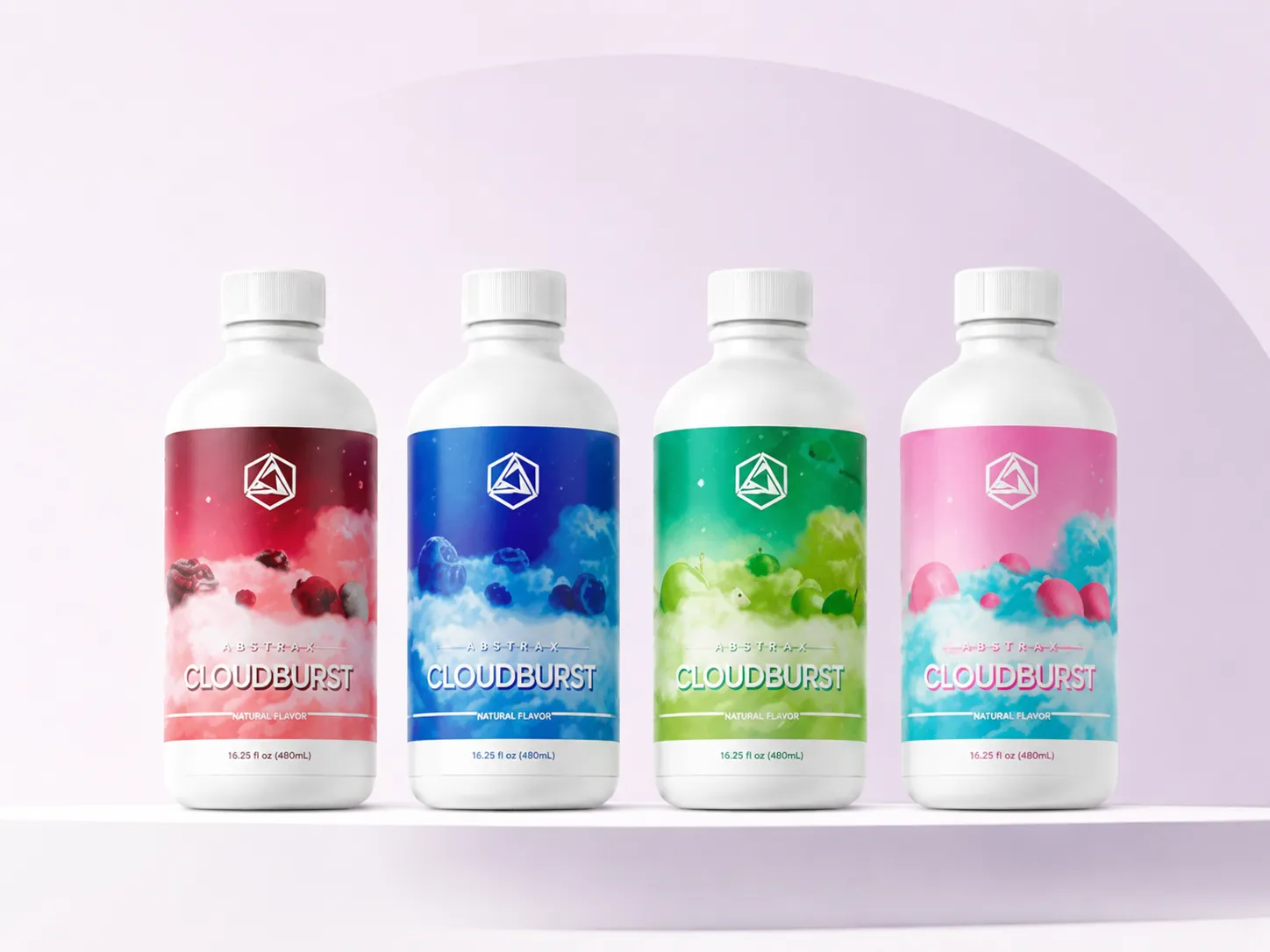
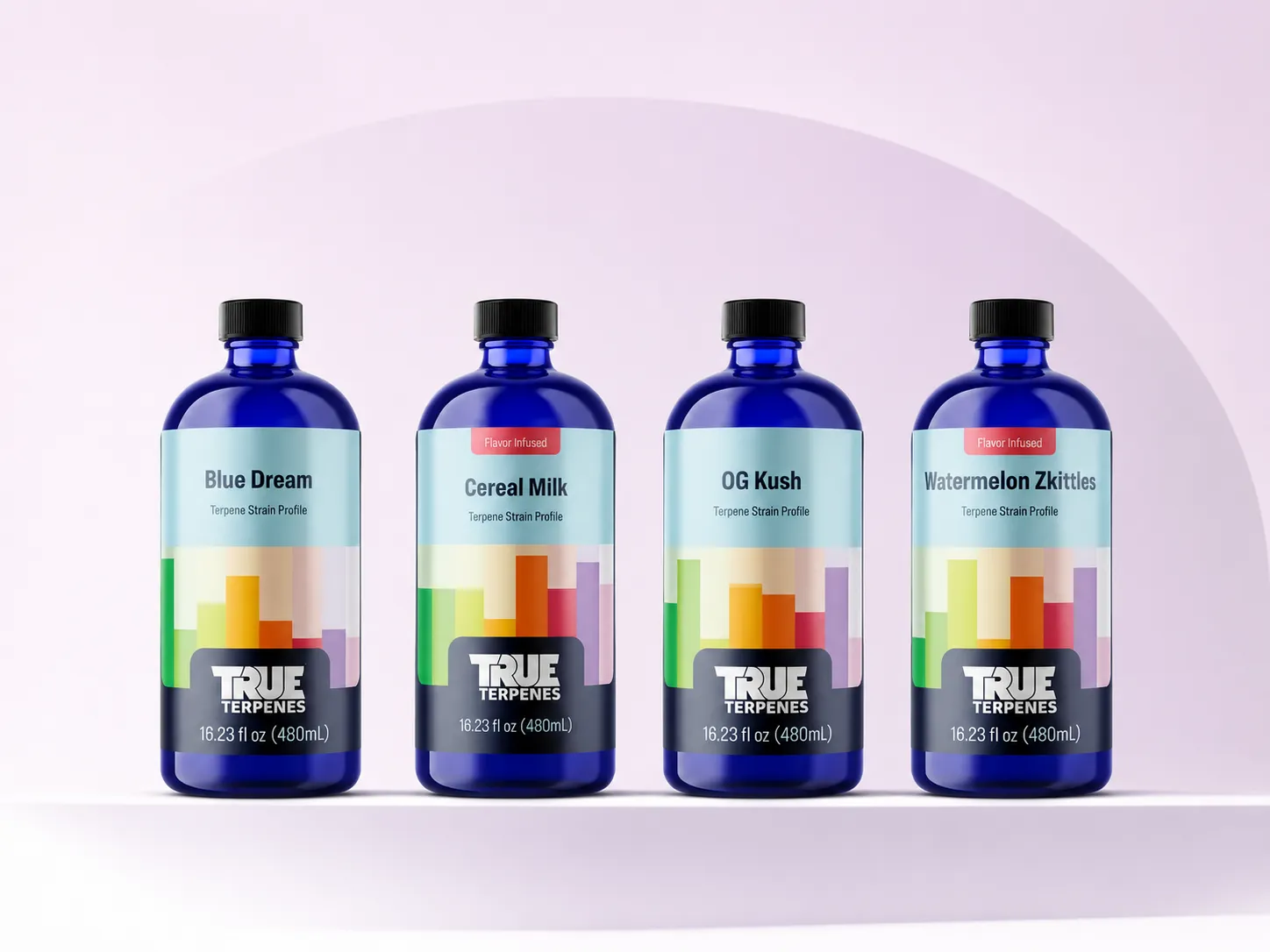
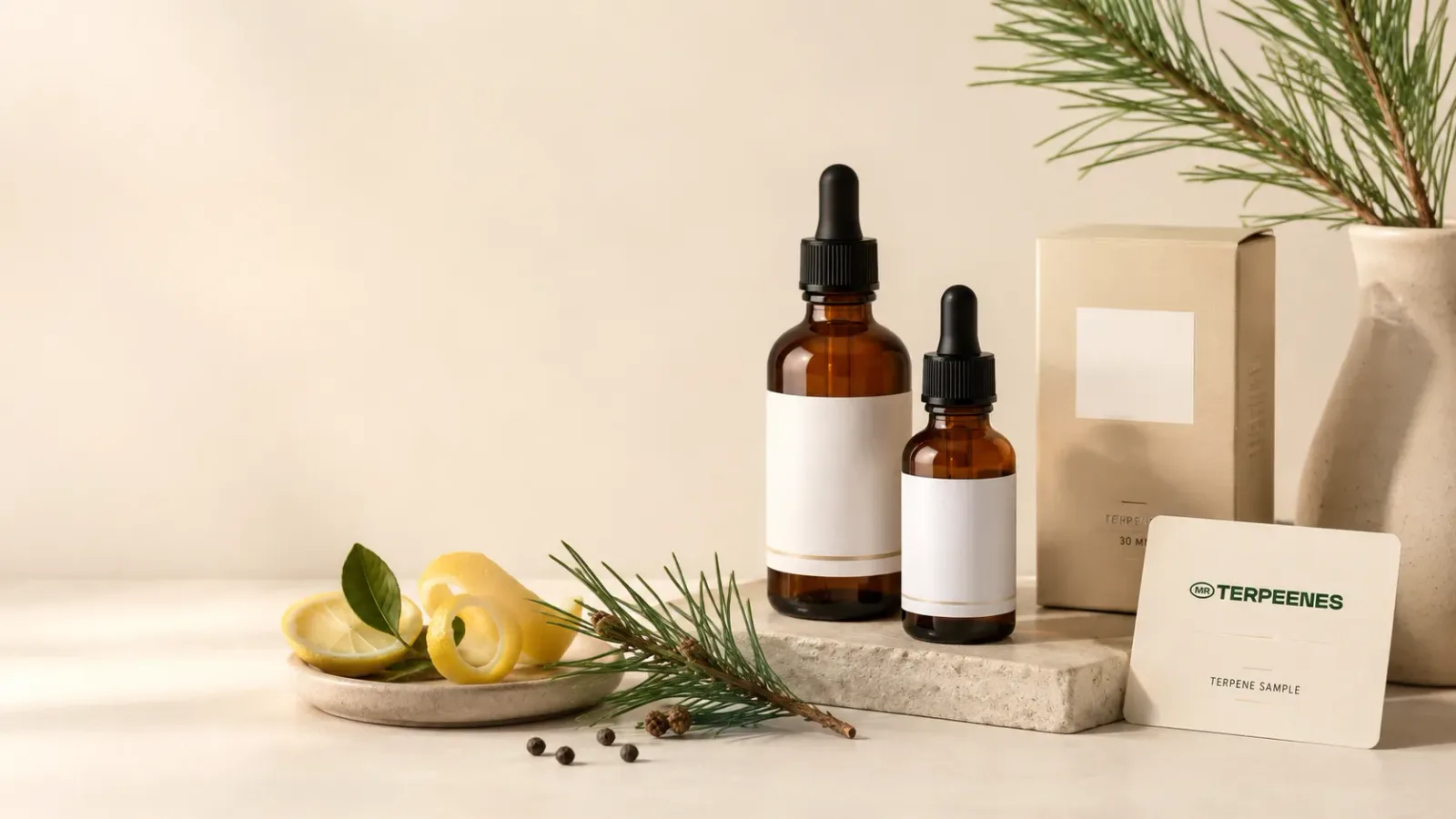
White label terpenes are terpene products — single isolates, botanical blends or cannabis-derived profiles — that a manufacturer produces and a brand sells under its own logo, label and packaging. The brand never touches the lab. The supplier fills, labels and packs to the brand’s spec; the brand puts the product on the shelf, on the site and on the invoice.
“Private label terpenes” usually means the same thing in commercial use. Some buyers reserve “private label” for an exclusive formula made only for them, and “white label” for a stock blend rebadged with their brand. Either way, the operational steps below apply.
When should a brand move from stock terpenes to a white label line?
Stock products are the right call until one of these starts hurting the business:
- Customers ask for “your” terpenes. Repeat buyers want a branded SKU, not a relabelled supplier bottle they can find elsewhere.
- The catalogue blend is everywhere. Competitors sell the same product under different names and the only lever left is price.
- Margins are squeezed by the supplier’s RRP. A custom-labelled or private-label SKU restores pricing power.
- Volume justifies it. Once monthly throughput sits above the supplier’s MOQ for a custom run, white label is usually cheaper per unit than buying retail-packaged stock.
- Compliance or claims need control. Branded labels let the brand control wording, allergen statements and regional compliance instead of inheriting a supplier template.
How do you choose a white label terpene supplier?
A white label terpene supplier is not just a manufacturer — it is the brand’s production backbone. The checks that matter:
- In-house formulation, not pass-through trading. A real supplier can adjust the blend, run a sample, and document the recipe. A trader cannot.
- Certificates of analysis on every lot. Without a per-batch COA, consistency is a promise, not a fact. See our terpene COA checklist for what a usable COA looks like.
- Documented MOQ, lead time and repeat-order policy. Numbers in writing, not “depends on the season”.
- Packaging capability under one roof. Bottles, droppers, secondary cartons, labels and inserts handled by the same partner remove a whole class of co-ordination problems.
- Regional logistics fit. A white label terpene supplier in the UK avoids EU import paperwork for British brands; a supplier with EU warehousing avoids it for European brands. Match the supplier’s geography to the brand’s main market.
- Track record with brands like yours. Vape, CBD, extract, edible and topical brands each have their own packaging, viscosity and labelling expectations.
Buyers running a parallel bulk programme should cross-reference the supplier checks in our bulk terpene supplier UK checklist — the same operational hygiene applies.

See the terpene range at Mr Terpeenes
A white label launch starts with the liquid, not the label. Browse the profiles available before working out minimums, packaging and lead times.
What MOQ should a brand expect for white label terpenes?
Terpene MOQ depends on three things: whether the blend is stock or custom, the bottle size, and whether the brand needs custom-printed labels and cartons or sticker-applied labels on stock components.
- Stock blend, sticker labels on stock bottles: the lowest entry point. Typically a few hundred units per SKU. Good for first launches and market tests.
- Stock blend, fully branded printed labels and cartons: MOQ usually sits in the low thousands per SKU because print runs have their own minimums.
- Custom blend, fully branded packaging: highest MOQ — often a few thousand units per SKU plus a separate batch minimum on the blend itself.
Smart launches start at the lowest viable MOQ to validate the SKU, then move up the ladder once reorders prove the demand. Pushing for the lowest possible MOQ on day one is fine; promising the brand will hit Tier 3 volumes from the first PO is not.
How long do white label terpene lead times take?
Terpene lead times for a white label run are not one number — they are the sum of four stages, and the artwork stage is usually the one brands underestimate:
- Sample and approval: sample shipped, smelled, signed off. One to two weeks if the blend is stock; longer for custom formulations.
- Artwork and label proofing: brand supplies print-ready files, supplier returns dielines, brand approves. One to three weeks depending on revisions.
- Component lead time: bottles, droppers, cartons. Two to six weeks depending on stock availability and printing.
- Blending, filling, labelling, QC and dispatch: one to three weeks once all components and the approved blend are in.
Realistic end-to-end for a first run: six to ten weeks from signed PO to delivered pallet. Repeat orders on the same SKU and packaging usually run in two to four weeks because the artwork and component spec are already locked.
Bulk terpene supply from Mr Terpeenes
Mr Terpeenes supplies stocked terpene profiles in bulk rather than white label terpene manufacturing. Check sizes, documentation and repeat ordering before you plan a branded launch.
What does custom terpene packaging actually involve?
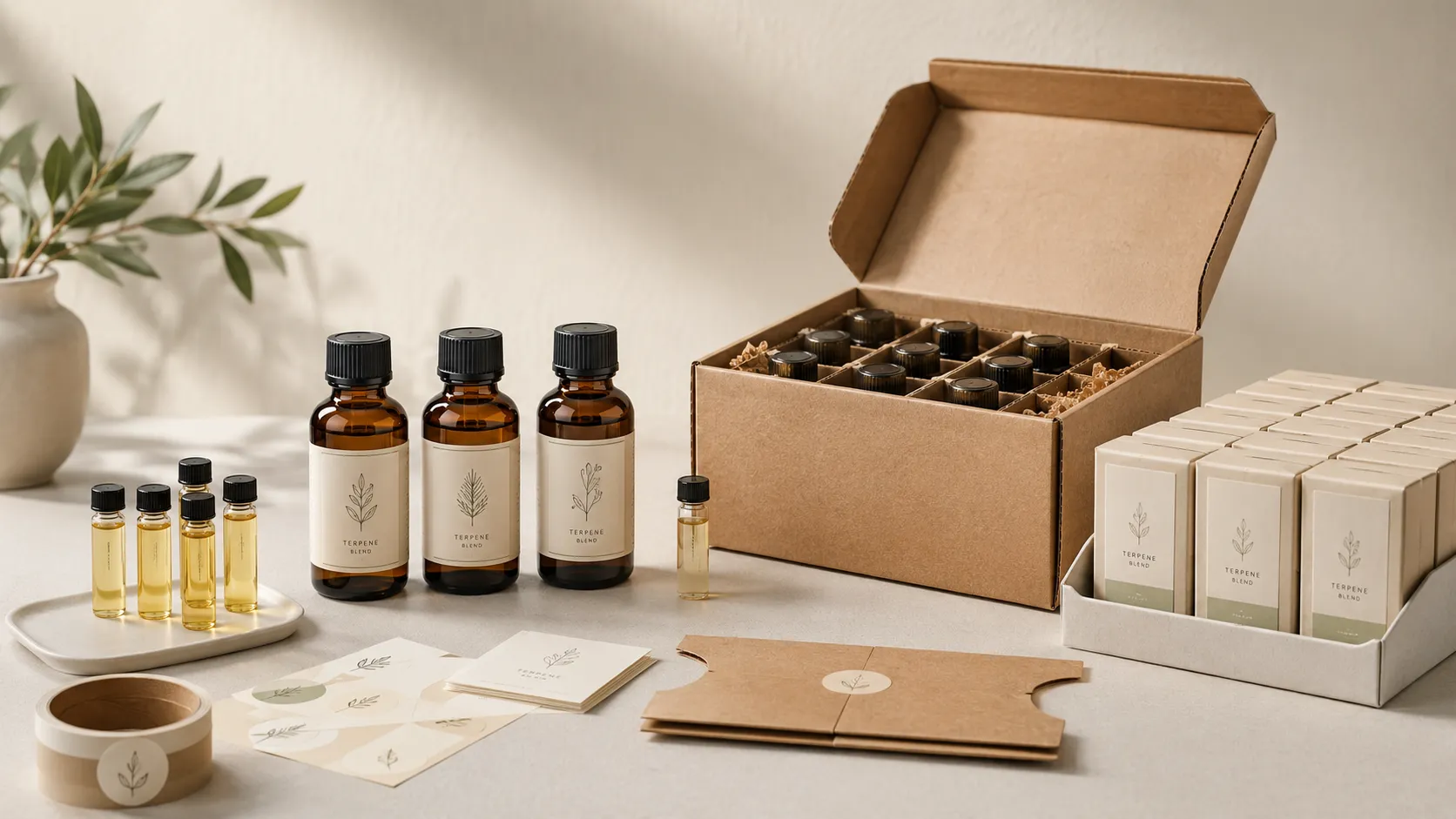
Custom terpene packaging is rarely just “the label”. A launch-ready spec covers six layers, and skipping any of them creates reorder friction later. For the deep dive on storage and presentation, see our guide to terpene packaging solutions.
- Primary container: amber glass bottle in the right ml, with the right neck finish for the dropper or cap. Amber matters — clear glass accelerates oxidation.
- Closure: dropper, child-resistant cap or screw cap, depending on the product and the market. Vape-adjacent SKUs often need tamper-evident closures.
- Primary label: printed or sticker-applied, with the brand identity plus mandatory information (volume, batch, best-before, allergens, warnings).
- Secondary carton: printed outer box if the brand wants a premium unboxing or a retail-display SKU.
- Inserts: usage card, COA QR, marketing leaflet. Small cost, high perceived quality.
- Shipping configuration: trays, fillers and outer cartons matched to the freight method, so bottles arrive without movement or breakage.

What does the white label terpene launch process look like end to end?
A repeatable terpene product launch runs in seven steps. Brands that treat each as a checkpoint, not a formality, avoid the rework that kills first-run margins.
- Define the SKU. Profile, bottle size, target audience, retail price, channel.
- Request samples. Order the candidate blends in the actual bottle and dropper you plan to launch with — not a generic sample vial. Smell, taste and dose under real conditions.
- Lock the spec. Approved blend, approved packaging, approved label copy. Sign it off in writing.
- Confirm MOQ, lead time and price in a single document. Verbal quotes drift; written quotes do not.
- Run a pilot batch. Smaller than the full launch run, used to validate filling, labelling and shipping before the brand commits inventory to a full PO.
- Launch on a narrow front. One channel, one region, one or two SKUs. Measure reorders and complaints before expanding.
- Plan the reorder rhythm. Component lead times mean reorders should be triggered when stock hits the lead-time buffer, not when the warehouse is empty.
How does white label compare to bulk buying and custom formulation?
Three commercial models keep getting confused. They are not interchangeable.
- Bulk buying. The brand orders large volumes of unlabelled or supplier-labelled product and resells. Cheapest unit cost, weakest brand identity. See buy terpenes UK and buy terpenes in Europe for the buying side.
- White label. Brand-labelled stock or near-stock blend with custom packaging. Mid unit cost, strong brand identity, fast time to market.
- Custom formulation. A blend developed for the brand and not sold to anyone else. Highest cost and longest timeline, but the only one that gives the brand a defensible signature. Detail in our guide to custom terpene blends for brands.
Most brands start with bulk, move to white label once the demand is proven, and graduate to custom formulation for the flagship SKU. Trying to skip stages usually burns cash without building anything ownable.
How white label terpenes turn a reseller into a brand
The strategic point of white label terpenes is not just nicer bottles. It is that the brand stops being a distribution channel for someone else’s product and starts owning the relationship with the customer. The customer buys the brand’s SKU, refers the brand’s SKU, and reviews the brand’s SKU. The supplier is invisible.
Done well, a white label programme also gives the brand pricing control, channel control and the option to expand into adjacent categories — vape liquids, edibles, topicals — under the same identity. Done badly, it just produces more expensive bottles of the same catalogue product. The difference sits in supplier choice, spec discipline and how seriously the brand treats the first three reorders. Brand-led merchandising matters too: shop the terpenes category to see how a finished line presents at retail.
Frequently asked questions
What is the difference between white label and private label terpenes?
Most suppliers use the terms interchangeably. The practical distinction is that “white label” usually refers to a stock blend sold under the brand’s label, while “private label” is reserved for a blend developed for, and sold only to, that brand. Both ship branded; only one is exclusive.
What is a realistic MOQ for a first white label terpene order?
For a stock blend with sticker labels on standard bottles, a few hundred units per SKU is normal. Fully printed labels and cartons push the MOQ into the low thousands because print components carry their own minimums. Custom formulations sit above that again.
How long does a first white label terpene launch take?
Plan for six to ten weeks from signed purchase order to delivered pallet on a first run, with most of the variability sitting in artwork approval and component lead times. Repeat orders on the same SKU typically run in two to four weeks.
Can the supplier handle bottles, labels and outer packaging in one quote?
A capable white label supplier consolidates bottles, droppers, primary labels, secondary cartons and shipping configuration into a single spec and a single quote. If three different vendors are quoting separately, the brand owns the co-ordination risk by default.
Do white label terpenes ship with their own certificates of analysis?
Yes. Every lot should ship with a certificate of analysis tied to the batch number printed on the bottle. The brand can then publish the COA, link it via a QR code on the label, or hold it for compliance and customer-service queries.